Why does my chihuahua growl? Reasons and kind fixes
A growl from a dog this tiny can be surprising, even a little funny, but it is always a message. If you have ever asked why does my chihuahua growl, understanding what your dog is trying to say is the first step to a calmer, safer home.
We are AKC chihuahua breeders in Traverse City, Michigan, and families often ask us why does my chihuahua growl. This guide explains the common reasons, how to read different growls, why you should never punish growling, when it signals pain and how to help your dog feel more comfortable.
The AKC chihuahua breed page describes chihuahuas as alert, confident and devoted, traits that make them quick to speak up. For behavior help, the American Veterinary Society of Animal Behavior shares guidance on positive, science-based training.
Why does my chihuahua growl? What it means
Growling is a normal part of how dogs talk. When you ask why does my chihuahua growl, the answer is that your dog is telling you how it feels, often that it is uncomfortable, worried or protecting something.
A growl is a warning, not an attack. It gives you and other animals a chance to back off before a dog feels it needs to snap or bite. That makes growling valuable information.
If you wonder why does my chihuahua growl, it is usually fear, discomfort, guarding food, toys or people, pain, being disturbed while resting or play. Never punish a growl. Give space, find the trigger, see a vet if pain is possible and use positive training to build your dog’s confidence.
Types of growls
| Type of growl | What it usually means | What you’ll see |
|---|---|---|
| Play growl | Fun and excitement | Loose body, play bows, wagging |
| Warning growl | “Back off, I’m uncomfortable” | Stiff body, hard stare, freezing |
| Fear growl | “I’m scared” | Tail tucked, ears back, leaning away |
| Guarding growl | “This is mine” | Body over food, toy or bed |
| Pain growl | “That hurts” | Growl when touched in one spot |
| Grumble | Mild annoyance or “talking” | Relaxed body, low rumble |
Telling these apart helps you answer why does my chihuahua growl in each situation.
Why does my chihuahua growl? 10 common reasons
- 1. Play and excitement.
- 2. Fear of people, dogs or new things.
- 3. Being picked up without warning.
- 4. Being disturbed while resting.
- 5. Guarding food, chews or toys.
- 6. Guarding a favorite person.
- 7. Pain or illness.
- 8. Strangers entering the home.
- 9. Other dogs, especially larger ones.
- 10. Frustration on the leash.
Most growling falls into one or more of these categories. The sections below explain each one and what helps.
Play growling
Many chihuahuas growl during tug games or wrestling. Play growls sound fierce but come with a loose, bouncy body, play bows and frequent breaks.
Play growling is normal. If the growls get deeper, the body stiffens or play gets rough, take a short break to let everyone calm down.
Fear and worry
Fear is one of the most common answers to why does my chihuahua growl. To a tiny dog, a large hand reaching down, a loud noise or a stranger can feel threatening.
Frightened dogs often growl while backing away, tucking their tail or flattening their ears. Our chihuahua anxiety and chihuahua socialisation guides explain how to build confidence.
Growling when picked up
Being swooped up can be scary for a small dog, and it can hurt if your dog has a sore back, hips or knees. Many owners ask why does my chihuahua growl when I pick it up.
- Use a cue like “up” before lifting.
- Crouch down and let your dog come to you.
- Support the chest and back end with both hands.
- Lift slowly and hold your dog close.
- Reward calm behavior.
If growling started suddenly, ask your vet to check for pain. Chihuahuas are prone to kneecap problems; our chihuahua luxating patella guide explains the signs.
Being disturbed
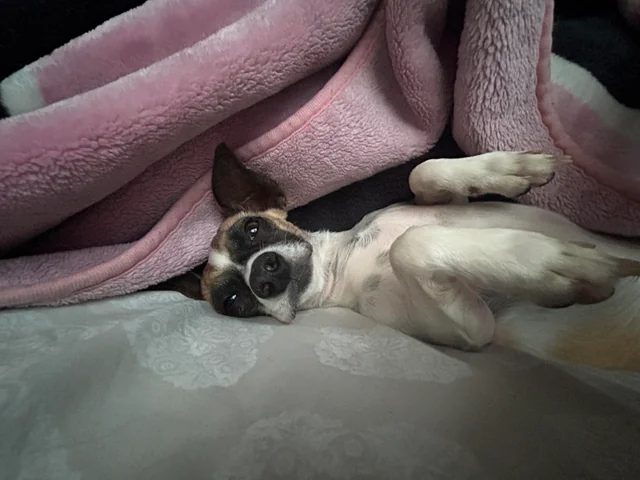
Like people, dogs don’t like being woken suddenly or moved off a comfy spot. A dog that growls when disturbed in bed or under a blanket is often just saying “please leave me alone.”
Call your dog to you instead of reaching in. Our why does my chihuahua burrow guide explains why chihuahuas love their cozy spots.
Guarding food and toys
Some dogs growl to protect food, chews, toys or their bed. This is called resource guarding and is a common answer to why does my chihuahua growl.
Never snatch items away. Instead, trade for something better. Our chihuahua resource guarding guide explains trade games step by step.
Guarding you
Chihuahuas often bond strongly with one person and may growl at others who come near, especially on the sofa or bed. This is a form of guarding, not true protection.
Ask other family members to toss treats when they approach, and invite your dog off furniture before it growls. Our why does my chihuahua follow me everywhere guide explains this close attachment.
Pain and illness
Dogs in pain often growl when touched or moved. If your dog growls when you touch one area, or has started growling out of character, pain is a likely answer to why does my chihuahua growl.
- Growling when touched in one spot.
- Limping or reluctance to jump.
- Pawing at the mouth or dropping food.
- Hiding more than usual.
- Changes in appetite or energy.
Dental pain is common in chihuahuas. Our chihuahua dental care guide explains the signs.
Growling at strangers
Chihuahuas are natural watchdogs and can be wary of new people. Growling at visitors usually means your dog feels unsure.
- Ask guests to ignore your dog at first.
- Let your dog approach in its own time.
- Have guests toss treats instead of reaching.
- Give your dog a quiet retreat.
Our why does my chihuahua bark so much guide has more tips for visitors.
Growling at other dogs
A small dog meeting a big dog has good reason to be cautious. Growling is often a way of saying “please don’t come closer.”
Keep a comfortable distance and reward calm looking. Our chihuahuas with other dogs guide explains safe introductions.
Growling on the leash
Some dogs growl or bark on the leash because they feel trapped or frustrated. Without the option to move away, they use their voice instead.
Walk at quieter times, cross the street to give space and reward your dog for looking at you. Keep the leash loose, since tension can add to stress.
Growling at children
Children move quickly, make noise and may grab or hug, which can frighten a tiny dog. Growling at children should always be taken seriously.
Always supervise children with dogs. Teach children not to hug, chase or pick up the dog, and give your dog a safe place to retreat. If your dog growls at a child, calmly separate them and seek professional help.
Our are chihuahuas good with kids guide has more advice.
Why does my chihuahua growl at night?
Night growling is common. When owners ask why does my chihuahua growl at night, the usual answers are being disturbed in bed, hearing noises outside or being moved when someone rolls over.
- Give your dog its own bed beside yours.
- Call your dog rather than lifting it in the dark.
- Use a night light so your dog can see you approach.
- Ask your vet if growling comes with restlessness or pain.
Why does my chihuahua growl while eating?
Growling over the food bowl is a form of resource guarding. If you wonder why does my chihuahua growl when you walk past at mealtime, your dog is worried you might take its food.
Feed your dog in a quiet spot, never reach into the bowl, and walk past while tossing a tasty extra into it. Over time, your dog learns that people near the bowl bring good things.
Why does my chihuahua growl during cuddles?
Some chihuahuas grumble softly when cuddled, which can simply be contentment or “talking.” Others growl because they want to be put down or are uncomfortable being held.
Look at the body. Relaxed eyes and a soft body mean a happy grumble. A stiff body or turning away means your dog wants space.
When in doubt about why does my chihuahua growl during cuddles, let it go and see if it comes back for more.
Common triggers at a glance
| Situation | Likely reason | Quick help |
|---|---|---|
| Picking up | Fear or pain | Use an “up” cue; vet check |
| Sofa or bed | Guarding a spot or person | Invite off with a treat |
| Food or chews | Resource guarding | Trade games |
| Visitors | Wariness | Let your dog approach in its own time |
| Bigger dogs | Fear | Keep distance |
This table gives a quick answer to why does my chihuahua growl in the most common situations.
Never punish a growl
It is tempting to scold a growling dog, but punishment removes the warning without fixing the feeling. A dog that learns not to growl may bite without warning instead.
When you ask why does my chihuahua growl, treat the growl as useful information. Calmly step back, note what happened just before and work on that trigger with positive training.
Reading body language
| Relaxed and playful | Uncomfortable or warning |
|---|---|
| Loose, wiggly body | Stiff, frozen body |
| Soft eyes | Hard stare or whale eye (whites showing) |
| Mouth open and relaxed | Lips tight or raised |
| Tail wagging loosely | Tail tucked or held stiffly |
| Play bows | Leaning away or hunching |
Watching the whole body, not just the sound, tells you what the growl means.
What to do in the moment
- Stay calm and don’t shout, whatever the answer to why does my chihuahua growl.
- Stop what you were doing.
- Give your dog space.
- Avoid staring or leaning over your dog.
- Note the trigger.
- Plan how to avoid or work on that trigger.
Once your dog is relaxed again, you can start teaching it that the trigger predicts good things.
Positive training
The best long-term answer to why does my chihuahua growl is changing how your dog feels about the trigger.
| Method | How it works |
|---|---|
| Desensitization | Expose your dog to the trigger at a low, comfortable level |
| Counterconditioning | Pair the trigger with something great, like a favorite treat |
| Trade games | Swap items for better rewards to reduce guarding |
| Cues | Teach “up”, “off” and “come” for calm handling |
| Choice | Let your dog move away when it wants to |
Our chihuahua training tips and how to calm a chihuahua guides explain reward-based methods.
Growling puppies
Puppies often growl in play, and some growl when tired or overexcited. Teach gentle play, offer chew toys and give plenty of rest.
Early, positive socialisation helps puppies grow into confident adults. Our chihuahua temperament guide explains the breed’s personality.
Older dogs
Older dogs may growl more because of pain, poor eyesight or hearing, or confusion. If your senior has started growling, ask your vet why does my chihuahua growl now.
Approach slowly, let your dog see and smell you and avoid startling it. Our guide to caring for an old chihuahua covers senior comfort.
Helping the whole household
Everyone in the home should follow the same simple rules so your dog feels safe and knows what to expect.
- Let the dog approach people, not the other way round.
- Use the same cues for picking up and getting off furniture.
- Never take food or toys by force.
- Give the dog a quiet space no one disturbs.
- Reward calm, relaxed behavior often.
Consistency helps a growly dog relax faster, because it learns that people are predictable and kind.
When to see a vet
- Growling is new or sudden.
- Growling when touched in one area.
- Growling with limping, appetite changes or hiding.
- An older dog that seems confused.
- Growling that turns into snapping.
When asking why does my chihuahua growl, ruling out pain is always the first step before working on behavior.
Getting professional help
If growling is frequent, involves children or comes with snapping or biting, get help from a qualified positive-reinforcement trainer or a veterinary behaviorist.
Our chihuahua biting guide explains how to handle nipping and biting safely.
Keeping a growl diary
| Record | Why it helps |
|---|---|
| Time and place | Shows patterns |
| Who or what was involved | Identifies triggers |
| What happened before | Reveals the cause |
| Your dog’s body language | Separates play from warning |
| What you did next | Shows what helps |
A few weeks of notes often make the answer to why does my chihuahua growl much clearer.
Myths about growling
| Myth | Fact |
|---|---|
| A growling dog is aggressive | It is usually communicating discomfort |
| You should punish growling | Punishment can lead to bites without warning |
| Small dogs’ growls don’t matter | They deserve the same respect as any dog |
| Dogs growl to be dominant | Most growling is about fear or discomfort |
| Play growling leads to aggression | Play growls are normal |
Knowing the facts helps you respond calmly and kindly when you wonder why does my chihuahua growl.
Our approach
At Chihuvas, we raise puppies with gentle handling, early socialisation and positive training in our Traverse City, Michigan home. Every family receives tips on calm handling and reading body language.
Every puppy goes home with vaccinations, a microchip, a vet health certificate, AKC registration and a two-year genetic health guarantee. We deliver nationwide by in-cabin chihuahua flight nanny and stay in touch for life.
See our available puppies, send us an inquiry or meet our family on our chihuahua breeder in Michigan page.
A growl is a gift: your dog is telling you how it feels before things go wrong. Listen, and help it feel safe.
Chihuvas breeding teamChihuvas is an AKC-registered Chihuahua breeder based in Michigan, and we deliver our puppies nationwide across the US. Every puppy is health-checked, vaccinated for their age and socialised from birth. See our available puppies or send us an inquiry.
Common questions about why does my chihuahua growl
Looking for a well-raised puppy?
Every puppy is raised in our Michigan home with gentle handling and delivered nationwide with a health guarantee.
View available puppies →