How to calm a chihuahua: quick fixes and long-term habits
Knowing how to calm a chihuahua makes life happier for both of you. Chihuahuas are loyal, alert little dogs, but that alertness can tip into barking, shaking, spinning or snapping when they feel overwhelmed.
We are AKC chihuahua breeders in Traverse City, Michigan, and we raise every puppy in our home to be calm and confident. This guide explains how to calm a chihuahua in the moment, how to build a calmer dog over time and how to handle common triggers like visitors, vet trips and car rides.
Chihuahuas are described on the AKC chihuahua breed page as alert and devoted. For serious behavior problems, the American College of Veterinary Behaviorists can help you find a qualified specialist.
Why learning how to calm a chihuahua matters
Chihuahuas notice everything. Their size means the world can feel big and unpredictable, so many react quickly to noises, strangers or sudden movement.
- Small dogs are more easily startled by large people and objects.
- Chihuahuas bond closely with one person and can be protective.
- They are intelligent and get bored without enough to do.
- Poor early socialization can make fear more likely.
- Many owners accidentally reward excited or anxious behavior.
Understanding why your dog reacts is the first step in learning how to calm a chihuahua. Our chihuahua temperament guide explains the breed’s natural personality.
How to calm a chihuahua: move to a quieter space, give distance from the trigger, lower your voice and offer something to sniff, lick or chew. Over time, build a steady routine, daily exercise and brain games, teach a “settle” on a mat and reward calm moments. See your vet if stress is sudden or severe.

Signs your chihuahua is stressed
Spotting stress early is a big part of how to calm a chihuahua. Dogs often show small signs before they bark, snap or panic.
| Early signs | Stronger signs |
|---|---|
| Lip licking or yawning | Barking or growling |
| Turning the head away | Shaking or trembling |
| Ears pulled back | Hiding or trying to escape |
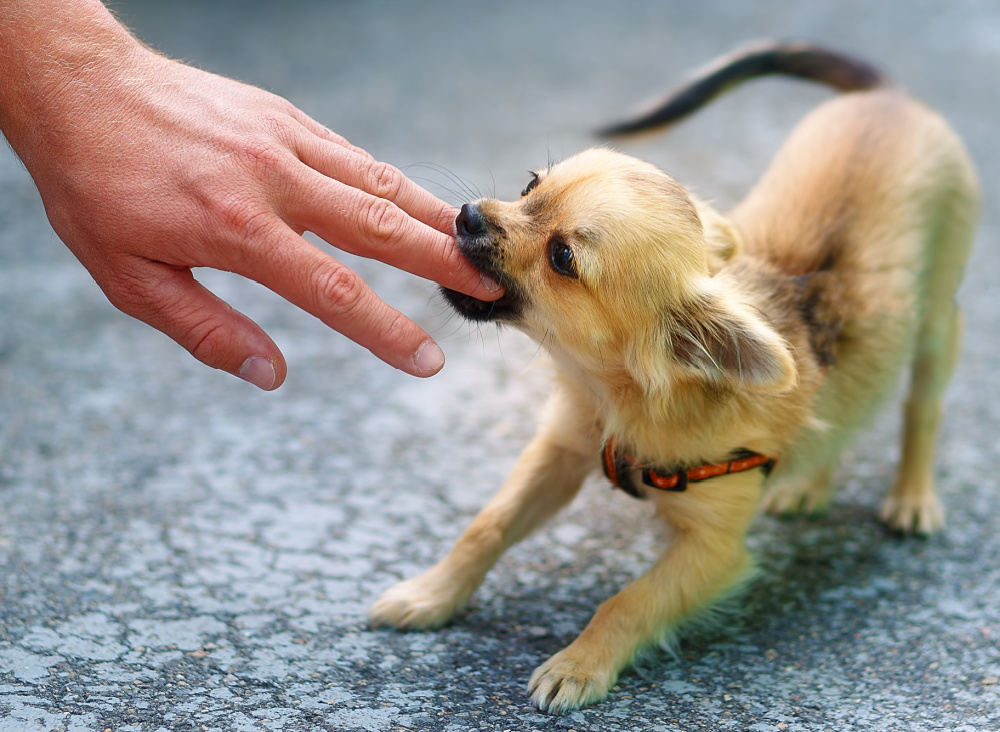
| Tucked tail | Snapping or nipping |
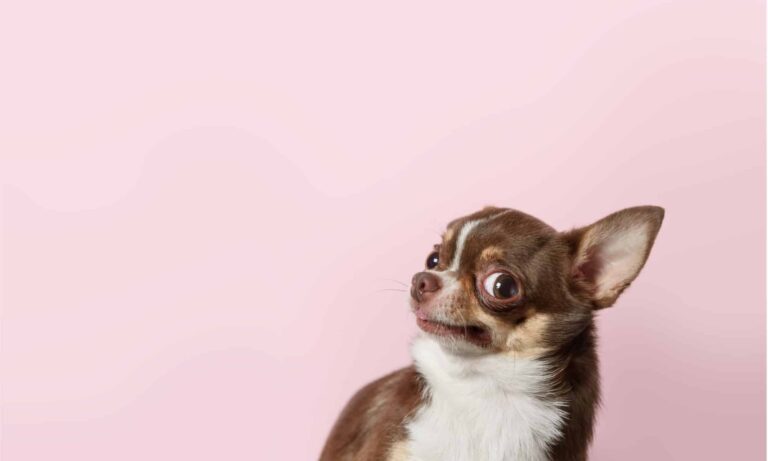
| Whale eye (whites of eyes showing) | Panting and pacing |
| Lifting a front paw | Accidents indoors |
Step in at the early signs and you can often prevent a bigger reaction. Our guide on why chihuahuas shake explains another common stress sign.
How to calm a chihuahua in the moment
When your dog is already worked up, focus on safety and lowering stress. Here is how to calm a chihuahua right now.
- Stay calm yourself and speak softly.
- Move your dog away from the trigger, or move the trigger away.
- Go to a quieter room with less noise and fewer people.
- Offer a lick mat, chew or a scatter of treats to sniff out.
- Use slow, gentle strokes on the chest if your dog likes touch.
- Give your dog time; it can take 15 to 20 minutes to settle fully.
Avoid lots of fuss, loud reassurance or rushing. A quiet, steady presence helps more than words.
Create a calm space
A safe retreat is one of the simplest answers to how to calm a chihuahua. Every dog benefits from a quiet spot where it can rest undisturbed.
- Use a crate, covered bed or playpen in a quiet corner.
- Add a soft blanket and a worn T-shirt that smells of you.
- Keep it away from busy doors and loud appliances.
- Make it a “no disturb” zone for children and other pets.
- Feed meals and give chews there to build positive feelings.
Our chihuahua crate training guide shows how to turn a crate into a happy den.
Build a steady routine
Chihuahuas feel safer when they know what to expect. A predictable day lowers stress and reduces attention-seeking behavior.
| Time | Routine |
|---|---|
| Morning | Potty break, short walk, breakfast |
| Midday | Brain game or short training session; rest |
| Afternoon | Play session; quiet time |
| Evening | Walk, dinner, calm cuddles |
| Bedtime | Final potty break; lights down |
Sticking to a routine is one of the most reliable ways of how to calm a chihuahua over the long term.
Daily exercise
A dog with pent-up energy finds it hard to relax. Daily exercise is a key part of how to calm a chihuahua.
- Two short walks a day, around 15 to 20 minutes each.
- Indoor play with a small ball or soft toy.
- Sniffing walks, where your dog sets the pace and explores.
- Short games of fetch in a hallway on cold days.
Our chihuahua exercise guide covers how much activity small dogs need.
Mental enrichment
Chihuahuas are clever, and boredom often shows up as barking or restlessness. Brain work tires them out in a calm way.
- Puzzle toys and treat balls.
- Snuffle mats for sniffing out food.
- Lick mats with a little wet food.
- Hide-and-seek with treats around the room.
- Short trick-training sessions.
Our best toys for chihuahuas guide lists puzzle toys sized for small dogs.
Teach a “settle” on a mat
Teaching your dog to settle on a mat gives it a clear, calm job. It is one of the most useful skills when learning how to calm a chihuahua.
- Place a small mat on the floor and reward your dog for stepping on it.
- Reward sitting, then lying down on the mat.
- Gradually wait longer before rewarding calm lying down.
- Add a cue word, such as “settle”.
- Practice in different rooms, then with mild distractions.
Keep sessions short and fun. Within a few weeks, many dogs will head to the mat on their own when things get busy.
Calming touch
Many chihuahuas find slow, gentle touch soothing. Watch your dog to see what it enjoys.
- Use long, slow strokes along the chest or back.
- Gently massage the base of the ears.
- Avoid patting the top of the head, which some dogs dislike.
- Stop if your dog moves away, stiffens or licks its lips.
Calm touch works best when your dog is already fairly relaxed. A very stressed dog may prefer space.
Reward calm behavior
Dogs repeat what gets rewarded. A simple trick in how to calm a chihuahua is to catch calm moments and reward them.
- Keep tiny treats handy around the house.
- Quietly drop a treat when your dog lies down calmly.
- Praise softly rather than excitedly.
- Avoid rewarding barking or jumping with attention.
Our chihuahua training tips explain positive reinforcement in more detail.
Calming barking
Barking is a common reason people search for how to calm a chihuahua. Most barking is alarm, boredom or attention-seeking.
- Block views of the street with window film or closed blinds.
- Teach a “quiet” cue and reward silence.
- Give more exercise and brain games.
- Ignore attention barking and reward quiet.
- Use white noise to mask outside sounds.
Our why does my chihuahua bark so much guide covers causes and fixes.
How to calm a chihuahua with visitors
Doorbells and guests are big triggers for many chihuahuas. A plan helps everyone stay relaxed.
- Put your dog in its calm space or behind a gate before guests arrive.
- Ask guests to ignore the dog at first.
- Let your dog approach in its own time.
- Have guests toss treats rather than reach to pet.
- Practice doorbell sounds at low volume with treats.
Gradual, positive experiences with people help a lot. Our chihuahua socialisation guide explains how to build confidence.
How to calm a chihuahua in the car
Car rides can cause stress or motion sickness. Make trips short and positive at first.
- Use a secure carrier or car seat with a familiar blanket.
- Start with short trips to fun places.
- Keep the car cool and quiet.
- Avoid feeding right before a trip.
- Ask your vet about motion sickness if needed.
Our travelling with a chihuahua guide has more travel tips.
How to calm a chihuahua at the vet
Vet visits are stressful for many dogs. Planning ahead is a big part of how to calm a chihuahua at the clinic.
- Visit the clinic just for treats and a weigh-in.
- Bring a familiar blanket and tasty treats.
- Wait in the car until it is your turn if the waiting room is busy.
- Ask for a quiet exam room.
- Practice handling paws, ears and mouth at home.
Many clinics now offer low-stress handling. Ask your vet what they provide and for their tips on how to calm a chihuahua before exams.
Grooming and handling
Nail trims, baths and brushing can upset some dogs. Short, positive sessions help them relax.
- Start with one nail or a few brush strokes, then reward.
- Use a lick mat on the wall during baths.
- Keep sessions under five minutes at first.
- Stop before your dog gets upset.
How to calm a chihuahua during storms
Thunderstorms, fireworks and construction can frighten small dogs. Prepare a quiet, cozy space ahead of time.
- Close curtains and play calming music or white noise.
- Offer a covered bed or crate.
- Stay nearby and stay calm.
- Practice low-volume noise recordings paired with treats.
If fear is severe, talk to your vet about extra support with how to calm a chihuahua during noisy events.
Being left alone
Some chihuahuas panic when left alone. Building independence slowly is part of how to calm a chihuahua with separation stress.
- Practice very short absences and build up slowly.
- Leave a frozen food toy when you go.
- Keep departures and returns low-key.
- Use a pet camera to see how your dog copes.
Our guides on chihuahua separation anxiety and chihuahuas left alone explain step-by-step plans.
How to calm a chihuahua at bedtime
A calm evening routine helps your dog sleep through the night.
- Give a final walk and potty break.
- Dim lights and lower noise.
- Offer a short, gentle cuddle or massage.
- Keep bedtime at the same time each night.
Calming tools
Some products can support your plan for how to calm a chihuahua. They work best alongside training and routine.
| Tool | How it helps |
|---|---|
| Pressure wrap | Gentle, steady pressure some dogs find soothing |
| Pheromone diffuser | May help some dogs feel more relaxed |
| Calming music or white noise | Masks sudden sounds |
| Lick mats and chews | Licking and chewing are naturally calming |
| Covered crate | Creates a den-like retreat |
Ask your vet before using calming supplements, especially for puppies or dogs on medication.
Rule out health problems
Sudden irritability, restlessness or snapping can be a sign of pain or illness. A vet check is important if behavior changes quickly.
- Dental pain is common in chihuahuas.
- Knee or back pain can make dogs grumpy when touched.
- Low blood sugar can cause shaking and restlessness.
- Itchy skin or ear infections cause discomfort.
Our chihuahua anxiety guide covers when stress needs medical support.
How to calm a chihuahua puppy
Puppies have bursts of wild energy, often called the zoomies, followed by deep sleep. Knowing how to calm a chihuahua puppy is mostly about rest, routine and gentle structure.
- Make sure your puppy sleeps 18 to 20 hours a day.
- Use a playpen for enforced naps when your puppy gets overexcited.
- Swap nipping for a soft chew toy.
- Keep play sessions short, then offer a quiet chew.
- Introduce new people, places and sounds slowly.
Overtired puppies often get more bitey and hyper. A nap in a quiet den usually fixes it.
A 7-day plan for how to calm a chihuahua
Here is a simple one-week starter plan for how to calm a chihuahua at home.
| Day | Focus |
|---|---|
| Day 1 | Set up a calm space and start a daily routine |
| Day 2 | Add two short sniffing walks |
| Day 3 | Introduce a puzzle toy or snuffle mat |
| Day 4 | Start mat training for two minutes, twice a day |
| Day 5 | Practice rewarding calm moments around the house |
| Day 6 | Work on one trigger at low intensity, like the doorbell |
| Day 7 | Review what worked and keep going |
Most owners see small changes within the first week. Bigger changes come with a few weeks of steady practice.
What not to do
Some reactions make stress worse. Avoid these.
- Don’t yell, punish or scold a scared dog.
- Don’t force your dog to face what frightens it.
- Don’t let strangers grab or pick up your dog.
- Don’t reward barking or jumping with attention.
- Don’t use shock, spray or prong collars.
Punishment can increase fear and lead to biting. Our chihuahua biting guide explains why.
When to get professional help
Sometimes knowing how to calm a chihuahua isn’t enough on your own. Seek help if you see any of these signs.
- Biting or serious snapping.
- Panic that causes injury or destruction.
- Fear that is getting worse over time.
- Stress that stops your dog eating, sleeping or going outside.
Your vet can refer you to a veterinary behaviorist or certified trainer who uses positive methods.
Myths about calming chihuahuas
There are a few myths around how to calm a chihuahua. Here are the facts.
| Myth | Fact |
|---|---|
| Comforting a scared dog rewards fear | Calm comfort helps; fear is an emotion, not a trick |
| Small dogs are naturally yappy | Most barking can be reduced with training and enrichment |
| A tired dog is always calm | Overtired dogs can be more reactive; rest matters too |
| Chihuahuas can’t be trained | They are smart and learn quickly with rewards |
| Carrying your dog everywhere helps | Dogs build confidence on their own four feet |
Patience and consistency matter most. Small daily steps add up to a much calmer dog.
Our approach to calm puppies
At Chihuvas, we help every puppy learn how to relax in our Traverse City, Michigan home. Puppies grow up with gentle handling, household sounds, quiet rest times and short positive training sessions, and every family gets tips on how to calm a chihuahua at home.
Every puppy goes home with vaccinations, a microchip, a vet health certificate, AKC registration and a two-year genetic health guarantee. We deliver nationwide by in-cabin chihuahua flight nanny and stay in touch for life.
See our available puppies, send us an inquiry or meet our family on our chihuahua breeder in Michigan page.
A calm chihuahua is made, not born: a steady routine, a safe space, daily brain games and lots of rewards for quiet moments.
Chihuvas breeding teamChihuvas is an AKC-registered Chihuahua breeder based in Michigan, and we deliver our puppies nationwide across the US. Every puppy is health-checked, vaccinated for their age and socialised from birth. See our available puppies or send us an inquiry.
Common questions about how to calm a chihuahua
Looking for a confident puppy?
Our puppies are raised in our Michigan home with gentle handling and early socialization, and we deliver nationwide.
View available puppies →