
Chihuahua training tips — 7 proven methods for a well-behaved dog.
Chihuahua training tips are some of the most searched topics for new owners of this breed — and for good reason. Chihuahuas have an undeserved reputation for being difficult to train. In reality, they are highly intelligent, quick learners who respond exceptionally well to the right approach. The Chihuahua’s training challenges are almost always training approach problems, not dog problems. With the right methods — consistent, positive, and appropriately brief — a Chihuahua can be one of the most rewarding dogs to train.
As AKC-registered breeders at Chihuvas, we begin the foundation of training in our nursery — socialising every puppy from birth and introducing handling, routines, and early commands before they leave for their new homes. This guide covers the seven most important Chihuahua training tips for a well-behaved companion, drawing on the AKC guide to positive reinforcement training and the PDSA dog training guidance.
Are Chihuahuas trainable?
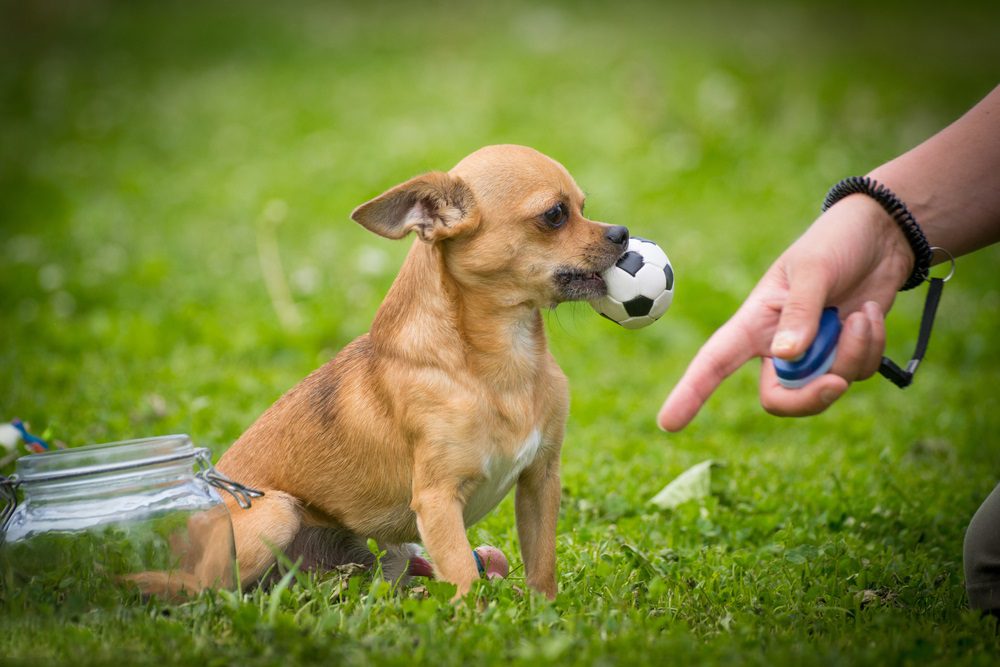
Before covering specific Chihuahua training tips, addressing the reputation question is important. Chihuahuas are not stubbornly untrainable — they are dogs whose owners frequently skip training because the dog is small enough to physically manage without it. A Chihuahua that pulls on the lead, jumps on visitors, or barks incessantly is not behaving this way because of its breed — it is behaving this way because no one taught it the alternative.
When Chihuahuas are given the same training opportunities as larger breeds, they perform very well. They learn quickly, retain commands reliably, and are highly food-motivated — which makes positive reinforcement training exceptionally effective. The best Chihuahua training tips leverage these strengths rather than fighting against the dog’s nature.
7 proven Chihuahua training tips
1. Use positive reinforcement exclusively
The single most important of all Chihuahua training tips is this: positive reinforcement only. This means rewarding desired behaviours immediately after they occur — with a high-value treat, calm praise, or brief play — and ignoring or redirecting undesired behaviours rather than punishing them. Punishment-based methods are counterproductive with Chihuahuas. They increase anxiety, damage trust, and worsen the very behaviours owners are trying to correct. A Chihuahua trained with punishment becomes fearful and unpredictable. A Chihuahua trained with positive reinforcement becomes reliable, engaged, and eager to work.
High-value treats for Chihuahuas should be tiny — pea-sized — and genuinely desirable. Chicken, cheese, and commercial soft training treats all work well. The treat must be delivered within one to two seconds of the desired behaviour to create the correct association. Timing is as important as the reward itself.
2. Keep sessions short and frequent
One of the most practical Chihuahua training tips is session length. Three to five minutes for puppies, five to ten minutes for adult dogs — no more. Chihuahuas are sharp minds in small packages, but their attention span for formal training is limited. Multiple short sessions throughout the day produce dramatically better results than one long session that ends in frustration. Always end every session on a success — ask for something the dog knows well and reward enthusiastically before finishing.
3. Start training on day one
The best of all Chihuahua training tips for new puppy owners is deceptively simple: start immediately. Do not wait until the puppy has settled in, is older, or seems ready. The critical socialisation and learning window closes at approximately 16 weeks. Everything learned in this period requires less effort and produces deeper, more reliable results than the same training attempted at six months or a year. Begin with sit and name recognition on the first day — even 60 seconds of training counts.
4. Train on the ground, not on your lap
This is one of the most commonly overlooked Chihuahua training tips and one of the most impactful. Training while holding a Chihuahua on your lap or at chest height creates confusion about what position and context the commands apply to, and prevents the dog from learning the physical postures associated with commands like sit or down. Always train with the dog on the floor at your feet — this is the context in which commands need to work in real-world situations.
5. Socialise constantly and consistently
Socialisation is arguably the most important of all Chihuahua training tips for long-term behaviour. A well-socialised Chihuahua that has been positively exposed to different people, environments, sounds, other dogs, and handling from puppyhood is a fundamentally different dog to one whose world has been small and protected. Unsocialised Chihuahuas are more reactive, more fearful, and more prone to defensive biting — not because of the breed but because of what they have not experienced. Every new positive experience before 16 weeks is an investment in a more confident, calmer adult dog.
6. Be completely consistent across all household members
All Chihuahua training tips fail without this: consistency across everyone who lives with or regularly interacts with the dog. If one person lets the Chihuahua jump up, another lets it sleep on the sofa against the house rule, and a third feeds it from the table — no amount of formal training sessions will produce consistent behaviour. Every person in the household must use the same commands, the same responses to undesired behaviour, and the same reward system. A single inconsistent household member can undo weeks of careful training.
7. Use a crate as a training tool, not a punishment
Crate training is one of the most valuable Chihuahua training tips for housetraining and building a settled, secure dog. A correctly introduced crate becomes the dog’s safe space — a den they choose to rest in and that naturally prevents indoor accidents when supervision is not possible. Introduce the crate gradually with positive associations: meals fed inside, treats scattered in the back, calm praise for entering voluntarily. Never use the crate as punishment — this destroys its function as a place of safety. A dog that retreats to its crate voluntarily is a dog with a secure, settled temperament.
Potty training your Chihuahua
Potty training is the most urgent early training priority — and one of the Chihuahua’s genuine challenges. Their small bladders, fast metabolisms, and tendency to sneak off quietly make accidents more common than with larger breeds. These Chihuahua training tips are specific to housetraining:
- Take puppies out every 1 to 2 hours — and always immediately after waking, eating, or play. A young Chihuahua puppy cannot hold their bladder for more than 90 minutes
- Use a consistent toilet spot — always take the puppy to the same area. The scent cues from previous visits help signal the purpose of the location
- Reward immediately and enthusiastically — praise and a treat the instant the puppy toilets in the right place. The reward must happen outside, not after coming back in
- Never punish indoor accidents — punishment after the fact creates anxiety without teaching anything useful. Clean up thoroughly with an enzymatic cleaner to remove scent cues
- Supervise or confine — a Chihuahua that cannot be watched should be in a crate or puppy-proofed area. Unsupervised access to the whole house is how indoor toileting habits become established
Basic commands to teach first
These are the commands to prioritise in the first weeks — in this order:
- Name recognition — the foundation of all communication. Say the dog’s name, reward when they look at you. Practice constantly in the first week
- Sit — the most useful command in daily life. Lure with a treat held above the nose, reward the moment the bottom touches the floor
- Leave it — essential for safety. Teach the dog to look away from an object or item on command
- Come — recall is the most important safety command. Build it with enthusiastic rewards and never call the dog to you for anything unpleasant
- Stay — builds impulse control and reliability in sit and down positions. Introduce duration and distance gradually
- Quiet — for bark management. See our Chihuahua barking guide for the full technique
Common Chihuahua training mistakes to avoid
- Skipping training because the dog is small — the root cause of most Chihuahua behaviour problems. Size does not remove the need for training
- Training sessions that are too long — ends in frustration for dog and owner. Three to ten minutes maximum
- Repeating commands multiple times — saying “sit, sit, sit” teaches the dog that the first command is optional. Say it once and wait
- Inconsistent rules across the household — destroys training progress faster than any other factor
- Using punishment for accidents or mistakes — creates fear and damages the trust that training depends on
- Carrying the dog to avoid situations — prevents the dog from learning to cope with the world calmly. Chihuahuas need to encounter things on their own four feet to build genuine confidence
Understanding small dog syndrome
Many Chihuahua training tips ultimately address what is informally called small dog syndrome — the pattern of behaviour that develops when small dogs are allowed to make demands, issue threats, and ignore commands without consequence because their size makes enforcement seem unnecessary or unkind. A Chihuahua that growls at strangers, barks without stopping, refuses commands, or snaps when handled is not expressing its true character — it is expressing the absence of training and the consequence of being consistently indulged.
The solution is identical to the solution for any dog: clear, consistent, positive training from an early age. A Chihuahua that has been trained, socialised, and given consistent structure is a confident, settled, sociable dog. At Chihuvas, our puppies leave with early socialisation built in — making the Chihuahua training tips in this guide significantly easier to apply from day one. Browse our available puppies or get in touch to learn about our early training programme.
Common questions about Chihuahua training tips
Start with a well-socialised Chihuahua from Chihuvas.
Our puppies leave with early training foundations built in — socialised from birth, handled daily, and ready for your home. AKC-registered Michigan breeders.
View available puppies →