
Are Chihuahuas good with kids? 7 proven tips for a safe family home.
Are Chihuahuas good with kids? It is one of the most common questions we receive at Chihuvas — and it deserves an honest answer rather than a simple yes or no. The truth is nuanced: Chihuahuas can be wonderful family dogs, but they are not automatically suited to every household with children. The outcome depends on the age of the children, the temperament of the individual dog, the quality of socialisation, and — perhaps most importantly — the effort the family puts into teaching both the dog and the children how to coexist safely.
As AKC-registered Chihuahua breeders, we counsel every family honestly before they bring one of our puppies home. This guide gives you the complete picture — the risks, the rewards, the age recommendations, and seven proven tips that make the difference between a harmonious household and a stressful one. The AKC Chihuahua breed profile and the PDSA Chihuahua care guide both provide useful additional context on the breed’s temperament with families.
The honest answer: are Chihuahuas good with kids?
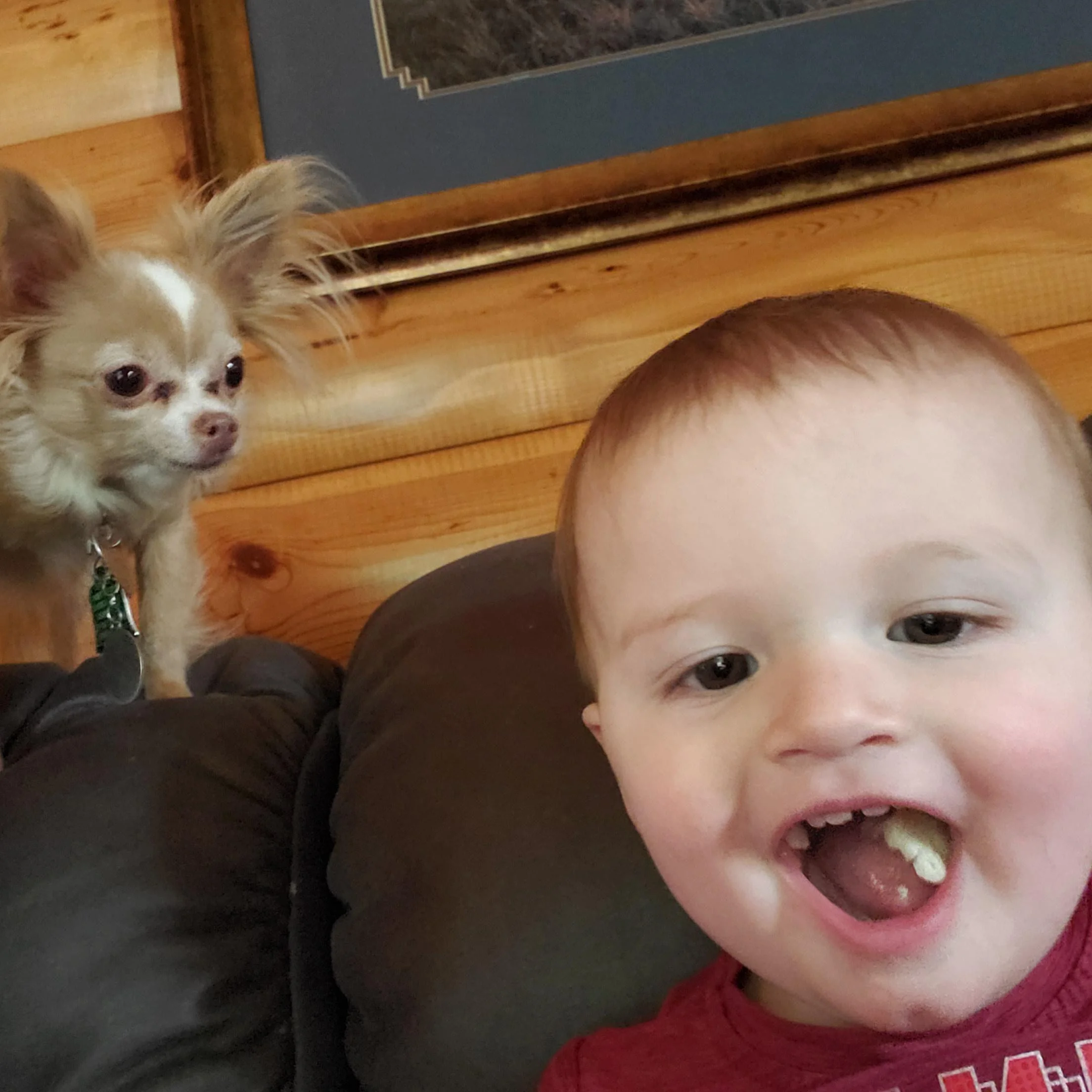
Are Chihuahuas good with kids? The most accurate answer is: yes — with the right children, in the right household, with the right approach. Chihuahuas are not naturally child-unfriendly dogs. They are loyal, affectionate, and form deep bonds with their families. Many of our Chihuvas puppies go to families with children and thrive in those homes.
However, several factors make the Chihuahua a more complex choice for families with children than a Labrador or a Golden Retriever. Their small size makes them physically vulnerable to rough handling. Their bold temperament means they will defend themselves when they feel threatened rather than simply tolerating it. And their intense loyalty to their primary person can make them wary of children they perceive as boisterous intruders into their space.
The question of are Chihuahuas good with kids is really two questions: are Chihuahuas compatible with children, and are the children compatible with the Chihuahua? Both sides of the equation need attention.
What age children are Chihuahuas best suited to?
Age is the single most important factor when considering whether Chihuahuas are good with kids in your specific household. Here is how the risk profile changes by age group:
- Toddlers (0–3 years): The highest risk group for Chihuahua households. Toddlers cannot regulate their grip, cannot read dog body language, move unpredictably, and do not understand the concept of a dog’s personal space. Most Chihuahua breeders — including us at Chihuvas — advise strongly against placing a Chihuahua in a home with children under 3
- Young children (4–7 years): Better than toddlers but still challenging. Children in this age range may understand basic rules but struggle to apply them consistently, particularly when excited. Chihuahuas in this age group require constant adult supervision during every interaction without exception
- Older children (8–12 years): The recommended age range for families considering a Chihuahua. Children of 8 and above can typically understand how to handle small dogs correctly, recognise warning signals, and respond appropriately when a dog shows discomfort. This is the age range where Chihuahuas genuinely thrive in family homes
- Teenagers (13+): Excellent. Teenagers who have an interest in dogs and have been taught appropriate handling make ideal Chihuahua companions. The bond a teenager forms with a Chihuahua is often extraordinarily close and mutually rewarding
The real risks — for the dog and the child
When families ask are Chihuahuas good with kids, they are usually thinking about the risk to the child. But the risks run in both directions — and the Chihuahua is often the more vulnerable party.
Risks to the child
A Chihuahua that feels cornered, frightened, or in pain will bite defensively. This is not aggression — it is a self-protection response from a dog that has exhausted its other warning signals. Chihuahua bites are typically minor and unlikely to cause serious injury to an older child, but they can break the skin and cause significant distress. The risk is highest when a child moves unpredictably, makes loud startling noises near the dog, or attempts to handle the dog when it is showing clear signs of discomfort that the child has not been taught to recognise.
Risks to the Chihuahua
This is the side of the equation that fewer families consider. A Chihuahua weighs between 2 and 6 pounds. A child falling on them, dropping them, or squeezing them too hard can cause serious injury — fractures, internal injuries, or worse. Young children who pick up a Chihuahua without proper technique can drop them from a height that would be fatal for a dog of this size. When we counsel families on whether Chihuahuas are good with kids, protecting the dog is just as important a part of the conversation as protecting the child.
7 proven tips for Chihuahuas and kids living harmoniously
These are the seven strategies that consistently make the difference for families successfully raising Chihuahuas alongside children.
1. Teach children the rules before the puppy arrives
Establish clear, simple rules for interacting with the Chihuahua before the puppy comes home — not after. Rules should include: always sit on the floor to interact with the dog, never pick up the dog without an adult present, never disturb the dog while eating or sleeping, and always let the dog approach you rather than chasing or grabbing. Children who understand the rules before the excitement of a new puppy clouds their judgement will apply them far more consistently.
2. Teach children to read dog body language
This is the most underrated safety skill for children in any dog household — but it is especially important when asking are Chihuahuas good with kids. Teach children to recognise the signs that a Chihuahua is uncomfortable: flattened ears, tucked tail, whale eye (showing the whites of the eyes), lip licking, yawning, turning away, or a stiff body posture. When a child can recognise these signals and back away, the risk of a defensive reaction drops dramatically.
3. Create a dog-only safe space
Your Chihuahua needs a retreat — a place that is entirely theirs and entirely off-limits to children. This might be a crate, a specific bed, or a corner of a room with a baby gate. When the dog retreats to this space, children must learn that the dog is not to be disturbed — no exceptions. This safe space gives the Chihuahua agency over their own stress levels and dramatically reduces the likelihood of defensive reactions.
4. Supervise every interaction without exception
For households with younger children, there are no unsupervised interactions — ever. Not for five minutes while you answer the door, not while you make a cup of tea. The moment supervision lapses is the moment an accident is most likely to happen. As children grow older and demonstrate consistently correct handling, supervision can become less intensive — but it should never disappear entirely in the early months.
5. Socialise your Chihuahua with children early
A Chihuahua that has been exposed to children from a young age is significantly more comfortable around them than one that encounters children for the first time as an adult. At Chihuvas, we begin socialisation in our nursery — exposing puppies to different people, sounds, and handling styles before they leave for their new homes. If your puppy did not have this early exposure, arrange calm, controlled meetings with gentle children as early as possible in the puppy’s first weeks with you.
6. Teach the dog too — basic obedience matters
A Chihuahua with solid basic obedience — sit, stay, leave it, off — is a safer Chihuahua in a family home. Training also strengthens the bond between dog and family, builds the dog’s confidence, and gives you reliable tools for managing situations before they escalate. Positive reinforcement training is ideal for Chihuahuas, who respond brilliantly to reward-based methods and poorly to harsh correction. A confident, well-trained Chihuahua is far less likely to react defensively in a busy family environment.
7. Never force interactions between dog and child
Forcing a Chihuahua to accept handling from a child it is not comfortable with is one of the fastest ways to create a biting incident. If the dog moves away, let it move away. If it hides, let it hide. Positive associations with children should be built slowly and on the dog’s terms — through treats, calm voices, and interactions the dog chooses to participate in. Over time, a dog that is never forced will become far more willing to engage voluntarily.
How socialisation makes the difference
The single biggest factor in whether Chihuahuas are good with kids is not the breed — it is the individual dog’s socialisation history. A Chihuahua raised from puppyhood with gentle, positive exposure to children of various ages, movement styles, and noise levels will be a fundamentally different dog around children than one that encountered its first child as a two-year-old adult.
This is why we take socialisation so seriously at Chihuvas. Every puppy in our nursery is handled regularly from birth, exposed to varied household sounds, introduced to visitors of different ages, and given the early experiences that build confidence and tolerance. A puppy that leaves us having already met children — even in controlled nursery visits — arrives in its new home with a head start that makes an enormous difference to how the question of are Chihuahuas good with kids is answered in that household.
Browse our available puppies to see current litters, or get in touch to discuss your family situation with us before committing. We are always happy to help families make the right decision — even if that sometimes means advising that a Chihuahua might not be the perfect fit right now.
Warning signs to watch for
Even in a well-managed household, knowing the early warning signs that your Chihuahua is approaching its stress threshold allows you to intervene before a situation escalates. Watch for:
- Whale eye — the whites of the eyes becoming visible as the dog turns its head away but keeps its gaze fixed on the child
- Lip licking or yawning — displacement behaviours that signal stress and discomfort
- Stiff body posture — muscles tensing, tail held rigidly, lack of natural fluidity in movement
- Growling — never punish a growl. A growl is a warning — the last communication before a bite. A dog that has been punished for growling learns to skip the warning and bite directly
- Moving away or hiding — the dog is telling you it needs space. Honour that request immediately
- Snapping at air — a warning bite that stops short. The next one may not
Common questions — are Chihuahuas good with kids?
Find the right Chihuahua for your family.
At Chihuvas, we match puppies to families carefully — considering temperament, age of children, and lifestyle. AKC-registered, socialised from birth, Michigan’s most trusted breeder.
View available puppies →