Chihuahua prey drive: chasing, squirrels and small pets
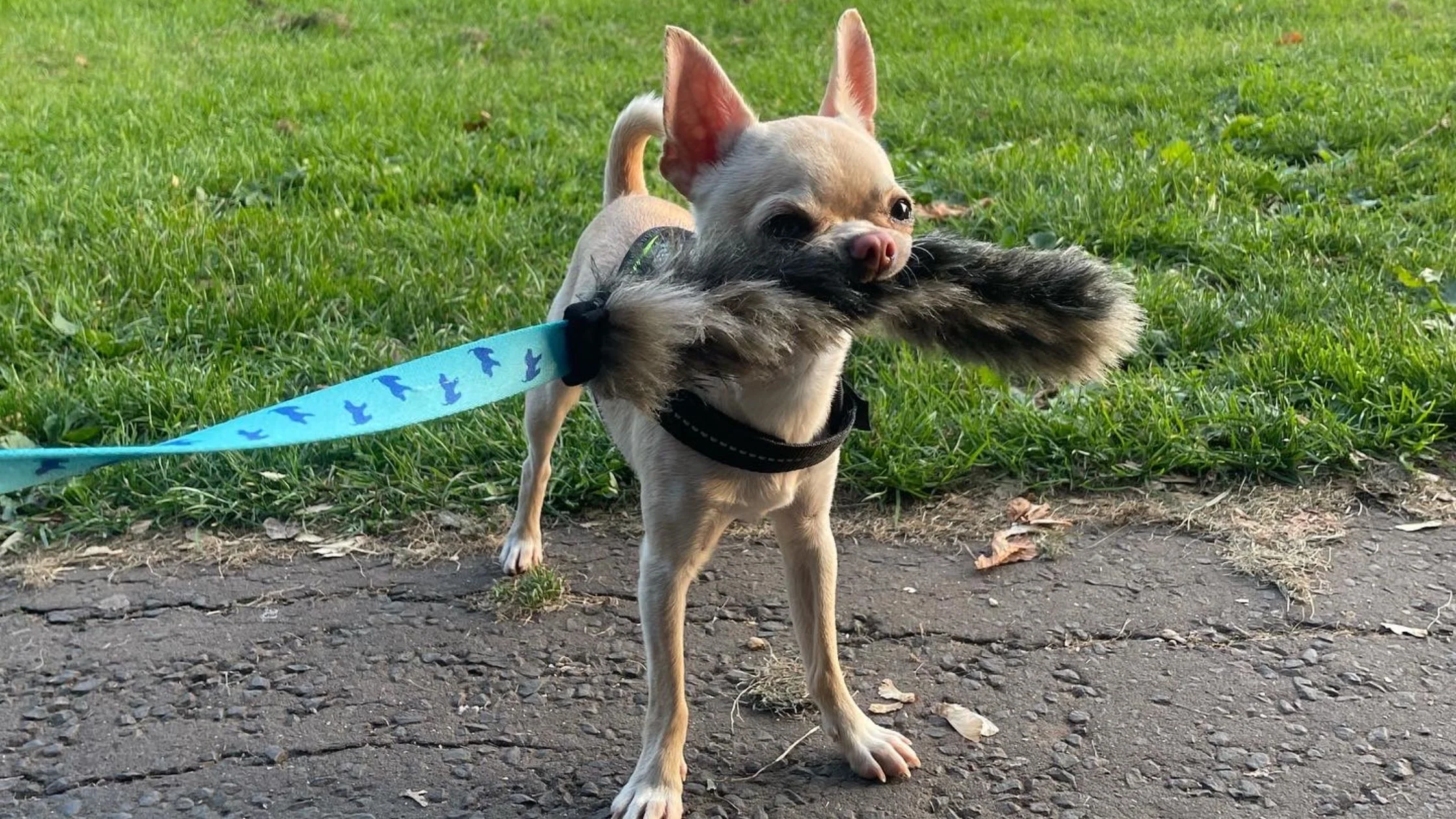
Chihuahua prey drive is the instinct behind the squirrel-watching, toy-shaking and sudden sprints at anything small that moves. Most chihuahuas have a moderate hunting streak, and understanding it helps you keep your dog, and any small pets, safe.
We are AKC chihuahua breeders in Michigan, and we see this instinct in our own dogs every day, from stalking leaves in the yard to “killing” squeaky toys. This guide explains what chihuahua prey drive is, how strong it usually is, the risks to small pets and wildlife, and how to manage and redirect it with kind training.
The breed standard describes chihuahuas as alert, with terrier-like qualities of temperament; you can read more on the AKC chihuahua page. For humane training guidance, see the American Veterinary Society of Animal Behavior.
What is chihuahua prey drive?
Prey drive is a dog’s natural instinct to notice, chase and catch small moving things. Chihuahua prey drive comes from the same ancestry as every other dog, shaped over thousands of years of hunting and scavenging.
In everyday life, it shows up as staring at birds, darting after leaves, shaking toys and pouncing on anything that skitters across the floor. Most of the time it is harmless and fun.
Problems arise when the instinct is aimed at small pets, wildlife or traffic. That is why it helps to understand your dog’s level and give the drive a safe outlet.
Most chihuahuas have a moderate chihuahua prey drive: they love chasing toys, squirrels and birds. Keep them on a harness and leash outdoors, supervise around small pets, teach “leave it” and “watch me”, and offer safe chase games at home. Remember that hawks and coyotes may also see a chihuahua as prey.

The prey sequence in dogs
Behaviorists describe prey drive as a sequence of steps. Different breeds were bred to keep or lose different parts of it.
| Step | What it looks like in a chihuahua |
|---|---|
| Orient | Ears forward, head turns towards movement |
| Eye | Fixed stare at a bird, squirrel or toy |
| Stalk | Slow, low creep forward |
| Chase | Sudden sprint after the moving object |
| Grab-bite | Snapping at or grabbing the toy |
| Shake or kill-bite | Vigorous side-to-side shaking of a toy |
| Dissect | Pulling stuffing out of plush toys |
Most chihuahuas show the early steps clearly, especially watching, chasing and shaking. Plush toys with their stuffing removed are often evidence of chihuahua prey drive in action.
How strong is chihuahua prey drive?
Compared with terriers or sighthounds, the chihuahua prey drive is usually moderate. Chihuahuas are companion dogs first, but they do keep a lively hunting streak.
Individual dogs vary widely. Some chihuahuas barely notice a squirrel, while others vibrate with excitement at every bird outside the window.
Genetics, early experiences and daily routine all play a part. A bored dog with few outlets often shows stronger chase behavior than a dog with plenty of play and enrichment. Our chihuahua temperament guide explains the breed’s wider personality.
Signs of chihuahua prey drive
You will probably recognize these signs of chihuahua prey drive in your own dog.
- Staring intently at birds, squirrels or insects.
- Freezing, then suddenly darting forward.
- Chasing leaves, shadows or reflections.
- Shaking toys hard from side to side.
- Ripping stuffing out of plush toys.
- Digging after scents in the yard.
- Trembling with excitement at a window.
- Ignoring your voice when focused on movement.
Shaking with excitement is common and different from shaking because of cold or fear. Our guide on why chihuahuas shake explains the difference.
Prey drive vs play vs aggression
These behaviors can look alike, but the cause and body language are different. Knowing which one you are seeing helps you respond correctly.
| Prey drive | Play | Aggression | |
|---|---|---|---|
| Aimed at | Small moving things | People, dogs or toys | Perceived threats |
| Body language | Focused, silent, stiff stare | Loose, bouncy, play bows | Stiff, growling, hackles up |
| Sounds | Usually quiet, maybe whining | Playful barks and growls | Deep growls, snapping |
| Trigger | Movement | Invitation to play | Fear, pain, guarding |
| Response needed | Manage and redirect | Enjoy and supervise | Create space, seek help |
If your dog’s behavior looks more like fear or guarding, read our guides to chihuahua biting and resource guarding.
Gauging your dog’s prey drive level
You can get a rough idea of your dog’s chihuahua prey drive by watching how it reacts in everyday situations.
| Behavior | Low | Moderate | High |
|---|---|---|---|
| Bird in the yard | Glances, then ignores | Watches and may chase | Fixates, ignores you |
| Toy dragged on floor | Mild interest | Chases and grabs | Obsessive, won’t stop |
| Squirrel on a walk | Notices, keeps walking | Pulls towards it | Lunges, screams, can’t focus |
| Recall when distracted | Comes easily | Comes with a treat | Doesn’t hear you |
When it comes to chihuahua prey drive, most dogs fall into the moderate column. Dogs in the high column need more management and training, especially around small pets.
Chihuahua prey drive and small pets at home
Small pets are where chihuahua prey drive matters most. Hamsters, gerbils, mice, rats, guinea pigs, rabbits, birds and even pet chickens can trigger the chase instinct.
- Keep small pets in secure, chew-proof enclosures your dog can’t reach.
- Put cages up high or in a room the dog can’t enter.
- Supervise every interaction, with the dog on a leash at first.
- Never let small pets run loose with the dog in the room.
- Never leave them alone together, even if the dog seems calm.
Even a gentle chihuahua can injure or kill a small animal in seconds, sometimes in play. A single bite or shake can be fatal to a hamster or bird. Separate them whenever you can’t watch closely.
Our guide to chihuahuas and other pets covers introductions in more detail.
Chihuahuas and cats
With cats, chihuahua prey drive is usually less of an issue. Most chihuahuas see cats as housemates, not prey, and many become close friends. Cats are often about the same size, confident and able to stand their ground.
Problems usually come from chasing. A cat that runs can trigger the chase, so give cats high shelves, cat trees and dog-free rooms where they can escape.
Introduce them slowly, reward calm behavior and stop any chasing early. See our guide to chihuahuas and cats.
Squirrels, birds and outdoor safety
Outdoors, chihuahua prey drive can lead to lunging, slipping out of collars or bolting into the road. A tiny dog chasing a squirrel can disappear under a fence in seconds.
- Use a well-fitted harness, not a collar, on every walk.
- Keep your dog on a leash in unfenced areas.
- Check fences for gaps, small holes and spaces under gates.
- Avoid retractable leashes, which give little control.
- Practice recall in safe, enclosed spaces only.
A harness also protects your dog’s windpipe when it pulls after a squirrel. Our collapsed trachea guide explains why this matters for chihuahuas.
When your chihuahua is the prey
Talk of chihuahua prey drive can make it easy to forget that a chihuahua is small enough to be prey itself. Hawks, owls, eagles, coyotes and foxes have all been known to target very small dogs.
- Supervise your dog outdoors at all times, even in a fenced yard.
- Be extra careful at dawn and dusk, when coyotes are most active.
- Use a covered pen if your dog spends time outside.
- Keep your dog close on trails and in open fields.
- Bring your dog inside if you see birds of prey circling.
If you live near open land or woods, ask neighbors and local wildlife services which predators are active in your area, and adjust your routine to match.
This doesn’t mean your chihuahua can’t enjoy the outdoors. It just means a small dog should never be left alone outside.
Prey drive indoors
You don’t need a yard to see chihuahua prey drive at work. Indoors, it often shows up as chasing flies, moths and spiders, pouncing on socks or stalking the vacuum cleaner.
Most indoor chasing is harmless, but watch for bees and wasps, which can sting a curious dog, and for toxic insects or baits. Keep mouse traps and rodent poison well out of reach, as a chihuahua may go after them.
A tiny dog that hunts household pests may also catch real mice. If you suspect rodents, use pet-safe pest control and talk to your vet about any risks, keeping the chihuahua prey drive pointed at toys instead.
A daily routine that calms chihuahua prey drive
A predictable routine with enough exercise and mental work often softens chihuahua prey drive. A tired, satisfied dog has less energy to fixate on every squirrel.
| Time of day | Activity |
|---|---|
| Morning | Short sniffing walk on a harness |
| Mid-morning | Five-minute “leave it” and “watch me” practice |
| Midday | Snuffle mat or puzzle feeder for lunch |
| Afternoon | Toy chase game, then a nap |
| Evening | Calm walk and a quiet chew |
Spread activities through the day rather than one long session. Short bursts suit a chihuahua’s size and attention span.
City, suburb or countryside
Where you live shapes how chihuahua prey drive plays out. In cities, pigeons and squirrels are everywhere, and traffic makes a sudden lunge dangerous, so a secure harness and short leash matter most.
In suburbs, backyard birds, rabbits and the neighbor’s cat are common triggers, and fences need checking for small gaps. In the countryside, wildlife is the bigger issue, both as prey for your dog and as a threat to it.
Wherever you live, supervised outdoor time and a reliable recall in safe spaces make the biggest difference.
Does prey drive change with age?
Prey drive often peaks in young adult dogs, between about one and three years old. Many chihuahuas become calmer as they mature, though the instinct rarely disappears completely.
Senior dogs may lose interest in chasing as their eyesight, hearing and joints change. Keep offering gentle sniffing games, which suit older dogs well. Our senior chihuahua care guide has more ideas for keeping older minds busy.
Training to manage chihuahua prey drive
You can’t train away chihuahua prey drive, but you can teach impulse control so your dog listens even when excited. Short, positive sessions work best.
- Watch me: reward your dog for looking at you instead of the squirrel.
- Leave it: start with toys at home, then practice with real distractions at a distance.
- Wait: pause before chasing a toy, then release with “get it”.
- Look at that: reward calm looking at a trigger, so it becomes less exciting.
- Recall: practice “come” with very high-value treats in a safe area.
Start far from distractions and move closer over many sessions. Our chihuahua training tips explain how to build each skill.
Safe outlets for the chase instinct
Giving chihuahua prey drive a safe outlet is one of the best ways to reduce unwanted chasing. A dog that gets to “hunt” toys is often calmer around real animals.
- Toy chase: drag a small toy along the floor and let your dog catch it.
- Small flirt pole: a light, toy-breed version, used gently on soft flooring.
- Squeaky toys: perfect for the shake-and-kill instinct.
- Snuffle mats: sniffing out treats satisfies the hunting brain.
- Hide and seek: hide toys or treats for your dog to find.
- Scent games: a great outlet for clever, curious chihuahuas.
Our best toys for chihuahuas guide covers safe, toy-breed sizes, and our exercise guide suggests daily routines.
Puppies and chihuahua prey drive
Puppyhood is the best time to shape how chihuahua prey drive shows up later. Calm, early exposure to cats, other pets and wildlife sounds helps a puppy learn that not everything that moves needs chasing.
Start “leave it” and “watch me” games early, reward calm behavior around other animals and give plenty of toy play. Puppies who learn impulse control young usually find it easier as adults.
Our chihuahua socialization guide explains how to plan these first experiences.
Myths about chihuahua prey drive
| Myth | The truth |
|---|---|
| Chihuahuas have no prey drive | Most have a moderate drive, and some have a strong one |
| Prey drive means aggression | It is a hunting instinct, not hostility |
| You can train it out completely | You can manage and redirect it, not erase it |
| Small dogs can’t hurt small pets | A chihuahua can seriously injure a hamster or bird |
| A fenced yard is always safe | Small dogs slip through gaps, and wildlife can get in |
Knowing the truth about chihuahua prey drive helps you protect your dog and your other pets without taking the fun out of play.
When to get help
Ask for help if chihuahua prey drive becomes obsessive, if chasing takes over walks, your dog injures another animal, or you can’t interrupt it even with high-value treats.
Start with your vet to rule out pain or other health problems, then look for a qualified, reward-based trainer or veterinary behaviorist. Avoid harsh tools or punishment, which add stress and rarely solve the problem.
How we raise our puppies
At Chihuvas, our puppies grow up in our Traverse City, Michigan home, with plenty of toys, gentle play and early introductions to household life. That start helps channel natural instincts into happy, safe play.
Every puppy goes home with vaccinations, a microchip, a vet health certificate, AKC registration and a two-year genetic health guarantee. We deliver nationwide by in-cabin chihuahua flight nanny, and you can read more in our guide to chihuahuas with other dogs.
See our available puppies, send us an inquiry or meet our family on our chihuahua breeder in Michigan page.
A chihuahua’s hunting instinct is part of its charm. Give it a squeaky toy to catch, and keep the real squirrels on the other side of the fence.
Chihuvas breeding teamChihuvas is an AKC-registered Chihuahua breeder based in Michigan, and we deliver our puppies nationwide across the US. Every puppy is health-checked, vaccinated for their age and socialised from birth. See our available puppies or send us an inquiry.
Common questions about chihuahua prey drive
Puppies raised with happy, safe play.
Our puppies grow up in our Michigan home with toys, gentle play and early training. We deliver nationwide.
View available puppies →