
Chihuahua and cats — 7 proven tips for a peaceful home.
Chihuahua and cats can absolutely live together harmoniously — and the data backs this up more strongly than many people expect. Research shows that when introduced properly, over 80% of households with a Chihuahua and a cat coexist peacefully. Chihuahuas typically have a relatively low prey drive compared to many other breeds, and their compact size means they are far less intimidating to a cat than a larger dog might be. That said, “introduced properly” is the operative phrase — a rushed or careless introduction is the single most common reason a Chihuahua and cat pairing struggles. This guide covers exactly how to do it right.
As AKC-registered Chihuahua breeders at Chihuvas, we regularly advise families bringing a Chihuahua into a home with an existing cat, or a cat into a home with an existing Chihuahua. This guide covers the seven most important proven tips for building a peaceful Chihuahua and cat household, drawing on behavioural research published in the journal Animals and the AKC guide to introducing dogs and cats.
Do Chihuahuas get along with cats?
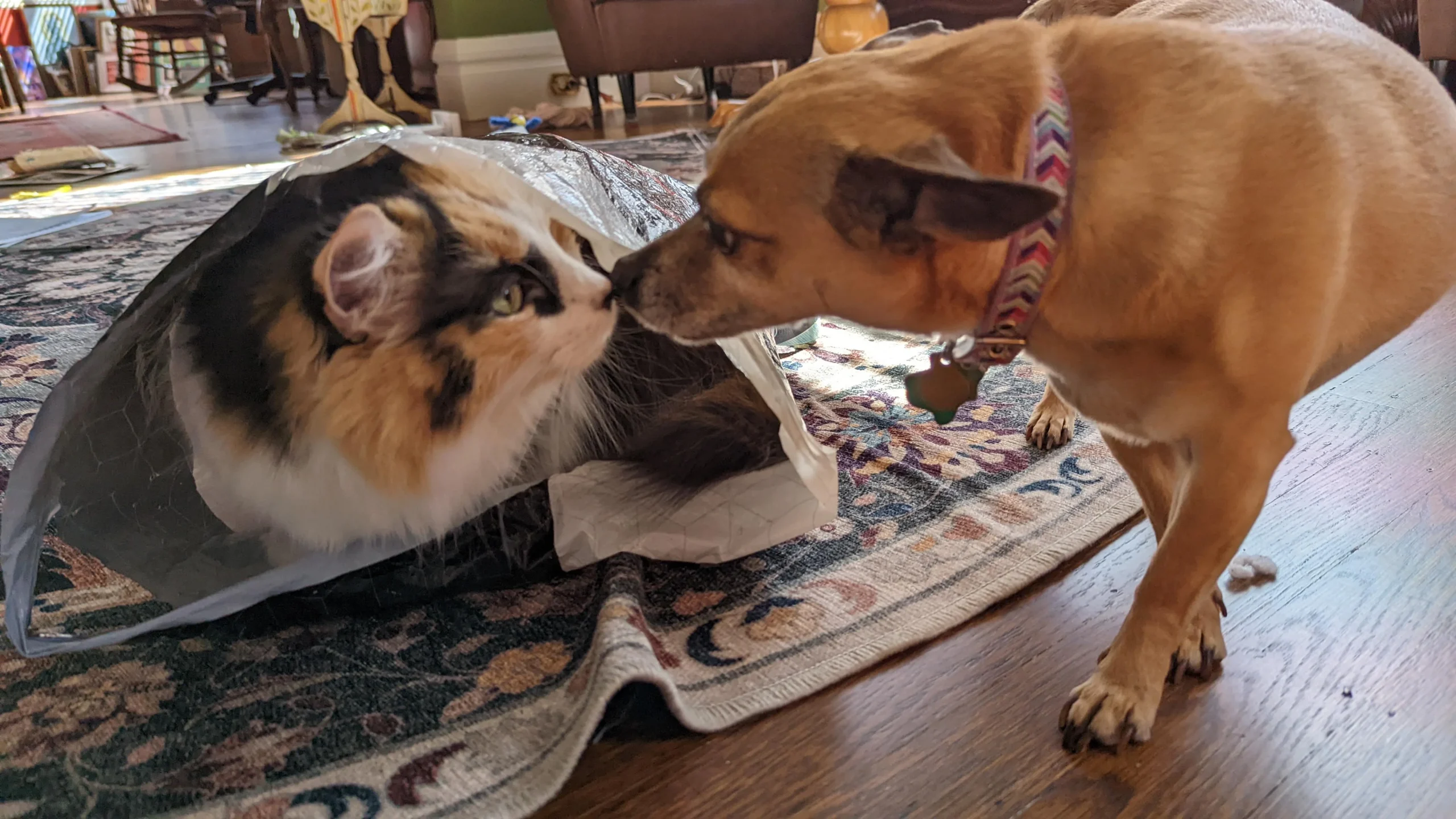
Generally, yes. Chihuahua and cats pairings tend to work well because Chihuahuas typically exhibit a relatively low prey drive compared to many other breeds — they are less likely to chase or harm a cat purely out of instinct. Their alert, sometimes vocal nature can occasionally create tension if not managed, and their lively, sometimes bossy personality means they may try to assert themselves around a new feline housemate. But overall, their small size actually works in their favour: a Chihuahua is far less physically intimidating to a cat than most larger dog breeds, which often makes the dynamic easier to manage from the outset.
Academic research published in the journal Animals, analysing data from 4,678 puppies, found that 26.7% lived with at least one cat — and identified specific factors associated with calm, low-conflict puppy behaviour around resident cats. See the full study on introducing puppies to household cats. The clear conclusion across multiple sources: success is less about breed compatibility in the abstract and far more about how carefully the introduction itself is managed.
7 proven tips for a peaceful Chihuahua and cat home
1. Separate them completely for the first few days
Before any direct contact, keep your Chihuahua and cat in separate rooms entirely — each with their own bedding, food, water, and toys. This allows both animals to hear and smell each other from a safe distance without any pressure of a face-to-face meeting. This scent-only phase, lasting several days, is one of the most important and most frequently skipped steps in a successful introduction.
2. Use a lead for the first visual introductions
When you do introduce them visually, keep your Chihuahua on a lead to control the interaction fully. This prevents any sudden chasing, lunging, or overly enthusiastic approach that could startle the cat or trigger a defensive reaction. A controlled, predictable first visual meeting sets the tone for everything that follows in the Chihuahua and cat relationship.
3. Keep sessions short, calm, and frequent
Start with brief, low-key supervised sessions rather than a single long introduction. Five to ten minutes of calm coexistence, repeated daily, builds familiarity far more effectively than one extended encounter that risks overwhelming either animal. Gradually increase the duration as both your Chihuahua and cat show consistently relaxed body language.
4. Reward calm behaviour generously
Use positive reinforcement throughout the process — reward your Chihuahua with treats and praise for calm, non-reactive behaviour around the cat. This builds a positive association between the cat’s presence and good things happening, which is one of the most reliable ways to shape a lasting peaceful dynamic between a Chihuahua and cat in the same household.
5. Give each animal their own safe space
Both animals need a retreat where they can relax completely undisturbed by the other — separate beds, feeding areas, and litter box placement well away from the dog’s space. A cat in particular needs vertical escape routes (cat trees, shelves) where they can observe from a safe height. This reduces territorial tension and gives both animals genuine agency in how much interaction they want at any given moment.
6. Maintain consistent daily routines
Consistent feeding times, play sessions, and household structure reduce the territorial behaviours that often complicate a new Chihuahua and cat introduction. Predictability lowers stress for both species — cats in particular are highly sensitive to disruption, and a stable routine helps both animals settle into their respective places in the household more quickly.
7. Ensure your Chihuahua gets adequate daily exercise
A Chihuahua with excess pent-up energy is considerably more likely to become over-excited and nip or chase a cat than a dog whose physical and mental needs are being met. Regular daily exercise — see our Chihuahua exercise guide — meaningfully reduces the excitability that most commonly threatens a peaceful Chihuahua and cat dynamic.
Reading body language during introductions
Learning to read both animals’ body language is essential throughout the Chihuahua and cat introduction process:
- Good signs: relaxed posture, normal tail position, curious but calm sniffing, eating or playing normally in each other’s presence
- Caution signs: stiff body posture, prolonged staring, raised fur on the cat, intense fixed focus from the dog
- Stop and separate: hissing, growling, swatting, lunging, or chasing — any of these means the introduction has moved too fast and needs to be slowed down considerably
Some initial tension and cautious curiosity is entirely normal in the first days. Persistent aggression or fear from either animal is the signal to pause and restart the introduction process more gradually.
Does age matter for a successful introduction?
Significantly, yes. Introducing a Chihuahua and cat when both are young — a puppy and a kitten growing up together — typically produces the smoothest, closest long-term bond, since both animals learn from the start that the other species is simply a normal part of life. Introducing an older, more set-in-their-ways animal to a new species companion generally requires considerably more patience, a slower pace, and realistic expectations that full comfort may take weeks rather than days.
It is also worth noting that the animal already established in the home — whether dog or cat — often feels a degree of territorial ownership over the space, which can introduce additional tension regardless of age. Acknowledging and managing this dynamic explicitly, rather than assuming it will resolve itself, improves outcomes considerably.
Common challenges and how to handle them
- The Chihuahua is too bold or bossy: reinforce basic obedience commands like “sit” and “stay” to give you a reliable way to interrupt over-excited behaviour around the cat
- The cat is the aggressor: ensure the cat has ample vertical space and retreat options, and never force interaction — let the cat set the pace of engagement
- Jealousy after a new pet arrives: maintain individual one-on-one time with the existing pet to reassure them that their place in the household has not been displaced
- Slow progress: this is normal and not a sign of failure — some Chihuahua and cat pairings take several weeks to reach full comfort, particularly with older or more cautious animals
When to be concerned
Most tension during a Chihuahua and cat introduction resolves with patience and a properly managed gradual process. Be more concerned if there is any physical altercation causing injury, if one animal is persistently hiding or refusing to eat normally due to stress, or if aggressive behaviour shows no improvement after several weeks of careful, structured introductions. In these cases, consulting a qualified animal behaviourist provides tailored guidance for your specific pets rather than continuing to push an introduction that is not progressing safely.
Browse our available puppies or get in touch with our team for any questions about introducing a new Chihuahua to your existing pets.
Common questions about Chihuahua and cats
Find your perfect multi-pet companion at Chihuvas.
Our puppies are socialised from birth — a great foundation for a calm, adaptable temperament in any household. AKC-registered, Michigan’s most trusted Chihuahua breeder.
View available puppies →