Travelling with a Chihuahua — 7 proven tips for stress-free trips.
Travelling with a Chihuahua is one of the great pleasures of owning this breed. Their compact size makes them the most portable of all dogs — small enough to fly in-cabin on most airlines, easy to carry in a bag or sling, and happy to accompany their owner almost anywhere. But portable does not mean effort-free. Travelling with a Chihuahua successfully requires the right carrier, the right safety measures, an understanding of their temperature vulnerability, and preparation that removes stress for both dog and owner.
As AKC-registered Chihuahua breeders at Chihuvas, our puppies make their first journey — from our Michigan nursery to their new home — at eight weeks old. How that experience goes shapes the dog’s relationship with travel for life. The seven tips in this guide reflect everything we know about making travelling with a Chihuahua as smooth as possible, drawing on the AKC road trip safety guidance and the PDSA guide to travelling with dogs.
Tip 1: Choose the right carrier
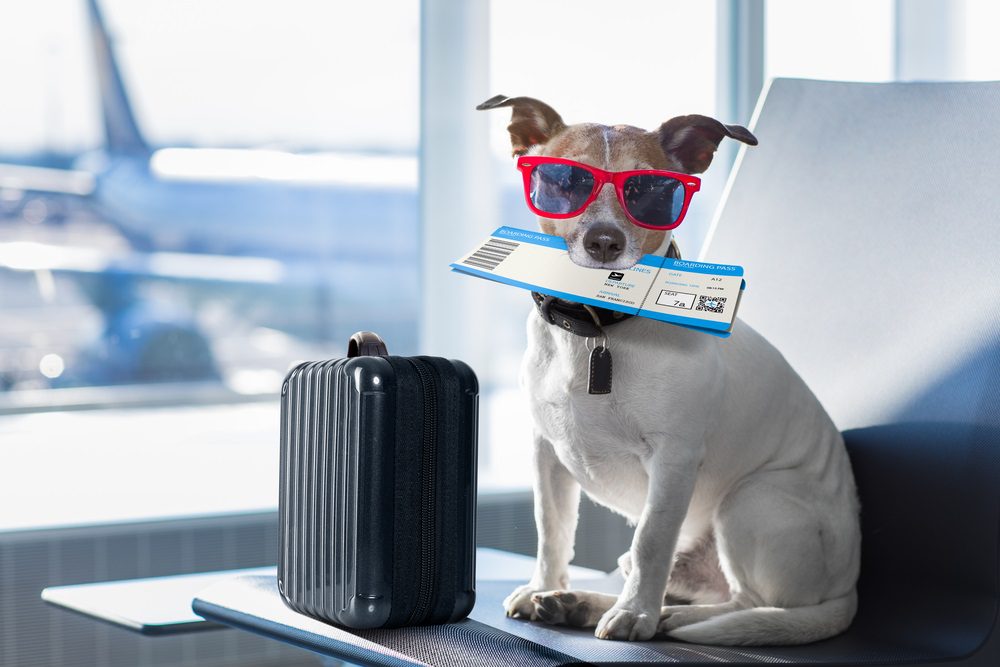
The carrier is the single most important piece of equipment for travelling with a Chihuahua. Everything else builds on having a carrier that is the right size, the right type for the mode of travel, and — critically — one that your Chihuahua associates with safety and comfort before the first journey begins.
For car travel, a hard-sided crate secured with a seatbelt clip offers the best protection in a collision. For air travel, a soft-sided carrier that fits under the airline seat is required — check your specific airline’s maximum dimensions before purchasing, as these vary considerably. The carrier must be large enough for your Chihuahua to stand, turn around, and lie down comfortably, but not so large that they slide around during movement. A carrier that is too large provides less security and more anxiety — not more comfort.
For day-to-day travelling with a Chihuahua — shopping, cafes, short trips — a well-padded shoulder bag carrier or front-facing sling designed for small dogs gives your Chihuahua the comfort of proximity while keeping your hands free. Many Chihuahuas settle more quickly in a carrier positioned at chest height where they can see and scent their owner throughout the journey.
Tip 2: Crate train before you travel
The most important preparation for travelling with a Chihuahua happens at home, long before any journey. A Chihuahua that has been crate trained and associates its carrier with safety, rest, and positive experiences will be a fundamentally different traveller from one that only encounters the carrier on the way to the vet or airport.
Begin carrier training by leaving the open carrier in your home with comfortable bedding inside, meals fed near or inside it, and treats scattered in the back. Progress to short periods with the door closed while you remain in the room, then brief car trips around the block. Build positive association gradually — never force the dog in or use the carrier as punishment. A Chihuahua that retreats to its carrier voluntarily between journeys is a dog that will travel well. This investment in pre-travel preparation pays dividends every time you travel with your Chihuahua.
Tip 3: Car travel with a Chihuahua
Car travel is the most common form of travelling with a Chihuahua and the one with the most specific safety requirements. A Chihuahua must never travel loose in a vehicle. At typical road speeds, an unsecured dog becomes a dangerous projectile in a collision — an unrestrained 4-pound Chihuahua in a 30mph impact exerts a force equivalent to many times its body weight. This is as dangerous for other passengers as it is for the dog.
The three safe options for car travel are: a hard-sided crate secured to the seatbelt or boot, a soft carrier clipped to the seatbelt with a specific carrier belt, or a properly fitted dog harness connected to a seatbelt adaptor. Of these, a secured crate is the safest in a serious collision. Whichever system you use, test the security before a long journey — a carrier that slides freely is not adequately restrained.
For longer car journeys when travelling with a Chihuahua, plan a stop every two hours. Offer water, a toilet opportunity on lead in a safe area, and a few minutes of calm movement before continuing. Never feed a full meal immediately before a long car journey — a light stomach reduces the risk of motion sickness. If your Chihuahua shows signs of car sickness — excessive drooling, restlessness, or vomiting — speak to your vet about anti-nausea options for longer trips.
Tip 4: Manage temperature carefully
Temperature is the most critical safety consideration when travelling with a Chihuahua. Chihuahuas are extremely sensitive to cold and heat due to their small body mass and minimal fat reserves. They lose body heat rapidly in cool environments and overheat quickly in warm ones — both within ranges that most humans consider comfortable.
Cold weather travel: always pack a dog coat or jumper for your Chihuahua on any journey in cool conditions. In the car, keep the cabin temperature warm and position the carrier away from air conditioning vents. In cool weather, a shivering Chihuahua is not just uncomfortable — it is burning energy reserves it cannot easily replace and is at risk of hypothermia.
Hot weather travel: never leave a Chihuahua in a parked car in warm weather — even briefly, even in shade, even with a window open. A car parked in sun on a mild day can reach dangerous temperatures within minutes. During hot weather travel, keep the carrier away from direct sunlight, ensure airflow, and offer water frequently. Watch for excessive panting, drooling, or lethargy as early signs of heatstroke — which is a medical emergency.
Tip 5: Flying with a Chihuahua
Flying is one of the most convenient ways of travelling with a Chihuahua given their small size — they fit comfortably in-cabin on most airlines and avoid the stress and risk of cargo travel. The process requires more advance planning than car travel but is very manageable with the right preparation.
For US readers: most major US airlines including American, Delta, and United allow small dogs in-cabin for a fee (typically $100 to $150 each way). The carrier must fit under the seat in front of you and meet the airline’s maximum dimensions. Book your pet’s space at the same time as your own ticket — most airlines limit the number of pets per cabin.
For UK readers: the situation is different and more complex. No UK airlines currently allow pets in the cabin on inbound flights to the UK — pets arriving in the UK must travel as cargo, regardless of size. European airlines flying outbound from the UK do allow in-cabin pets on many routes to Europe. Always verify current rules directly with your specific airline before booking, as policies change.
Key flying tips for travelling with a Chihuahua: do not sedate your dog before flying — sedation at altitude can cause dangerous respiratory depression in small dogs and is strongly discouraged by most veterinarians. Provide water access throughout the journey. Line the carrier with absorbent bedding. Bring a familiar blanket or worn item of your clothing to provide comfort scent. Practice with the carrier at home for weeks before the flight.
Tip 6: What to pack for travelling with a Chihuahua
A well-packed travel kit makes travelling with a Chihuahua significantly smoother. The essentials:
- Water and a collapsible travel bowl — offer water every 2 hours on car journeys and at every opportunity when flying
- Familiar bedding — a small blanket or mat from home that carries the dog’s scent provides comfort in unfamiliar environments
- A worn item of your clothing — your scent is the most reassuring presence for a Chihuahua in a carrier
- Food and treats — bring enough of the dog’s usual food for the trip and a few high-value training treats for rewarding calm behaviour
- Dog coat or jumper — essential for any journey in cool conditions
- Lead and harness — never use a collar alone for Chihuahua exercise stops, as collar pressure can worsen tracheal collapse
- Poop bags — always
- Vet records and vaccination documentation — essential for air travel and international trips, useful for any emergency
- Any regular medication — with enough supply for the full journey plus a day or two extra
Tip 7: Managing travel anxiety in Chihuahuas
Some Chihuahuas are naturally anxious travellers, particularly if their first journey experiences were stressful. The most effective approach to managing travel anxiety when travelling with a Chihuahua is prevention through gradual, positive exposure — building from brief, positive car trips at home to longer journeys over weeks and months.
Signs of travel anxiety include panting, whining, drooling, restlessness, refusing to enter the carrier, or vomiting. For mild anxiety, the strategies above — familiar carrier, familiar scent, covering the carrier with a light cloth, keeping your own voice calm — address most cases. For persistent or severe travel anxiety, speak to your vet about options including anxiety wraps, pheromone sprays (Adaptil is widely used and evidence-based), or prescription anxiety medication for longer journeys.
The long-term solution is always the same: more positive travel experiences. A Chihuahua that has made dozens of short, pleasant car trips is a dog that travels well. Every Chihuahua travel tip ultimately comes back to the same principle: prepare the dog, not just the journey. See our related guides on Chihuahua separation anxiety and Chihuahua training tips for complementary approaches to building a confident, settled dog. Browse our available puppies or get in touch with our team.
Common questions about travelling with a Chihuahua
Find your perfect travel companion at Chihuvas.
Our AKC-registered Chihuahua puppies are socialised from birth — confident, adaptable, and ready for life’s adventures. Michigan’s most trusted Chihuahua breeder.
View available puppies →