The best chihuahua harness: types, sizing and fit
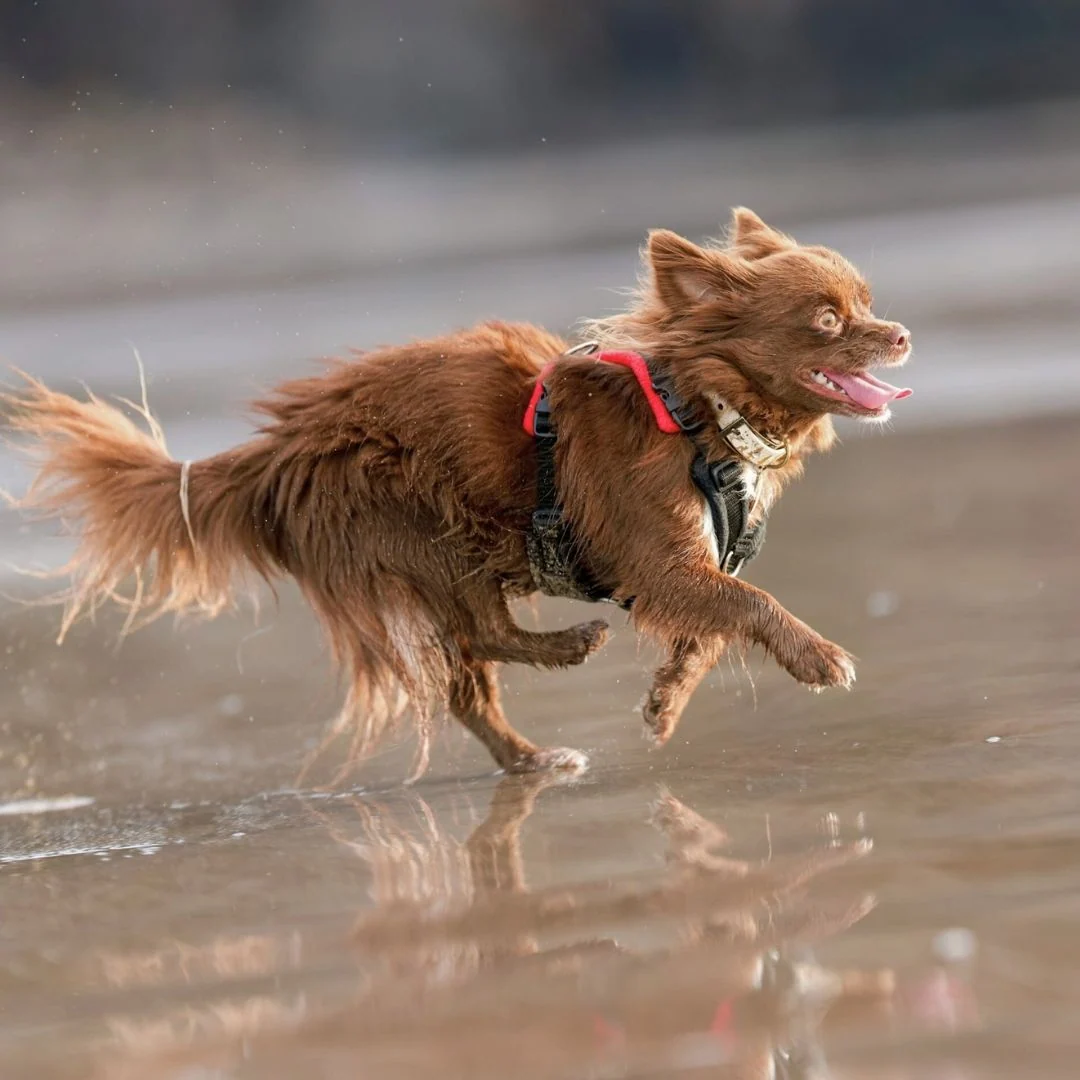
A good chihuahua harness is one of the most important things you will buy for your dog. It keeps walks safe and comfortable and protects one of the breed’s most delicate body parts: the windpipe.
We are AKC chihuahua breeders in Traverse City, Michigan, and every puppy we raise learns to wear a soft harness before it goes home. This guide explains why a chihuahua harness beats a collar, the best types, how to measure and fit one, training tips and safety advice.
Chihuahuas are tiny, with adults weighing no more than 6 pounds according to the AKC chihuahua breed page. Small breeds are prone to tracheal problems, as the VCA Animal Hospitals guide to tracheal collapse explains, which is why harnesses matter so much.
Why a chihuahua harness matters
A chihuahua harness protects your dog’s neck and windpipe. Chihuahuas have small, delicate tracheas, and pressure from a collar can damage them over time.
- Spreads pressure across the chest and shoulders.
- Reduces the risk of tracheal collapse and coughing.
- Gives better control without pulling on the neck.
- Makes it harder for a tiny dog to slip free.
- Lets you lift your dog safely in an emergency.
Our chihuahua collapsed trachea guide explains this condition in detail.
Choose a soft, lightweight chihuahua harness in XXS or XS, measured to your dog’s chest and neck. Vest and step-in styles suit most chihuahuas, and you should be able to slide two fingers under the straps. Use it for every walk instead of clipping a leash to a collar.
Harness vs collar
Most vets recommend a chihuahua harness over a collar for walks. Here is how they compare.
| Feature | Harness | Collar |
|---|---|---|
| Pressure on the neck | Low | High when the dog pulls |
| Windpipe protection | Good | Poor |
| Escape risk | Low with a good fit | Higher for tiny heads |
| Control | Good | Fair |
| Best use | Walks and outings | Holding ID tags indoors |
A light collar with an ID tag is still useful at home. Just clip the leash to the harness, not the collar.
Types of chihuahua harness
There are several styles of chihuahua harness. The right one depends on your dog’s shape, coat and behavior.
| Type | Pros | Cons |
|---|---|---|
| Vest harness | Soft, comfortable, spreads pressure | Can be warm in summer |
| Step-in harness | Easy to put on; no over-the-head step | Some dogs can back out |
| H-style | Light, adjustable | More straps to adjust |
| Y-front | Leaves shoulders free to move | Fit must be precise |
| Escape-proof | Extra belly strap for wriggly dogs | Bulkier |
| Coat harness | Warmth and walking in one | Only for cold weather |
Many owners have two: a vest for everyday walks and a coat harness for winter.
Vest harnesses
A soft vest is one of the most popular choices of chihuahua harness. It covers more of the chest, so pressure spreads evenly.
- Made from mesh or soft fabric.
- Usually fastens with Velcro and a buckle.
- Comfortable for dogs that dislike straps.
- Choose breathable mesh for warmer weather.
Make sure the vest doesn’t rub under the front legs. Some tiny dogs need an XXS to avoid gaps.
Step-in harnesses
Step-in harnesses are great for dogs that dislike things going over their head. Your dog steps in with its front feet, and you clip it over the back.
They are quick to put on, but check the fit carefully. A loose step-in chihuahua harness can let a wriggly dog back out.
H-style and Y-style harnesses
Strap harnesses are light and highly adjustable. They suit dogs that get hot easily or dislike fabric vests.
- H-style harnesses have a strap around the neck and one around the chest.
- Y-front harnesses form a Y shape across the chest, leaving the shoulders free.
- Both need careful adjustment for tiny dogs.
- Look for padding where straps touch the skin.
Escape-proof harnesses
Some chihuahuas are escape artists. An escape-proof chihuahua harness adds a second strap further back on the belly, making it much harder to wriggle free.
These are a good choice for nervous dogs, rescue dogs and puppies who panic on walks. Make sure the extra strap doesn’t press on the belly or groin.
What to look for in a chihuahua harness
Use this checklist when buying a chihuahua harness.
- Small, light buckles and clips sized for toy breeds.
- Soft padding on the chest and under the legs.
- At least two adjustment points.
- A back clip for everyday walks.
- Reflective strips for dark evenings.
- Machine-washable fabric.
- A sturdy D-ring that won’t bend.
Avoid heavy hardware, which can weigh down a tiny dog and rub its skin.
How to measure for a chihuahua harness
Measuring is the key to a good chihuahua harness fit. Use a soft tape measure while your dog stands.
| Measurement | Where to measure |
|---|---|
| Chest (girth) | Around the widest part of the chest, just behind the front legs |
| Neck | Around the base of the neck, where a collar would sit |
| Weight | Helps choose between sizes |
Measure twice and write it down. If your dog is between sizes, choose the one that adjusts to fit both measurements.
Chihuahua harness size chart
Sizes vary by brand, so always check each brand’s chart. This is a general guide for a chihuahua harness.
| Size | Chest girth | Typical chihuahua |
|---|---|---|
| XXS | 7 to 10 in | Young puppies and very tiny adults |
| XS | 10 to 13 in | Most adult chihuahuas |
| S | 13 to 16 in | Larger or stocky chihuahuas |
| M | 16 in and up | Chihuahua mixes |
Puppies grow fast, so check the fit every week. Our chihuahua weight chart helps you estimate adult size.
How to fit a chihuahua harness
A good chihuahua harness fit is snug but comfortable. Follow these steps.
- Loosen all straps before putting the harness on.
- Put it on and fasten the buckles.
- Tighten until you can slide two fingers under each strap.
- Check the chest strap sits behind the front legs without rubbing.
- Make sure the neck opening isn’t pressing on the throat.
- Gently pull backwards to check your dog can’t slip out.
Recheck the fit after a few minutes of walking, as straps can loosen. Check again after baths, as wet fabric can stretch slightly.
Choosing a leash
A light leash pairs best with a chihuahua harness. Heavy leashes and big clips can weigh down a tiny dog.
- Choose a lightweight leash with a small clip.
- A 4 to 6 foot leash suits most walks.
- Avoid retractable leashes, which can jerk a small dog suddenly.
- Use a longer training line in safe, open spaces.
Keep the leash loose and relaxed. A tight leash makes many dogs pull or feel anxious.
Harnesses for puppies
Puppies can start wearing a soft chihuahua harness at home from about 8 to 10 weeks. Early, positive practice makes walks easy later.
- Choose an adjustable XXS harness that can grow a little.
- Check the fit every few days.
- Keep sessions short and fun.
- Wait for your vet’s advice before walking in public places.
Our chihuahua puppy checklist lists everything your puppy needs at home.
Chihuahua harness training
Most dogs accept a chihuahua harness quickly with the right approach. Make it a happy experience from the start.
- Let your dog sniff the harness and reward with a treat.
- Touch the harness to its body and reward.
- Put the harness on for a few seconds, then take it off and reward.
- Gradually increase the time it stays on.
- Add the leash indoors, then try short walks outside.
Never force a harness onto a scared dog. Our chihuahua training tips explain positive reinforcement.
Walking tips
Walks are about sniffing and exploring as much as exercise. Let your dog set a comfortable pace.
- Keep walks to 15 to 20 minutes for most adults.
- Avoid very hot pavements and icy paths.
- Pick your dog up near large, unfamiliar dogs.
- Bring water on longer walks.
- Reward your dog for walking calmly beside you.
Our chihuahua exercise guide explains how much activity small dogs need.
If your chihuahua pulls
Pulling is common, even in tiny dogs. A chihuahua harness reduces strain, but training stops the habit.
- Stop walking when the leash goes tight.
- Move forward again only when the leash is loose.
- Reward your dog for walking beside you.
- Change direction often to keep your dog focused.
- Keep sessions short and fun.
Front-clip harnesses can help with pulling in larger dogs, but most chihuahuas do best with a back clip and simple training.
Car safety
A chihuahua harness can also keep your dog safe in the car. Never let a small dog ride loose or on your lap while driving.
- Use a crash-tested car seat or carrier.
- Clip the car seat tether to the harness, never a collar.
- Keep your dog in the back seat, away from airbags.
- Remove the leash during the drive to prevent tangles.
Our travelling with a chihuahua guide has more travel tips.
Weather and seasons
Seasons change what your dog needs on walks.
- Winter: a coat harness or a harness over a sweater keeps your dog warm.
- Summer: breathable mesh harnesses help prevent overheating.
- Rain: choose quick-drying fabrics and dry the harness after walks.
- Dark evenings: add reflective strips or a clip-on light.
Our keeping your chihuahua warm in winter guide covers cold-weather walks.
Cleaning and care
A clean chihuahua harness is more comfortable and lasts longer.
- Wash every two to four weeks, or when dirty.
- Close Velcro and buckles before washing.
- Air dry rather than tumble dry.
- Check stitching, buckles and D-rings regularly.
- Replace worn or frayed harnesses.
Collars and ID tags
Even with a harness, your dog needs identification. In many states, dogs must wear an ID tag in public, and a microchip is your backup if a tag is lost.
- Use a light, breakaway collar for ID tags indoors.
- Or attach a small tag to the harness for walks.
- Keep your phone number current on tags and the microchip.
- Choose small, quiet tags that won’t weigh down a tiny neck.
Never clip a leash to a breakaway collar. It is designed to release under pressure.
Harnesses for older dogs
Older chihuahuas may have stiff joints, weaker muscles or breathing problems. A comfortable harness becomes even more important.
- Choose a soft, padded vest that is easy to put on.
- Pick step-in styles for dogs that dislike things over the head.
- Look for a handle on the back to help lift or steady your dog.
- Keep walks shorter and slower.
Our guide to caring for an old chihuahua covers other ways to keep seniors comfortable.
Dogs with knee or back problems
Chihuahuas are prone to knee problems like luxating patella. A harness with a back handle lets you lift your dog gently over steps or curbs.
- Avoid harnesses that restrict the shoulders or front legs.
- Lift your dog with a hand under the chest and rear, not by the harness alone.
- Keep walks on flat, even ground.
- Ask your vet about the best support harness for your dog.
Our chihuahua luxating patella guide explains this common knee condition.
What to spend
Good harnesses for tiny dogs don’t need to cost a lot. Price depends on materials, padding and features.
| Type | Typical price range |
|---|---|
| Basic strap harness | $10 to $20 |
| Soft vest harness | $15 to $30 |
| Escape-proof harness | $20 to $40 |
| Coat harness | $25 to $50 |
| Lightweight leash | $8 to $20 |
Spend a little more on a well-fitted harness with good buckles. It lasts longer and keeps your dog safer.
Indoors vs outdoors
A harness is walking gear, not everyday clothing. Taking it off at home keeps your dog comfortable and protects its coat.
- Put the harness on just before walks.
- Take it off once you are home and your dog is dry.
- Store it by the door with the leash so it is easy to find.
- Check for burrs, mud or wet patches after each walk.
Long-coat chihuahuas especially benefit from time without a harness, as straps can cause matting where they rub.
Brush under the strap areas a few times a week to keep the coat smooth and spot any redness early.
Common mistakes
Avoid these common harness mistakes.
- Buying a size by guesswork instead of measuring.
- Leaving the harness on all day.
- Clipping the leash to the collar instead of the harness.
- Using a heavy leash or big clip.
- Not checking the fit as a puppy grows.
Signs of a poor fit
Watch for signs that your chihuahua harness doesn’t fit well.
- Red marks or hair loss under the straps.
- Your dog walks stiffly or won’t move.
- Your dog can back out of the harness.
- Coughing or gagging when walking.
- The harness twists or slides to one side.
If you notice any of these, adjust the straps or try a different size or style.
Myths about the chihuahua harness
There are a few myths about using a chihuahua harness. Here are the facts.
| Myth | Fact |
|---|---|
| Harnesses make dogs pull more | Training, not the harness, stops pulling |
| Collars are fine for tiny dogs | Collars can strain a delicate windpipe |
| Any small harness will do | Fit and measurements matter |
| Harnesses can stay on all the time | Remove them indoors to protect skin and coat |
| Puppies are too young for harnesses | Short, positive practice can start early |
Our chihuahua health problems guide covers other conditions small dogs face.
Our approach to walks
At Chihuvas, every puppy gets used to wearing a soft chihuahua harness in our Traverse City, Michigan home before it leaves. We show families how to measure and fit one and explain why harnesses protect tiny windpipes.
Every puppy goes home with vaccinations, a microchip, a vet health certificate, AKC registration and a two-year genetic health guarantee. We deliver nationwide by in-cabin chihuahua flight nanny and stay in touch for life.
See our available puppies, send us an inquiry or meet our family on our chihuahua breeder in Michigan page.
Measure carefully, fit snugly and always clip the leash to the harness. Small steps protect a small dog’s neck for life.
Chihuvas breeding teamChihuvas is an AKC-registered Chihuahua breeder based in Michigan, and we deliver our puppies nationwide across the US. Every puppy is health-checked, vaccinated for their age and socialised from birth. See our available puppies or send us an inquiry.
Common questions about chihuahua harness
Looking for a new puppy?
Every puppy is harness-trained at home, raised in our Michigan home and delivered nationwide with a health guarantee.
View available puppies →