Blue chihuahua: the rare color explained
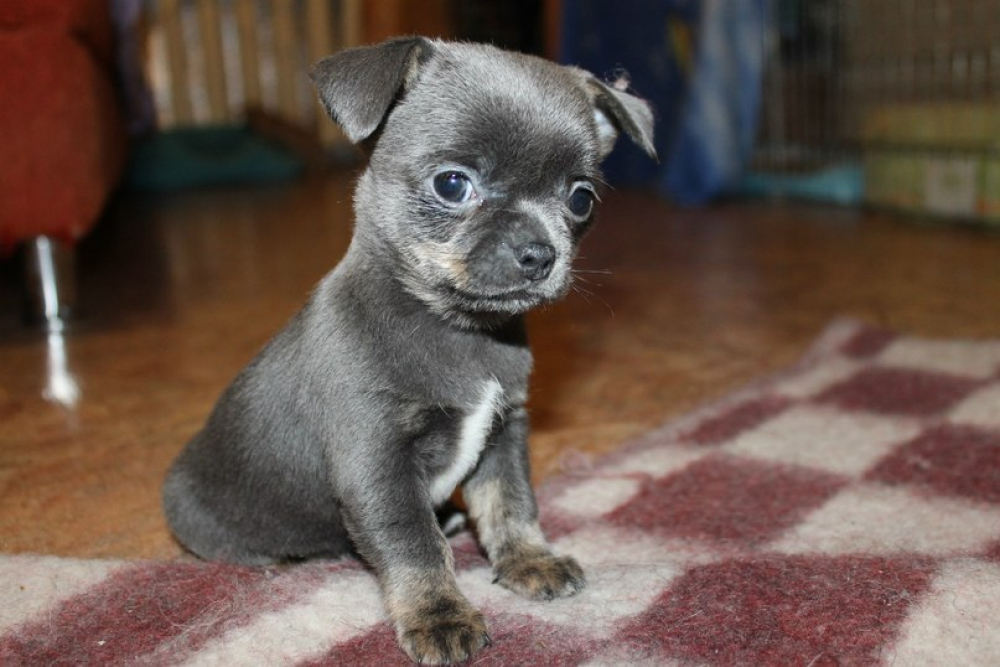
A blue chihuahua has a soft, smoky gray coat that stands out in any litter. The color is caused by a recessive gene that dilutes black, which makes blue puppies less common and highly sought after.
We are AKC chihuahua breeders in Michigan, and our litters include several blue and blue-and-white puppies. This guide explains what makes a blue chihuahua, the genetics behind the color, the shades and markings, health questions, AKC status, price and how to choose one.
For background on accepted colors, see the Chihuahua Club of America breed standard and the AKC chihuahua page.
What is a blue chihuahua?
A blue chihuahua has a coat that looks gray, silver or slate rather than black. Genetically, it is a black dog whose pigment has been diluted, so the color appears softer and lighter.
The same gene also lightens the skin, so blue dogs usually have gray or blue-gray noses, eye rims and paw pads instead of black. Eyes are often a little lighter too, ranging from dark brown to amber or gray-green.
Blue can appear on its own or with other markings, such as tan points, white patches or fawn. It occurs in both smooth-coat and long-coat chihuahuas.
A blue chihuahua is a black dog with diluted pigment, caused by two copies of a recessive gene from both parents. Blues have gray noses and paw pads, are AKC registrable and are mostly as healthy as other colors. Ask the breeder about color dilution alopecia, a coat condition seen in some dilute dogs.

How the blue gene works
Blue comes from a dilution gene, often written as D for normal color and d for dilute. The dilute version is recessive, so a puppy needs two copies, one from each parent, to be blue.
| Genes | Written as | Coat result |
|---|---|---|
| No dilution | DD | Full-strength color, does not carry blue |
| One dilute copy | Dd | Full-strength color, but carries blue |
| Two dilute copies | dd | Diluted color: blue (from black) or lilac (from chocolate) |
This is why two black parents can have a blue puppy. If both parents carry one hidden dilute gene, about one puppy in four will be blue.
Breeders who want blue puppies often DNA test their dogs for the dilute gene. It lets them plan pairings instead of guessing, and it helps them avoid producing puppies from lines with coat problems.
Blue chihuahua shades and markings
No two blues look exactly alike. A blue chihuahua can be pale silver or deep slate, and the markings add even more variety.
| Type | What it looks like |
|---|---|
| Solid blue | Even gray or slate all over |
| Blue and tan | Blue body with tan points on the face, chest and legs |
| Blue and white | Blue with white patches, often on the chest, feet and face |
| Blue fawn | Fawn coat with a bluish overlay and gray nose |
| Blue brindle | Blue base with darker stripes |
| Blue tricolor | Blue, tan and white together |
Our current litter includes a blue smooth-coat and several blue-and-white long-coats. Our chihuahua colors guide explains the full range of colors and markings.
Blue chihuahua vs blue merle
These two get confused all the time, especially in online listings. They look different and come from completely different genes.
| Blue | Blue merle | |
|---|---|---|
| Cause | Recessive dilution gene (dd) | Dominant merle gene (Mm) |
| Look | Even gray all over | Black patches on a gray base |
| Nose | Gray or blue-gray | Often black, sometimes pink patches |
| Eyes | Brown, amber or gray-green | Can be blue, partly blue or odd |
| Main health watch-out | Color dilution alopecia in some lines | Double merle if two merles are bred |
A dog can also be both, a dilute merle, which is less common. Our merle chihuahua guide explains the merle pattern and its genetics in detail.
Blue vs lilac, silver and gray
Several color names overlap with blue, and breeders don’t always use them the same way. Here is how they usually compare.
- Lilac or isabella: diluted chocolate, giving a pinkish-gray or lavender coat and a liver-gray nose.
- Silver: usually a very pale blue, not a separate gene.
- Gray: another name for blue in casual use.
- Blue fawn: a fawn dog that is also dilute, with a bluish cast and gray nose.
If you are unsure what a listing means, ask the breeder whether the parents have been DNA tested for dilution. The test result is clearer than any color name.
Nose, eyes and skin
The dilution gene affects more than the coat. A blue chihuahua usually has gray or slate-colored skin on the nose, lips, eye rims and paw pads.
Eyes are often lighter than in black dogs, sometimes amber or a greenish-gray. This is normal for dilute dogs and not a sign of eye disease.
Lighter skin can be more sensitive to sun, especially on the nose. Limit strong midday sun in summer, and see our chihuahua eye care guide for everyday eye checks.
How rare is a blue chihuahua?
A blue chihuahua is less common than fawn, cream, black or chocolate, but it isn’t the rarest color. The reason it is uncommon is genetics: both parents must carry the hidden dilute gene.
Demand for blue has grown in recent years, which has pushed prices up. Unfortunately, it has also attracted breeders who focus on color over health, so careful buyers ask more questions.
Colors like lilac, solid white and some rare patterns are harder to find than blue. If a seller calls blue “ultra rare” to justify a very high price, treat it as marketing.
Health and color dilution alopecia
Most blue dogs are as healthy as any other chihuahua. The one color-linked condition worth knowing about is color dilution alopecia, often shortened to CDA.
CDA can affect dogs with diluted coats, including blues and lilacs. It usually appears in young adults as thinning hair, a dull or brittle coat, dry flaky skin and sometimes skin infections, often starting on the back.
- It isn’t life-threatening, but it is usually lifelong.
- It can’t be cured, though gentle shampoos, supplements and vet care can help manage it.
- Not every blue dog gets it, and it tends to run in certain lines.
- A vet can confirm it with a skin examination and sometimes a biopsy.
Before you choose a blue chihuahua, ask the breeder whether any dogs in their lines have had hair loss or skin problems. An honest breeder will tell you, and will avoid breeding dogs with CDA.
Apart from CDA, blue dogs share the same breed health issues as any chihuahua. Our chihuahua health problems guide and chihuahua allergies guide cover skin and coat issues in more depth.
Coat and skin care for blue dogs
Blue coats benefit from gentle care. Harsh shampoos and frequent bathing can dry out skin that may already be a little more sensitive.
- Brush smooth coats weekly and long coats two or three times a week.
- Bathe only when needed, using a mild, moisturizing dog shampoo.
- Feed a good-quality diet with healthy fats for skin and coat.
- Use a sweater in cold weather if the coat is thin.
- Check regularly for thinning patches or flaky skin and mention changes to your vet.
See our how to bathe a chihuahua and chihuahua grooming guide for step-by-step routines.
How blue puppies change as they grow
Blue puppies are often born darker or lighter than they will be as adults. The final shade usually settles over the first year.
Long-coat blues can look quite different once the full adult coat grows in, often with a silvery sheen on the longer hair. Smooth coats tend to keep a more even color.
Puppy eyes are often blue-gray at first and change over the first few months. Nose and paw pads stay gray, which is one easy way to recognize a true blue.
Does color affect temperament?
No. A blue chihuahua has the same personality range as any chihuahua: loyal, alert, affectionate and full of character. Color has no effect on behavior.
Temperament comes from the parents and from early socialization. Our guides to chihuahua socialization and training tips matter far more than coat color.
Breeding blue responsibly
Good breeders treat color as the last thing they choose for, not the first. Health, temperament and structure come before any shade.
Because blue is recessive, some breeders pair blue to blue to get all-blue litters. That isn’t harmful in itself, but repeatedly breeding dilute to dilute without watching for coat problems can concentrate CDA in a line.
- Health test parents for patella, heart and eyes before breeding.
- DNA test for the dilute gene to plan pairings.
- Avoid breeding any dog that has shown hair loss or chronic skin problems.
- Keep records of coat quality in adult offspring.
- Never pair two merles, whatever their base color.
Ask the breeder how they choose pairings. A thoughtful answer about health and coat quality tells you far more than a promise of a particular shade.
Blue in long coats and smooth coats
On a smooth coat, blue looks sleek and even, with a velvety finish that shows off the color well. It is easy to spot any thinning patches early.
On a long coat, blue often has a softer, silvery look, especially on the ear fringes, chest and tail. The undercoat may be lighter than the top coat, giving a shimmering effect.
Grooming needs follow the coat length, not the color. Our long coat vs smooth coat comparison explains the differences in daily care.
Living with a blue dog day to day
Day-to-day life with a blue dog is the same as with any chihuahua. They need small, regular meals, gentle exercise, plenty of company and warmth in cold weather.
The main extras are sun and skin care. Pale noses can burn, and a thin or dull coat is worth mentioning to your vet early rather than waiting.
Regular vet checks, a healthy weight and good dental care will do more for your dog’s long-term health than anything color-related. Our chihuahua dental care guide is a good place to start.
Is a blue chihuahua AKC registered?
Yes. The US breed standard allows any color, solid, marked or splashed, so a blue chihuahua can be registered and shown in AKC events like any other color.
When the breeder registers the litter, each puppy’s color is recorded, with options such as blue, blue and tan, blue and white or blue fawn. Make sure the color on the paperwork matches your puppy.
Our guides to the AKC chihuahua breed standard and AKC limited vs full registration explain what registration means for you.
How much does a blue chihuahua cost?
A blue chihuahua often costs more than common colors because of demand. Prices also depend on coat length, markings, size and pedigree.
Our current blue and blue-and-white puppies range from $1,500 to $2,750, in line with our other colors. Our chihuahua cost guide explains what a fair puppy price includes.
A breeder who charges a large premium for blue but can’t show health records is putting color ahead of health. Pay for good breeding, not just a rare shade.
How to choose a blue chihuahua puppy
Choosing a blue puppy means asking a few color-specific questions on top of the usual checks.
- Have the parents been DNA tested for the dilute gene?
- Has any dog in the lines had hair loss, thinning coat or chronic skin problems?
- Have the parents had OFA patella, cardiac and eye checks?
- Can I see the puppy and parents on a live video call?
- Is the puppy AKC registered, with its color recorded correctly?
- What does the health guarantee cover?
Our guides on how to choose a chihuahua breeder. Rare colors are also a common lure in scams, so be careful with cheap blue listings.
Common myths about blue dogs
| Myth | The truth |
|---|---|
| Blue chihuahuas are unhealthy | Most are healthy; CDA affects some dilute lines |
| Blue means merle | Blue and merle are different genes |
| Blue is the rarest color | Less common, but not the rarest |
| Blue dogs can’t be AKC registered | Any color is allowed in the US standard |
| Two blue parents make healthier blues | Health depends on lines and testing, not color pairings |
If you hear a claim about blue dogs that sounds dramatic, ask your vet or a breed club breeder. Most worries about the color come from a few poorly bred lines, not the color itself.
Knowing the facts helps you choose a blue puppy for the right reasons, and from the right breeder.
Name ideas for a blue puppy
Many families like a name that suits the smoky color. A few favorites we hear from our puppy families are below.
- Soft and classic: Smokey, Ash, Misty, Pebble, Willow.
- Stormy and bold: Storm, Thunder, Slate, Flint, Steel.
- Sweet and playful: Blueberry, Bluebell, Indigo, Dusty, Skye.
- Elegant: Sterling, Silver, Pearl, Luna, Opal.
Choose a short name of one or two syllables, which is easier for a puppy to learn. Use it often in happy moments, with treats and praise, so your puppy learns to love hearing it.
Our blue puppies
At Chihuvas, our blue puppies are raised in our Traverse City, Michigan home alongside every other color. Parents are AKC registered and health checked, and every blue chihuahua we place goes home with the same care as its littermates.
Each puppy comes with vaccinations, a microchip, a vet health certificate, AKC registration and a two-year genetic health guarantee. We deliver nationwide by in-cabin chihuahua flight nanny.
Browse our blue and blue-and-white puppies on our available puppies page, send us an inquiry or meet our family on our chihuahua breeder in Michigan page.
Blue is a beautiful color, but it should never be the only reason to choose a breeder. Ask about the parents’ health first, and the color second.
Chihuvas breeding teamChihuvas is an AKC-registered Chihuahua breeder based in Michigan, and we deliver our puppies nationwide across the US. Every puppy is health-checked, vaccinated for their age and socialised from birth. See our available puppies or send us an inquiry.
Common questions about blue chihuahua
Meet our blue puppies.
Our blue and blue-and-white puppies are AKC registered, raised in our Michigan home and delivered nationwide.
View available puppies →