Merle chihuahua: genetics, health and price
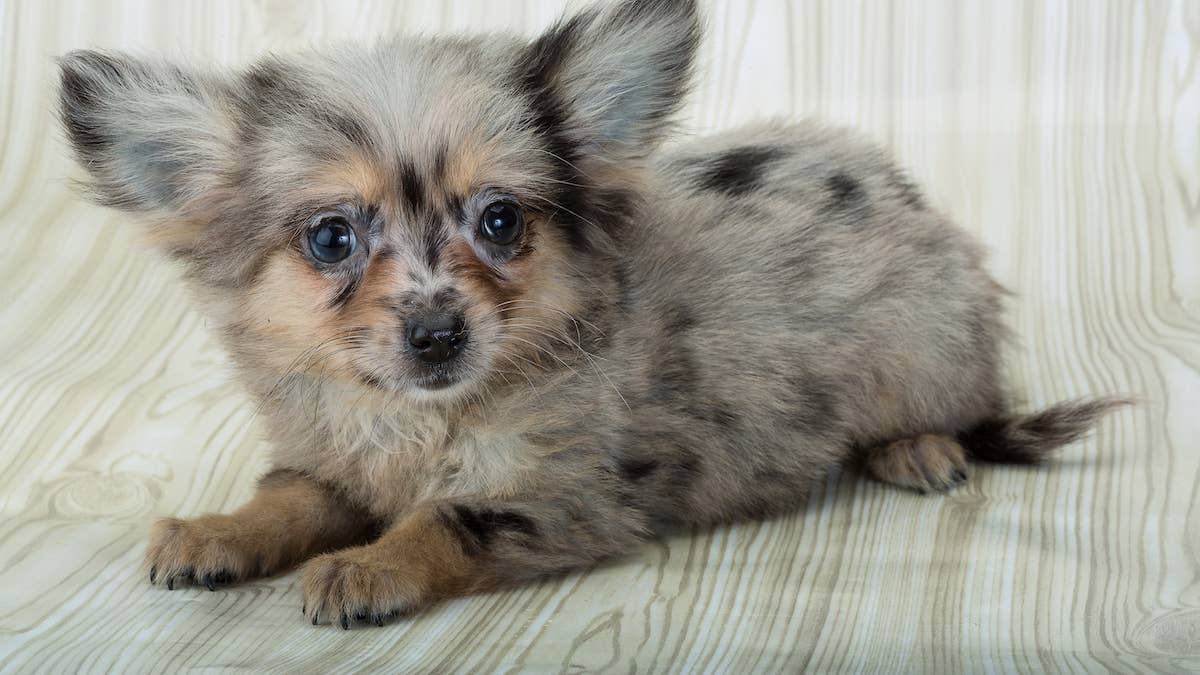
A merle chihuahua is one of the most eye-catching chihuahuas you can find, with a marbled coat of darker patches on a softer, diluted background. The pattern is beautiful, but it comes with genetics every buyer should understand before choosing one.
We are AKC chihuahua breeders in Michigan, and we raise merle puppies alongside solid colors. This guide explains what makes a merle chihuahua, the different types, the health questions around double merles, AKC status, price and how to choose one responsibly.
For background, see the Chihuahua Club of America breed standard and the club’s article on the merle coat pattern.
What is a merle chihuahua?
A merle chihuahua has a coat pattern called merle, which creates irregular darker patches on a lighter, diluted version of the dog’s base color. No two merles look exactly alike.
The pattern can appear on both smooth-coat and long-coat chihuahuas. On long coats it can be softer and harder to see, while on smooth coats the patches are usually crisp and obvious.
Merle often comes with other changes, such as blue or partly blue eyes and pink patches on the nose or paw pads. These are part of how the gene affects pigment.
A merle chihuahua has darker patches on a diluted coat from one copy of the merle gene, and single merles from a merle and a solid parent are generally healthy. Double merles, from two merle parents, carry a high risk of deafness and eye defects. The AKC registers merles, and the US standard allows any color.

How merle genetics work
Merle is caused by a dominant gene, often written as M. A dog only needs one copy to show the merle pattern.
| Genes | Written as | What you see |
|---|---|---|
| No merle | mm | Solid or marked coat, no merle pattern |
| One merle copy | Mm | Merle pattern: a single merle |
| Two merle copies | MM | Double merle, often mostly white, high health risk |
This is why breeding pairs matter so much. A merle chihuahua bred to a solid-colored dog produces, on average, about half merle and half solid puppies, all with at most one merle copy.
When two merles are bred together, about one puppy in four inherits two copies of the gene. Those double merle puppies are the ones with serious health problems.
Types of merle chihuahua
The look of a merle depends on the base color underneath the pattern.
| Type | Base color | Typical look |
|---|---|---|
| Blue merle | Black | Black patches on a gray-blue base, the most common type |
| Chocolate merle | Chocolate | Dark brown patches on a lighter tan or beige base |
| Lilac or isabella merle | Diluted chocolate | Soft lilac-gray patches, rare |
| Red or sable merle | Fawn, red or sable | Subtle patches, sometimes hard to see |
| Merle and white | Any | Merle pattern with white markings |
Many merles also have tan points on the face, chest and legs, or white markings. Our puppies page shows several, including blue merle smooth-coat and blue merle long-coat puppies. Our chihuahua colors guide covers the full range of colors and patterns.
Cryptic merle: the hidden risk
Some dogs carry the merle gene but show little or no visible pattern. These are often called cryptic or phantom merles, and they are especially common on red, fawn and cream dogs.
A cryptic merle bred to a visible merle chihuahua can produce double merle puppies without the breeder realizing. That is why careful breeders DNA test for merle before pairing any dog, especially fawn or cream dogs from merle lines.
If a breeder has merle dogs, ask whether they DNA test both parents for the merle gene. It is the only reliable way to rule out an accidental double merle.
Double merle chihuahuas
The biggest welfare concern around the merle chihuahua is the double merle. These puppies inherit two copies of the gene and are often mostly white, because the pattern removes so much pigment.
- Deafness: partial or complete, in one or both ears.
- Eye defects: very often, most commonly abnormally small eyes (microphthalmia), plus iris and retina problems.
- Blindness: partial or complete in some dogs.
- Extra care needs: training a deaf or blind dog takes patience and different methods.
Double merles can live happy lives with dedicated owners, and many rescues place them in loving homes. But producing them knowingly is not responsible breeding, and the breed club urges breeders to avoid merle-to-merle pairings.
Is a single merle chihuahua healthy?
A single merle chihuahua, bred from a merle and a solid-colored parent, is generally as healthy as any other chihuahua. The pattern itself doesn’t shorten life or cause illness.
Single merles can occasionally have mild eye or hearing differences, so a vet check is always worthwhile. The same breed health issues apply as for any chihuahua: luxating patella, dental disease and heart problems.
That is why health testing of both parents matters just as much for merles. Our chihuahua health problems guide covers what to watch for.
Eyes and hearing
Blue eyes are one of the most striking features of merle dogs. Eyes can be fully blue, partly blue, flecked or two different colors.
Blue eyes on their own aren’t a health problem. What matters is that the eyes are normal in size and structure, which a vet or veterinary ophthalmologist can check.
Hearing can be tested with a BAER test, which measures the ear’s response to sound. The OFA keeps records of hearing and eye results for dogs that have been tested.
Our chihuahua eye care guide explains how to keep a chihuahua’s eyes healthy day to day.
Merle vs dapple, brindle and piebald
Several coat patterns get confused with merle, especially in online listings. Knowing the difference helps you understand what you are actually looking at.
| Pattern | What it looks like | Same as merle? |
|---|---|---|
| Merle | Irregular dark patches on a diluted base | Yes |
| Dapple | The name used for merle in dachshunds | Same gene, different breed term |
| Brindle | Dark stripes over a lighter base, like tiger stripes | No, a different gene |
| Piebald or splashed | Large white patches with solid-colored areas | No |
| Sable | Dark-tipped hairs over a lighter base | No |
Brindle and piebald chihuahuas don’t carry the merle health risks. If a listing is unclear, ask the breeder whether the parents have been DNA tested for merle.
Merle in long coats and smooth coats
The same merle gene can look very different depending on coat length. Many buyers fall in love with a photo, then find the adult dog looks different from what they expected.
On a smooth coat, the patches sit close to the body and stay clearly defined. The contrast between dark and light areas is usually easy to see from puppyhood onward.
On a long coat, the longer hair blends the colors together, especially on the ears, chest and tail feathering. The effect is softer and more marbled, and some long-coat merles look almost solid from a distance.
If the pattern matters to you, ask to see photos of adult dogs from the same parents. A breeder with merle lines will usually have plenty to share.
Coat length also changes grooming time, so think about both together. Our long coat vs smooth coat comparison covers the day-to-day differences.
How merle puppies change as they grow
Merle puppies can look quite different at eight weeks than they will as adults. The base color often lightens or darkens over the first year, and the patches may become softer or sharper.
Long-coat merles change the most, because the adult coat grows in over 12 to 18 months and can blur the pattern. Smooth coats usually keep a crisper look.
Eye color can also shift in the first few months. Puppies are often born with blue eyes that change, while true merle blue eyes tend to stay blue.
Does merle affect temperament?
No. Coat pattern has no effect on personality. A merle puppy is just as likely to be bold, cuddly, curious or calm as any littermate.
Temperament comes from the parents and from how the puppy is raised in the first weeks. Our guides to chihuahua socialization and chihuahua training tips matter far more than color when it comes to raising a confident dog.
The one exception is a double merle with hearing or sight loss. These dogs can be wonderful companions, but they rely more on routine, touch and visual or vibration cues.
Where merle came from in chihuahuas
Merle has long been debated among chihuahua breeders. Some experts have argued the gene was not originally part of the breed and was introduced through crossbreeding many decades ago.
In the US, the breed club chose not to disqualify merle and asked the AKC to add it to the registration color list, so merles can be recorded accurately. At the same time, the club has urged breeders to avoid merle-to-merle pairings and to screen carefully for health problems.
Other countries took a different view. The UK Kennel Club stopped accepting merle in 2007, and the international FCI standard lists merle as a color that is not allowed.
Living with a deaf or partially sighted dog
Some families adopt double merles from rescues, or end up with a puppy who has mild hearing or vision loss. With a few adjustments, these dogs can live full, happy lives.
- Use hand signals instead of voice cues for training.
- Approach from the front and touch gently to avoid startling them.
- Keep furniture in the same place for dogs with limited sight.
- Always use a leash or secure yard, since they may not hear traffic or calls.
- Use a light or floor tap to get their attention.
Vets and trainers who have worked with deaf dogs can also help you get started. Ask your vet for a referral if you are bringing home a dog with sensory loss.
Patience and routine make all the difference. Many owners say their deaf or partially sighted dogs are among the most affectionate they have ever had.
Is a merle chihuahua AKC registered?
Yes. The AKC registers the merle chihuahua, and merle is listed among the accepted colors and markings for registration.
The US breed standard, approved in 2008, allows “any color, solid, marked or splashed”, so merle is not a disqualification in AKC shows. Other kennel clubs differ: the UK Kennel Club and the FCI standard used across much of Europe do not accept merle.
If you plan to show or travel abroad with your dog, keep this in mind. Our guides to the AKC chihuahua breed standard and AKC limited vs full registration explain what registration means for you.
How much does a merle chihuahua cost?
A merle chihuahua often costs more than a solid-colored puppy, mainly because of demand. Prices vary with coat, size, pedigree and the breeder’s health testing.
Our current merle puppies range from $1,750 to $2,500, in line with our other colors. Our chihuahua cost guide covers what a fair price includes.
Long-coat and smooth-coat merles are usually priced the same way, and the final price is always confirmed in writing before you pay a deposit.
Be wary of breeders who charge a big premium for merle but can’t show health testing or DNA results for the parents. A rare color is never a reason to skip the basics.
How to choose a merle chihuahua puppy
Choosing a merle means asking a few extra questions on top of the usual checks. A responsible breeder will be glad you asked.
- Is only one parent merle, with the other a solid color?
- Have both parents been DNA tested for the merle gene?
- Have the parents had OFA patella, cardiac and eye checks?
- Has the puppy had a vet check, including eyes and hearing?
- Can I see the puppy and mother on a live video call?
- Is the puppy AKC registered?
Our guides on how to choose a chihuahua breeder cover the rest.
Caring for a merle coat
Merles need the same coat care as any chihuahua. Smooth coats need a quick weekly brush, and long coats need brushing two or three times a week.
Merle dogs with pink skin patches, especially on the nose, can burn in strong sun. Limit midday sun in summer and ask your vet about pet-safe sun protection for pink areas.
See our chihuahua grooming guide and long coat vs smooth coat comparison for coat care by type.
Common merle myths
| Myth | The truth |
|---|---|
| Merles are always unhealthy | Single merles are generally healthy; double merles carry the risks |
| Merle means mixed breed | Merle chihuahuas can be registered purebreds with the AKC |
| Blue eyes mean blindness | Blue eyes are usually normal; size and structure matter |
| Merle is a disqualification in AKC shows | The US standard allows any color |
| Two merles make better merles | Merle-to-merle breeding risks double merle puppies |
Understanding these points makes it much easier to choose a merle puppy with confidence.
Our merle puppies
At Chihuvas, we pair a merle parent only with a solid-colored parent, so every merle chihuahua we raise is a single merle. Parents are AKC registered and health checked, and every puppy is raised in our Traverse City, Michigan home.
Each puppy goes home with vaccinations, a microchip, a vet health certificate, AKC registration and a two-year genetic health guarantee. We deliver nationwide by in-cabin chihuahua flight nanny.
See our current merle and solid puppies on our available puppies page, send us an inquiry or meet our family on our chihuahua breeder in Michigan page.
Merle is a pattern, not a health problem. The problem is careless breeding, which is why every merle puppy should come from one merle parent and one solid parent.
Chihuvas breeding teamChihuvas is an AKC-registered Chihuahua breeder based in Michigan, and we deliver our puppies nationwide across the US. Every puppy is health-checked, vaccinated for their age and socialised from birth. See our available puppies or send us an inquiry.
Common questions about merle chihuahua
Meet our merle puppies.
Every merle puppy we raise has one merle and one solid parent, is AKC registered and raised in our Michigan home. We deliver nationwide.
View available puppies →