Chihuahua hair loss: what is normal and what is not
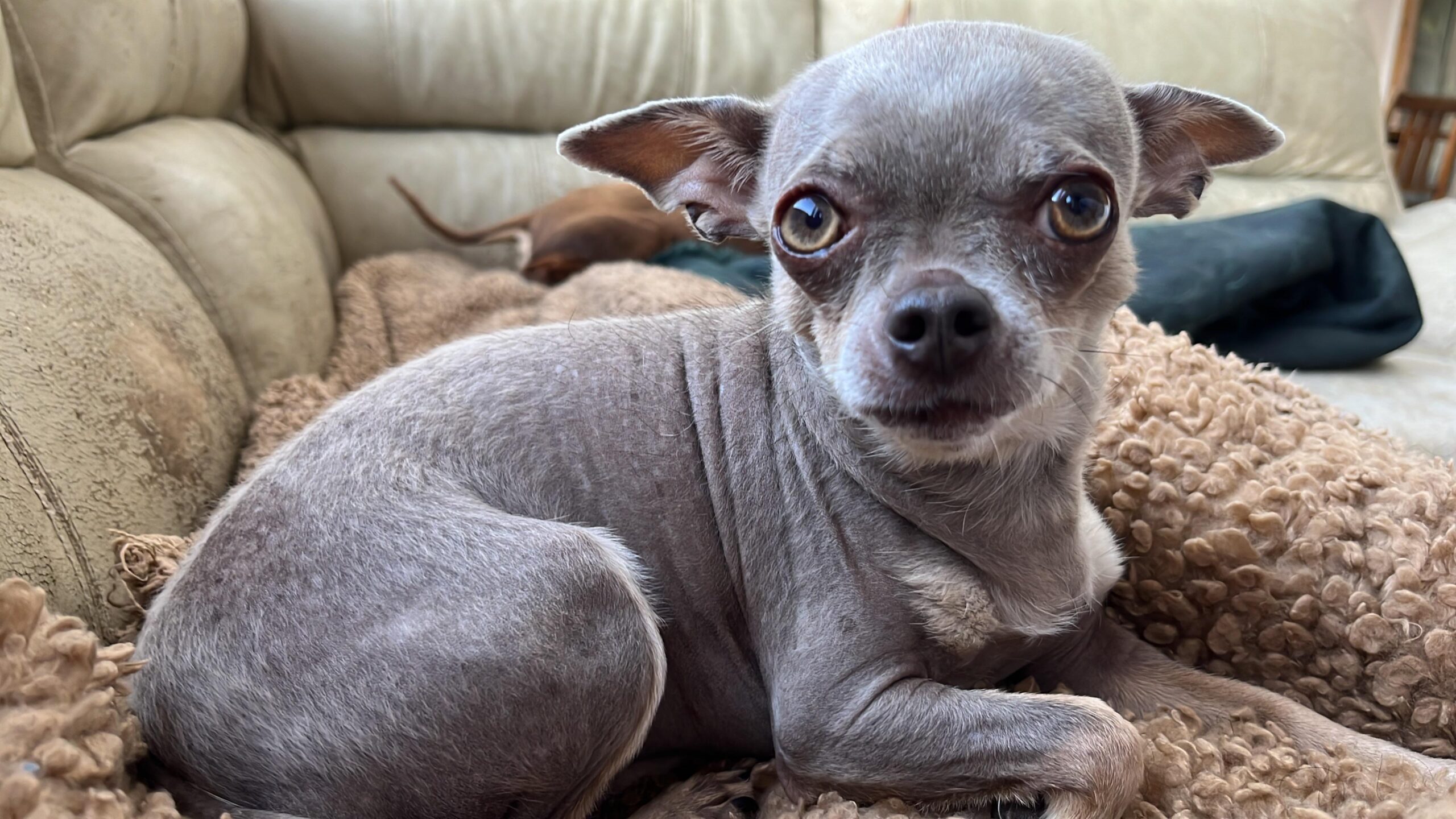
Finding clumps of fur or a bald spot on your tiny dog can be worrying. Chihuahua hair loss ranges from perfectly normal shedding to signs of allergies, parasites or hormone problems, so it helps to know what is normal for the breed and what needs a vet.
We are AKC chihuahua breeders in Traverse City, Michigan, raising both smooth and long coat puppies. This guide explains normal shedding, breed-specific thin spots, the common medical causes of chihuahua hair loss, what your vet will check and how to keep the coat healthy.
For background on the breed’s two coat types, see the AKC chihuahua breed page. Blue and fawn dogs can be affected by a specific condition explained in the VCA Animal Hospitals guide to color dilution alopecia.
Chihuahua hair loss: what is normal?
Not all chihuahua hair loss is a problem. Every dog sheds, and chihuahuas have a few breed quirks that can look like hair loss but are normal.
| Usually normal | Worth a vet check |
|---|---|
| Even shedding all over, more in spring and fall | Bald patches or circles |
| Thin hair on the ears and temples | Red, scaly or crusty skin |
| Long coat puppy losing fluff | Itching, licking or chewing |
| Coat thinning after heat or pregnancy | Bad smell or greasy skin |
| Lighter coat in summer | Hair loss with weight change or thirst |
Even shedding and thin hair on the ears and temples are often normal. See a vet if chihuahua hair loss leaves bald patches, comes with itching, red or scaly skin, scabs or a bad smell, or appears with other signs like weight change or drinking more.

Normal shedding
Normal shedding is the most common form of chihuahua hair loss. Most dogs shed lightly all year, with heavier “coat blows” in spring and fall as they adjust to the seasons.
Smooth coats tend to drop short hairs everywhere, while long coats shed less often but in larger tufts. Our long coat vs smooth coat chihuahua guide compares the two.
Thin ears and temples
Many chihuahuas naturally have very thin hair on the backs of the ears and on the temples, the area between the eye and the ear. This is common in the breed and isn’t usually a cause for worry.
The skin underneath should look healthy, without redness, flakes or scabs. If the thin area grows quickly or the skin changes, ask your vet.
Pinnal alopecia
Pinnal alopecia is a form of chihuahua hair loss affecting the ear flaps. Hair gradually thins until the ears may become nearly bald. It is seen in chihuahuas, dachshunds and some other small breeds.
It is usually cosmetic and not itchy or painful. Your vet will rule out other causes such as mites or hormone problems. Some dogs benefit from treatment, while others simply need sun protection on bare ears.
The long coat puppy stage
Long coat puppies often go through an awkward stage between about four and ten months old. The soft puppy fluff falls out before the adult coat grows in, and owners sometimes mistake this for chihuahua hair loss.
The full adult coat, with feathering on the ears, legs and tail, can take up to two years to develop. Regular gentle brushing helps during this stage.
Common causes of chihuahua hair loss
| Cause | Typical signs |
|---|---|
| Allergies | Itching, licking paws, red skin, ear infections |
| Fleas | Itching, especially near the tail, flea dirt |
| Demodex mites | Patchy hair loss, often around eyes and face |
| Sarcoptic mange | Intense itching, crusts on ears and elbows |
| Ringworm | Round, scaly bald patches |
| Bacterial or yeast infection | Red skin, spots, greasy feel, smell |
| Color dilution alopecia | Thinning in blue or fawn areas |
| Hypothyroidism or Cushing’s disease | Even thinning on the body, other health changes |
| Stress-related licking | Thin, stained patches where the dog licks |
Many causes of chihuahua hair loss look similar at first, so a vet visit is the fastest way to find the real cause.
When to see a vet
- Bald patches or circles.
- Red, inflamed, scaly or crusty skin.
- Constant itching, licking or chewing.
- Open sores, scabs or bleeding.
- A bad smell from the skin.
- Hair loss with weight gain, lethargy or drinking more.
- Hair loss in a young puppy with sores.
Ringworm can spread to people and other pets, and sarcoptic mange can spread to other dogs. Wash hands after handling your dog and see your vet promptly.
Allergies
Allergies are one of the most common medical causes of chihuahua hair loss. Itching leads to licking, scratching and chewing, which thins the coat and damages the skin.
Triggers include fleas, pollen, dust mites and certain food proteins. Our chihuahua allergies guide explains how vets find and treat the cause.
Fleas
Fleas are a leading cause of chihuahua hair loss. Even a few flea bites can cause intense itching in an allergic dog. Hair loss is often worst over the lower back and near the tail.
Use a vet-recommended flea preventative suited to your dog’s tiny weight, treat all pets in the home and wash bedding regularly. Never use products meant for larger dogs or cats.
Mites and mange
Two types of mites cause chihuahua hair loss.
| Type | Key features |
|---|---|
| Demodex | Not contagious; patchy hair loss, often in puppies or dogs with weak immunity |
| Sarcoptic (scabies) | Contagious to other dogs; intense itching, crusts on ear edges and elbows |
Your vet diagnoses mites with skin scrapings or other tests. Both types respond well to modern treatments.
Ringworm
Ringworm is a contagious cause of chihuahua hair loss. It is a fungal infection, not a worm. It causes round, scaly patches of hair loss, often on the face, ears and paws.
It can spread to people and other pets. Your vet will confirm it and prescribe treatment, and you’ll need to clean the home thoroughly.
Skin infections
Bacterial and yeast infections that cause chihuahua hair loss often follow allergies or other skin damage. Signs include red spots, crusts, greasy skin and a musty smell.
Treatment usually includes medicated shampoos and sometimes tablets. Treating the underlying cause stops infections from coming back.
Color dilution alopecia
Color dilution alopecia is an inherited condition seen in dogs with diluted coat colors, such as blue and some fawn shades. Hair in the diluted areas becomes thin and brittle, and the skin may become flaky.
It usually appears in young adults and has no cure, but gentle skin care and treating any infections keep dogs comfortable. Our blue chihuahua and chihuahua colors guides explain coat colors.
Hormone conditions
Hormone problems can cause even, non-itchy chihuahua hair loss on both sides of the body.
| Condition | Other signs |
|---|---|
| Hypothyroidism | Weight gain, low energy, feeling cold |
| Cushing’s disease | Drinking and peeing more, pot belly, thin skin |
| Sex hormone imbalances | Changes linked to heat cycles or intact males |
These need blood tests to diagnose. Treatment of the hormone problem usually brings the coat back over several months.
After heat or pregnancy
Many females shed heavily a few weeks after a heat cycle or after having puppies. This hormonal coat loss is temporary and the coat regrows within a few months.
Our chihuahua in heat and chihuahua pregnancy guides explain these stages.
Licking, chewing and stress
Dogs that are bored, anxious or itchy may lick or chew one area over and over. This can cause thinning hair, reddish staining from saliva and sore skin.
Your vet will first rule out itching from allergies or parasites. Our chihuahua anxiety guide has ideas for calmer days.
Pressure points
Dogs that lie on hard floors can develop a form of chihuahua hair loss: thickened, hairless patches on elbows and hocks. Soft bedding helps prevent and improve these calluses.
After clipping
Occasionally, chihuahua hair loss follows clipping, and hair is slow to regrow after a long coat is clipped short, for example for surgery. This usually resolves on its own within several months.
Avoid shaving a long coat chihuahua unless your vet advises it. Our chihuahua grooming guide explains safe coat care.
Diet and coat health
A balanced diet with good-quality protein and healthy fats supports a strong, shiny coat. Poor nutrition can contribute to dull hair and chihuahua hair loss.
Our best food for chihuahuas guide explains what to look for. Ask your vet before adding fish oil or other supplements.
Older dogs
Some thinning is normal with age, but new or patchy chihuahua hair loss in an older dog should be checked. Hormone conditions and skin growths become more common with age.
Our guide to caring for an old chihuahua covers senior health checks.
Sun protection for bare skin
Bare or thin-haired skin, such as on hairless ear tips, can burn in strong sun. Light-colored dogs are most at risk.
- Limit midday sun exposure in summer.
- Offer shade on walks and in the yard.
- Ask your vet about a pet-safe sunscreen for bare areas.
- Use a light, breathable shirt for very thin coats.
Other pets and the household
If more than one pet has itching or hair loss, a contagious cause such as fleas, sarcoptic mange or ringworm is more likely. Tell your vet about all the pets in the home.
- Treat all pets for fleas at the same time.
- Wash bedding, blankets and soft toys on a hot cycle.
- Vacuum floors and furniture often.
- Wash your hands after handling an affected pet.
Tackling the whole home stops chihuahua hair loss from parasites coming back.
What happens at the vet
| Test | What it checks |
|---|---|
| Physical exam | Pattern of hair loss, skin condition |
| Skin scraping | Mites |
| Fungal test | Ringworm |
| Skin cytology | Bacteria and yeast |
| Blood tests | Thyroid and adrenal hormones |
| Skin biopsy | Unusual or stubborn cases |
Photos of the chihuahua hair loss over time help your vet see how it is changing.
Treatment
- Flea and mite treatments.
- Antifungal treatment for ringworm.
- Medicated shampoos for infections.
- Allergy medications or diet trials.
- Hormone treatment for thyroid or adrenal conditions.
- Soft bedding and gentle skin care.
Treatment depends on the cause, which is why a diagnosis comes first. Most dogs with chihuahua hair loss improve once the right cause is treated.
Grooming tips
- Brush smooth coats weekly with a soft brush or rubber mitt.
- Brush long coats two to three times a week.
- Check the skin for redness, flakes or parasites while brushing.
- Use gentle tools to avoid scratching thin skin.
Our how to groom a chihuahua guide walks through each step.
Bathing
Bathing too often strips natural oils and dries the skin. Most chihuahuas need a bath every three to four weeks, using a gentle dog shampoo.
Our how to bathe a chihuahua guide explains how to bathe and dry a tiny dog safely.
Keeping a thin-coated dog warm
Dogs with chihuahua hair loss or thin coats lose heat quickly. A soft sweater in cold weather and sun protection on bare skin in summer help keep them comfortable.
Our chihuahua clothes and keeping your chihuahua warm in winter guides have tips.
Keeping a coat diary
| Record | Why it helps |
|---|---|
| Photos every two weeks | Shows whether hair loss is spreading or improving |
| Itching level | Points to allergies or parasites |
| Diet and treat changes | Spots food triggers |
| Heat cycles | Links coat loss to hormones |
| Treatments used | Shows what works |
A coat diary makes vet visits for chihuahua hair loss far more productive.
Questions to ask your vet
These questions help you leave a vet visit about chihuahua hair loss with a clear plan.
- What is causing the hair loss?
- Is it contagious to people or other pets?
- How long until the coat grows back?
- Which shampoo and flea products are safe for my dog?
- When should we recheck?
Write the answers down and keep them with your coat diary. Following the plan closely gives chihuahua hair loss the best chance to improve.
Preventing chihuahua hair loss
- Use year-round flea prevention suitable for tiny dogs.
- Feed a balanced, quality diet.
- Brush regularly and check the skin.
- Avoid over-bathing.
- Provide soft bedding.
- Book regular vet checkups.
Our chihuahua health problems guide covers other conditions to know about.
Myths about chihuahua hair loss
| Myth | Fact |
|---|---|
| Chihuahuas don’t shed | Both coat types shed |
| Thin ears always mean illness | Thin ear and temple hair is common in the breed |
| Bald patches will grow back on their own | Many need treatment |
| Shaving reduces shedding | It can damage the coat |
| Only dirty dogs get mites | Any dog can be affected |
Knowing the facts helps you respond calmly to chihuahua hair loss.
Our approach
At Chihuvas, we groom our smooth and long coat puppies gently from an early age and check their skin regularly in our Traverse City, Michigan home. Every family receives a grooming guide for their puppy’s coat type.
Every puppy goes home with vaccinations, a microchip, a vet health certificate, AKC registration and a two-year genetic health guarantee. We deliver nationwide by in-cabin chihuahua flight nanny and stay in touch for life.
See our available puppies, send us an inquiry or meet our family on our chihuahua breeder in Michigan page.
Thin ears are often just a chihuahua being a chihuahua. Bald, red or itchy patches are always worth a vet visit.
Chihuvas breeding teamChihuvas is an AKC-registered Chihuahua breeder based in Michigan, and we deliver our puppies nationwide across the US. Every puppy is health-checked, vaccinated for their age and socialised from birth. See our available puppies or send us an inquiry.
Common questions about chihuahua hair loss
Looking for a healthy puppy?
Every puppy is vet-checked, raised in our Michigan home and delivered nationwide with a health guarantee.
View available puppies →