Chihuahua itching: causes and relief
A tiny dog that won’t stop scratching, licking or chewing is uncomfortable, and so is everyone watching. Chihuahua itching has many causes, and finding the right one is the key to lasting relief.
We are AKC chihuahua breeders in Traverse City, Michigan, and we check our dogs’ skin and coats every week. This guide explains the common causes of chihuahua itching, how to tell them apart, safe ways to soothe itchy skin and when to see your vet.
For skin specialist information, see the American College of Veterinary Dermatology. The Companion Animal Parasite Council explains how to keep fleas and mites under control.
Signs of chihuahua itching
- Scratching with the back legs.
- Licking or chewing paws, legs or belly.
- Rubbing the face on carpets or furniture.
- Scooting the bottom along the floor.
- Shaking the head or scratching the ears.
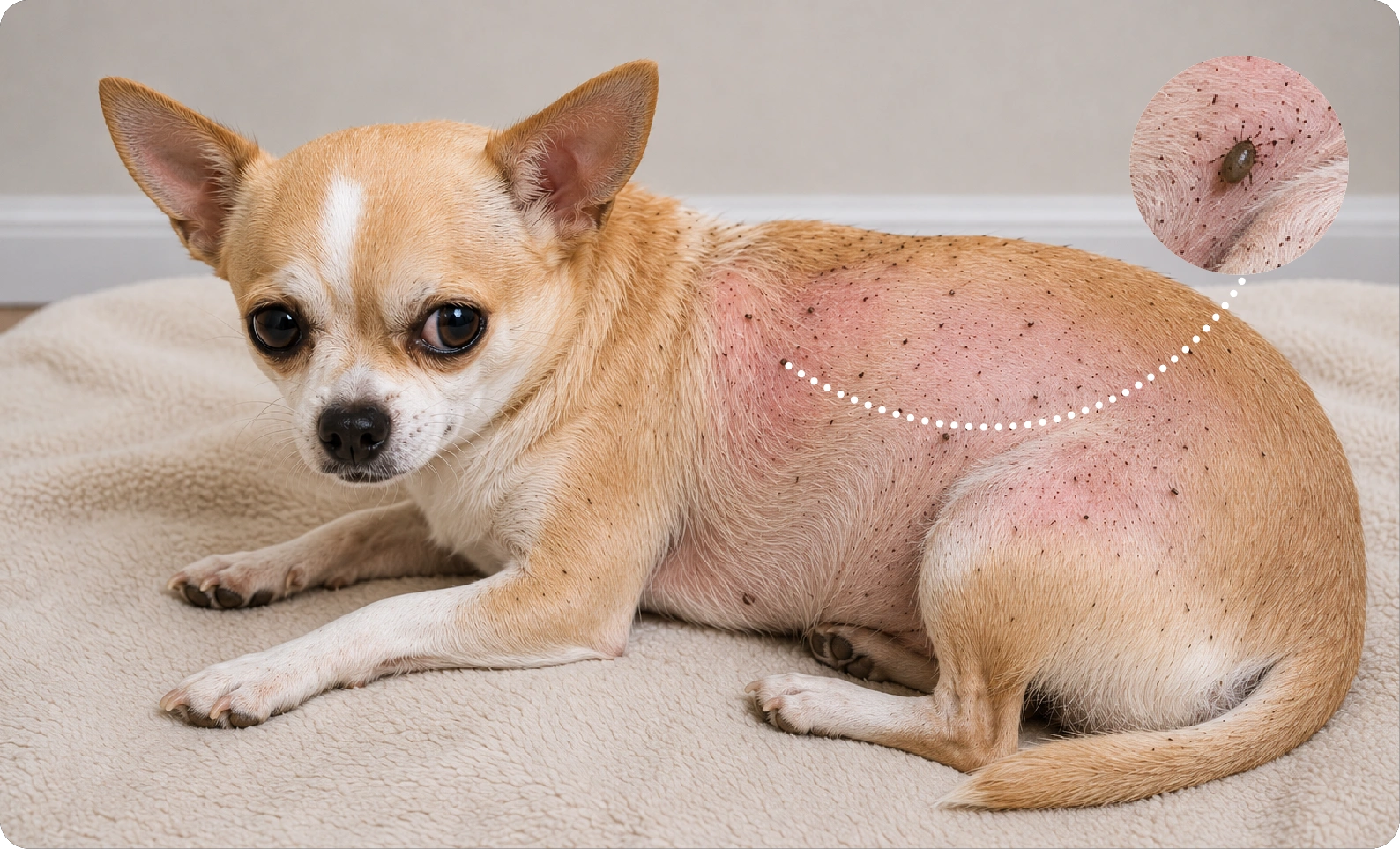
- Red, flaky or bumpy skin.
- Hair loss or thin patches.
- Brown or reddish staining from licking.
- Restless sleep.
A little scratching is normal. Chihuahua itching becomes a concern when it is frequent, intense or causes skin damage.
chihuahua itching is most often caused by fleas, allergies, mites, skin infections or dry skin. Start with flea control and gentle skin care, and avoid human creams. See a vet if itching is constant, causes sores or hair loss, or keeps your dog awake.

How itchy is too itchy?
| Level | What you see | What to do |
|---|---|---|
| Normal | Occasional brief scratching | Nothing special |
| Mild | Scratches a few times a day | Check for fleas, review diet and bathing |
| Moderate | Scratches or licks often, some redness | Book a vet visit |
| Severe | Constant scratching, sores, hair loss, poor sleep | See a vet soon |
Rating chihuahua itching on a simple scale helps you track changes and explain them to your vet.
Common causes of chihuahua itching
| Cause | Typical signs |
|---|---|
| Fleas | Itching near the tail, flea dirt |
| Environmental allergies | Paws, face, ears, belly; often seasonal |
| Food allergies | Paws, ears, bottom; all year |
| Mites (mange) | Intense itching, crusts on ears and elbows |
| Bacterial infection | Red bumps, pustules, crusts |
| Yeast infection | Greasy skin, musty smell, brown staining |
| Dry skin | Flakes, worse in winter |
| Contact irritants | Redness where skin touched something |
| Stress or boredom | Licking one spot, often when alone |
Several causes can happen at once. Allergies, for example, often lead to secondary infections.
Fleas
Fleas are the most common cause of chihuahua itching. Some dogs are allergic to flea saliva, so even one bite can cause days of intense scratching, especially over the lower back and tail.
Year-round flea prevention suited to your dog’s weight is essential. Our chihuahua fleas guide explains safe treatment for tiny dogs.
Environmental allergies
Environmental allergies are a leading cause of chihuahua itching. Pollen, grasses, dust mites and mold can all cause them. Itching often affects the paws, face, ears, armpits and belly, and may be worse in certain seasons.
Our chihuahua allergies guide explains how vets diagnose and manage allergies.
Food allergies
Some dogs react to proteins such as chicken, beef, dairy or wheat. Food allergies usually cause year-round chihuahua itching, often around the paws, ears and bottom, sometimes with tummy upsets.
The only reliable test is a strict elimination diet for eight to twelve weeks, using a prescription or novel-protein food chosen with your vet. Blood and hair tests sold online are not reliable for food allergies.
Mites
| Mite | Key features |
|---|---|
| Sarcoptic mange | Very itchy, contagious to other dogs, crusts on ear edges and elbows |
| Demodex | Usually not itchy at first; patchy hair loss, often in puppies |
| Ear mites | Dark, crumbly ear debris and head shaking |
| Walking dandruff (Cheyletiella) | Flaky skin along the back |
Mites that cause chihuahua itching need a vet diagnosis, usually with skin scrapings or a look under the microscope. Modern treatments work well.
Skin infections
Bacterial and yeast infections often follow scratching and licking. They cause red bumps, pustules, crusts, greasy skin and a musty smell, and they make chihuahua itching worse.
Your vet can confirm an infection with a simple skin test and prescribe medicated shampoos, wipes or tablets.
Dry skin
Dry skin causes flaking and mild chihuahua itching. It is common in winter, when indoor heating dries the air, and in dogs bathed too often or with harsh shampoos.
A humidifier, fewer baths and a gentle dog shampoo often help. Our keeping your chihuahua warm in winter guide has more cold-weather tips.
Contact irritants
Contact irritants can trigger chihuahua itching too. Some dogs react to things their skin touches, such as cleaning products, lawn chemicals, new carpets, plastic bowls or certain fabrics. Redness often appears on the belly, paws or chin.
Wipe paws after walks, rinse bedding well and use pet-safe cleaners on floors.
Itchy ears
Head shaking and ear scratching often point to ear infections, allergies or ear mites. Look for redness, a bad smell or dark discharge.
Our chihuahua ear care guide explains how to check and clean ears safely.
Itchy paws
Paw licking and chewing are common signs of allergies, yeast or something stuck between the toes. Brown staining on light fur is a clue.
Our chihuahua paw care and why does my chihuahua lick so much guides explain the causes.
Itchy bottom
Scooting and licking the bottom often mean full or irritated anal glands, food allergies or worms. Tapeworm segments may be visible around the tail.
Our chihuahua worms guide explains the signs of parasites.
Stress and boredom
Some dogs lick or chew one spot when anxious or bored, especially when left alone. Medical causes are ruled out first, then more exercise, enrichment and calm routines help.
Our chihuahua anxiety guide has tips for calmer days.
Where it itches
| Area | Common causes |
|---|---|
| Lower back and tail | Fleas |
| Paws | Environmental or food allergies, yeast |
| Face and ears | Allergies, ear infections, mites |
| Belly and armpits | Allergies, contact irritants |
| Ear edges and elbows | Sarcoptic mange |
| Bottom | Anal glands, food allergies, worms |
The pattern of chihuahua itching gives your vet important clues.
Seasonal itching
Chihuahua itching that flares in spring, summer or fall often points to pollen or grass allergies. Itching that worsens in winter is often dry skin or indoor allergens like dust mites.
Year-round itching suggests food allergies, dust mites or a chronic skin condition.
When to see a vet
- Itching that lasts more than a week or two.
- Open sores, scabs or bleeding.
- Hair loss or thickened skin.
- A strong smell or greasy skin.
- Swelling of the face or ears.
- Itching that keeps your dog awake.
- Lethargy or appetite changes.
Sudden swelling of the face or hives, especially with breathing changes, can be an allergic reaction. Contact a vet straight away.
What your vet may test
| Test | What it checks |
|---|---|
| Flea comb check | Fleas and flea dirt |
| Skin scraping | Mites |
| Skin cytology | Bacteria and yeast |
| Fungal test | Ringworm |
| Elimination diet | Food allergies |
| Allergy testing | Environmental allergies |
Finding the cause may take more than one visit, especially with allergies.
Treatment
- Flea or mite treatment.
- Medicated shampoos, sprays or wipes.
- Antibiotics or antifungals for infections.
- Modern anti-itch medications prescribed by your vet.
- A prescription diet for food allergies.
- Allergy shots or drops for environmental allergies.
- Omega-3 fatty acids, if your vet recommends them.
Most dogs with chihuahua itching feel much better once the underlying cause is treated.
Home care tips
- Keep up with flea prevention for all pets.
- Wipe paws and face after walks to remove pollen.
- Wash bedding weekly on a hot cycle.
- Run a humidifier in winter.
- Vacuum often to reduce dust mites.
- Keep nails short to limit scratch damage.
Bathing an itchy dog
For chihuahua itching, a cool bath with a gentle, soap-free dog shampoo can soothe itchy skin and remove allergens. Oatmeal shampoos made for dogs are a common choice.
Don’t bathe too often, as this dries the skin. Our how to bathe a chihuahua guide explains how to bathe and dry a tiny dog.
Diet and skin health
A balanced diet with good-quality protein and healthy fats supports the skin barrier. Some dogs with chihuahua itching benefit from diets with added omega-3 fatty acids.
Our best food for chihuahuas guide explains what to look for. Talk to your vet before changing diets for allergies.
What to avoid
- Human creams, lotions and hydrocortisone unless your vet advises them.
- Essential oils such as tea tree, which can be toxic.
- Human antihistamines without a vet-calculated dose.
- Harsh soaps and dish detergents.
- Flea products meant for larger dogs or cats.
Stopping skin damage
Untreated chihuahua itching, with constant licking and scratching, can cause raw patches and infections. While treatment starts working, a soft cone, a light T-shirt or a recovery suit can protect the skin.
Keeping nails short also limits damage from scratching.
Quick relief while you wait for the vet
If you have a vet appointment booked, these simple steps can make chihuahua itching more bearable in the meantime.
- Comb through the coat for fleas and flea dirt.
- Wipe paws, face and belly with a damp cloth after walks.
- Give a cool bath with a gentle dog shampoo.
- Put a light T-shirt on your dog to protect scratched areas.
- Keep your dog busy with chews and puzzle toys.
- Note where and when your dog itches.
Avoid starting any new medicine or supplement without your vet’s advice, as it can make diagnosis harder.
Ringworm
Ringworm is a fungal infection, not a worm. It causes round, scaly patches of hair loss and can be mildly itchy. It can spread to people and other pets.
Your vet can confirm ringworm with a simple test and prescribe treatment. Wash hands after handling your dog and clean bedding thoroughly.
The cost of chronic itching
Allergies are often lifelong, and managing them can involve regular vet visits, special diets and medication. Pet insurance can help with these costs if your dog is insured before signs appear.
Our chihuahua pet insurance guide explains what to look for.
Living with allergies
For many dogs, allergic chihuahua itching is managed rather than cured. A long-term plan keeps flare-ups small.
| Step | Why it helps |
|---|---|
| Year-round flea control | Removes the most common trigger |
| The right diet | Avoids food triggers |
| Regular bathing with a gentle shampoo | Washes off allergens |
| Prescribed anti-itch medication | Controls flare-ups |
| Regular vet rechecks | Adjusts treatment as seasons change |
With the right plan, most allergic dogs live comfortable, happy lives.
Reducing allergens at home
- Vacuum carpets and furniture often.
- Wash your dog’s bedding weekly on a hot cycle.
- Use an air purifier in rooms where your dog sleeps.
- Keep windows closed on high-pollen days.
- Wipe your dog down after walks in grassy areas.
These small changes can noticeably reduce chihuahua itching in allergic dogs.
Itchy puppies
Puppies often itch because of fleas, mites or worms. Demodex mites are common in young puppies and usually cause patchy hair loss.
Ask your vet before using any product on a young puppy. Our chihuahua hair loss guide explains mites and skin conditions.
Itchy older dogs
In older dogs, new itching can come from dry skin, skin growths, hormone conditions or infections. Any new skin change in a senior deserves a vet check.
Our guide to caring for an old chihuahua covers senior health checks.
Keeping an itch diary
| Record | Why it helps |
|---|---|
| Itch level each day | Shows patterns and progress |
| Where your dog itches | Points to the cause |
| Food and treats | Spots food triggers |
| Weather and season | Links itching to pollen |
| Treatments used | Shows what helps |
A few weeks of notes make chihuahua itching much easier for your vet to solve.
Preventing chihuahua itching
- Use year-round flea prevention.
- Feed a balanced diet.
- Bathe only when needed with a gentle shampoo.
- Wipe paws after walks.
- Keep bedding clean.
- Book regular vet checks.
Our chihuahua health problems guide covers other conditions to know about.
Myths about chihuahua itching
| Myth | Fact |
|---|---|
| Itching is just a habit | There is usually a medical cause |
| No fleas seen means no fleas | Fleas are easy to miss |
| More baths stop itching | Too many baths dry the skin |
| Online allergy tests are reliable | Food trials are the best test |
| Human creams are fine | Dogs lick them off and some are harmful |
Knowing the facts helps you find real relief for chihuahua itching.
Our approach
At Chihuvas, we check skin and coats weekly, keep up with parasite prevention and feed a balanced diet in our Traverse City, Michigan home. Every family receives tips on skin and coat care.
Every puppy goes home with vaccinations, a microchip, a vet health certificate, AKC registration and a two-year genetic health guarantee. We deliver nationwide by in-cabin chihuahua flight nanny and stay in touch for life.
See our available puppies, send us an inquiry or meet our family on our chihuahua breeder in Michigan page.
Itching is a symptom, not a diagnosis. Find the cause, and the scratching usually stops.
Chihuvas breeding teamChihuvas is an AKC-registered Chihuahua breeder based in Michigan, and we deliver our puppies nationwide across the US. Every puppy is health-checked, vaccinated for their age and socialised from birth. See our available puppies or send us an inquiry.
Common questions about chihuahua itching
Looking for a healthy puppy?
Every puppy is vet-checked, raised in our Michigan home and delivered nationwide with a health guarantee.
View available puppies →