
Chihuahua and babies — 7 proven tips for a safe introduction.
Chihuahua and babies can absolutely coexist safely and happily — but getting there takes genuine preparation, not just hope that things will work out naturally. Chihuahuas are small, sometimes assertive, occasionally anxious, and their tiny size means they are physically more vulnerable to accidental injury from a baby than a larger, sturdier dog would be. The good news is that almost everything that goes wrong in a Chihuahua and babies households is preventable with the right groundwork started well before the baby ever arrives. This guide covers exactly how to prepare, introduce, and supervise for a genuinely safe and calm outcome.
As AKC-registered Chihuahua breeders at Chihuvas, we discuss baby preparation with expecting families regularly, since the work that matters most happens months before the introduction itself. This guide covers the seven most important proven tips for Chihuahua and babies introductions, drawing on guidance from the AKC’s guide to introducing dogs and babies and general veterinary behavioural best practice.
Preparation months before the baby arrives
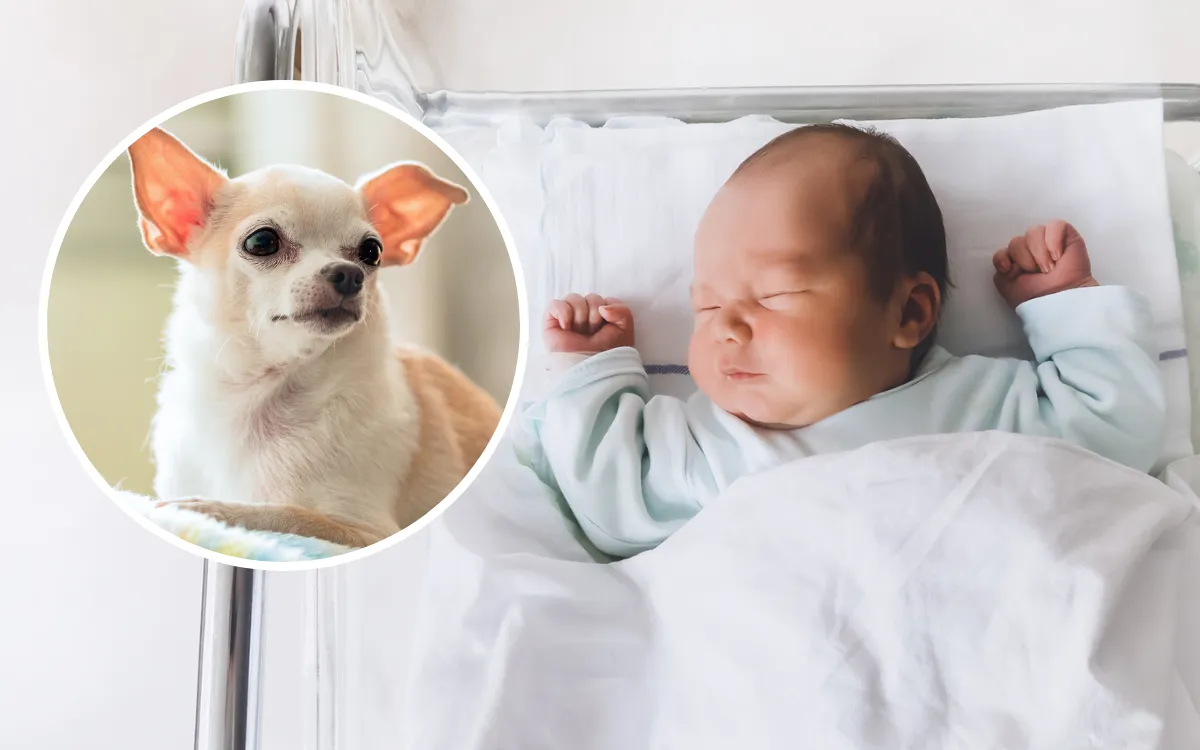
The single most important principle in Chihuahua and babies preparation is starting early. Begin by honestly assessing your dog’s current behaviour: do they jump up when you sit down, climb into your lap uninvited, guard toys or resting spots, or react strongly to sudden movements and high-pitched sounds? Any behaviour that is mildly inconvenient now becomes a genuine safety concern once a baby is in the picture. A Chihuahua who guards their favourite spot on the sofa is in a very different situation when that sofa has a baby on it.
Address these behaviours well before the baby’s arrival, not as a reaction afterwards. If your Chihuahua has never been asked to settle calmly on a mat or in a crate while you are occupied, start practising that now. If a nursery or particular room will be off-limits, introduce that boundary with a baby gate months in advance, so your dog learns the restriction exists independently of the baby’s arrival — preventing them from associating the new limitation directly with resentment toward the new arrival.
7 proven tips for Chihuahua and babies introductions
1. Adjust your dog’s routine gradually, in advance
If your Chihuahua and babies household will mean shorter walks or less one-on-one attention once the baby arrives, begin that adjustment gradually during pregnancy rather than imposing it suddenly the day the baby comes home. This prevents your dog from directly associating the loss of attention with the baby’s arrival, reducing the likelihood of resentment or anxious behaviour later.
2. Bring home the baby’s scent first
Before the baby themselves arrives home, bring a blanket or piece of clothing carrying their scent and let your Chihuahua sniff it calmly. This is not magical bonding — it simply gives your dog useful information about the new scent before encountering it attached to a small, noisy, unpredictable human, reducing the novelty shock of the actual introduction.
3. Keep the first introduction calm and low-key
When the moment comes, keep the energy deliberately calm rather than an excited, high-pitched welcome that could overstimulate your Chihuahua. Allow your dog to approach and sniff at their own pace, with a lead on hand if needed for control, and reward relaxed, quiet behaviour generously throughout. A subdued, controlled first meeting sets the tone for everything that follows when raising Chihuahua and babies together.
4. Never force interaction
Let your Chihuahua choose their own level of engagement with the baby rather than forcing proximity. Some dogs warm up within days; others take weeks to feel fully comfortable. Respecting your dog’s own pace, rather than insisting on closeness before they are ready, produces a more genuine and lasting positive association over time.
5. Maintain one-on-one time with your dog
Carving out dedicated, undivided attention for your Chihuahua even amid the demands of a newborn helps prevent them from experiencing the baby as the thing that made all the good things disappear. Even ten or fifteen minutes of focused play or affection daily makes a meaningful difference to how your dog processes this major household change.
6. Address barking or anxiety calmly and consistently
If your Chihuahua barks excessively around the baby, this usually reflects anxiety, overstimulation, or a perceived need to alert the household — not aggression. Respond with calm, consistent redirection toward quiet behaviour, reward stillness, and ensure your dog has access to a quiet retreat space when the noise and activity of a newborn household becomes overwhelming for them.
7. Involve your Chihuahua in baby-related routines positively
The Main Line Health guide to bringing home baby and pets recommends exactly this kind of gradual, positive inclusion. Where appropriate and safe, include your dog gently in parts of the daily routine — being nearby calmly during feeding times, present during quiet moments — so they experience the baby’s presence as a normal, low-stakes part of daily life rather than something separate and unfamiliar that happens elsewhere in the house.
Chihuahua and babies — the non-negotiable supervision rule
This rule is not specific to Chihuahuas or a reflection of distrust in your particular dog — it applies universally across every breed and every dog, regardless of size or temperament. Babies are simply unpredictable in ways no amount of training can fully account for, and the consequences of an unsupervised reflexive reaction are too serious to risk.
Common issues and how to address them
- Excessive barking at the baby: usually anxiety or overstimulation rather than aggression — address with calm redirection and a designated quiet retreat space
- Jealousy or attention-seeking: maintain dedicated one-on-one time daily to reassure your Chihuahua that their place in the household has not been displaced
- Guarding behaviour around the baby’s things: apply the same trade-up techniques used for general resource guarding — see our complete resource guarding guide
- Reluctance to approach or general avoidance: respect this entirely. Forcing interaction before your dog is ready typically slows progress rather than speeding it up
Warning signs to take seriously
While most Chihuahua and babies adjustment challenges resolve with patience and consistent management, certain signs warrant professional support: persistent growling or snapping directed at the baby, a dog who becomes increasingly tense or avoidant rather than gradually more comfortable over several weeks, or any incident involving a nip or bite, however minor. A certified professional dog trainer or veterinary behaviourist can provide tailored guidance specific to your dog and family, and should be consulted promptly rather than hoping the behaviour resolves on its own.
Building a positive long-term relationship
As your baby grows into a mobile toddler, the dynamics between Chihuahua and babies will continue to evolve. Teach children, as soon as they are old enough to understand, how to interact gently and respectfully with a small dog — no grabbing, no chasing, no disturbing a resting or eating dog. A Chihuahua treated with consistent gentleness and respect from infancy through childhood very often grows into one of the calmest, most bonded Chihuahua and babies relationships imaginable, but this outcome is built deliberately over years, not assumed automatically from the start.
Browse our available puppies or get in touch with our team for any questions about preparing your Chihuahua for a growing family. See also our guide on Chihuahuas and kids for the next stage of this relationship.
Common questions about Chihuahua and babies
Find a calm, well-socialised Chihuahua at Chihuvas.
Our puppies are raised with gentle handling and early socialisation — the best foundation for a confident, family-ready temperament. AKC-registered, Michigan’s most trusted Chihuahua breeder.
View available puppies →