
Chihuahua resource guarding — how to stop it safely.
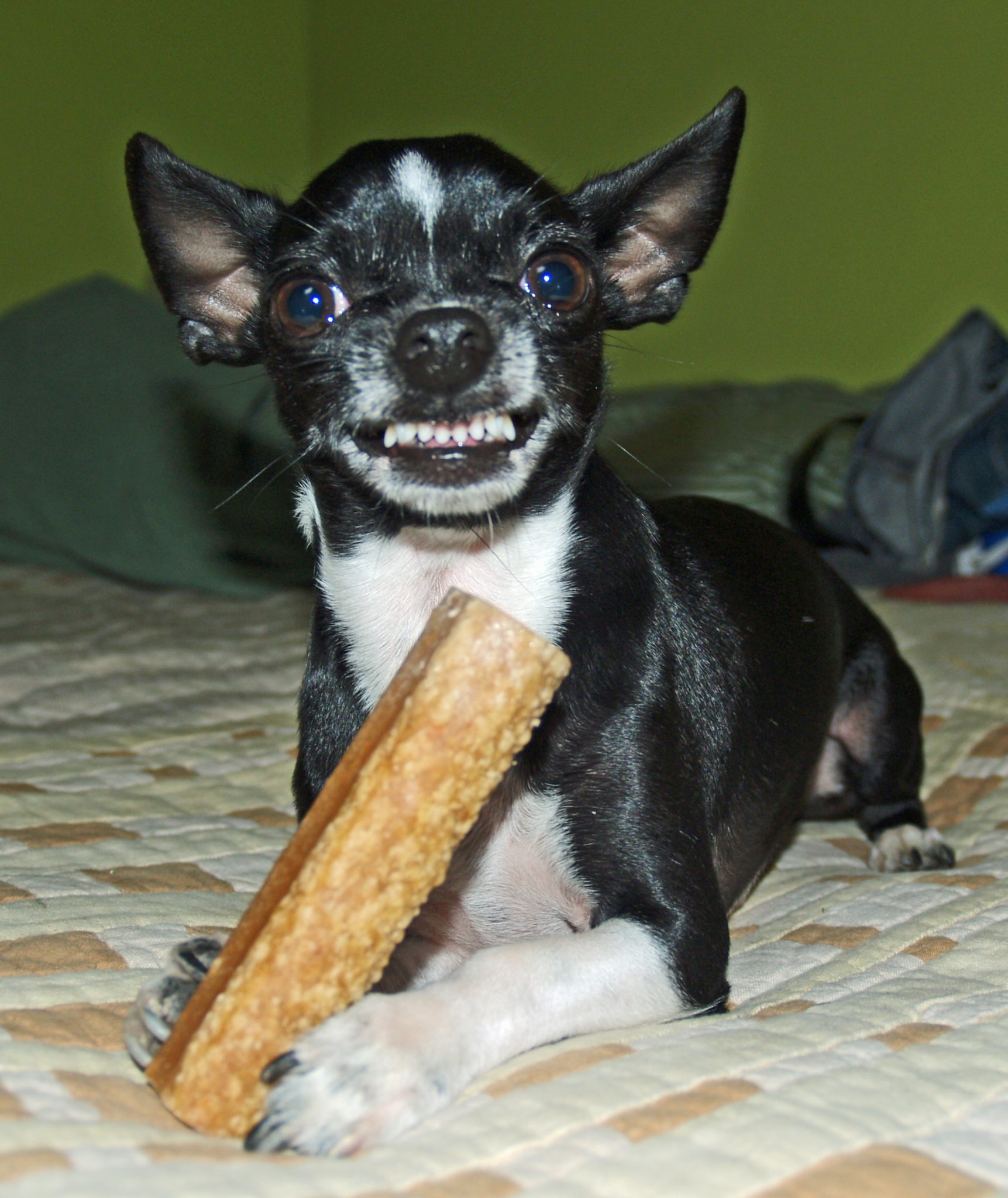
Chihuahua resource guarding is one of the most common behavioural issues in the breed — and one of the most consistently mishandled. A chihuahua that growls over its food bowl, snaps when you reach for its toy, or stiffens when another pet approaches its bed is not being “dominant” or “spoiled.” It is exhibiting a natural survival behaviour — protecting valued resources from perceived threats — that has been allowed to develop unchecked, often because the dog is small enough that the behaviour seems harmless or even endearing. It is neither. Chihuahua resource guarding escalates. What starts as a stiff body over a chew toy becomes a growl, then a snap, then a bite. The size of the dog changes the damage, not the seriousness of the behaviour.
This guide explains why chihuahua resource guarding happens, how to recognise it at every stage, the step-by-step counter-conditioning approach that resolves it safely, how to prevent it from developing in puppies, and when the behaviour requires professional help. The training principles here are consistent with force-free behaviour modification guidance from the American Kennel Club.
Chihuahua resource guarding — why it happens
Chihuahua resource guarding is not a character flaw — it is a survival instinct. In the wild, an animal that does not protect its food does not eat. This instinct persists in domestic dogs, and several factors make chihuahuas particularly prone to developing resource guarding behaviour:
- Size vulnerability: Chihuahuas are the smallest dog breed in the world. Everything around them — other dogs, cats, children, even adult humans — is enormous by comparison. Chihuahua resource guarding is partly driven by the reality that a chihuahua cannot physically compete for resources, so it escalates defensive behaviour earlier and more intensely to compensate.
- Owner reinforcement: Many chihuahua owners inadvertently reinforce guarding by laughing at it (“look how fierce she is with her bone!”), removing items forcibly (which confirms the dog’s fear that approach equals loss), or avoiding the dog during meals (which never gives the dog a chance to learn that human proximity is safe).
- Lack of early handling: Puppies that are not taught from weaning that human hands near their food are a good thing — adding food, offering treats, gently touching the bowl — miss the critical window for preventing chihuahua resource guarding.
- Competitive environments: Multi-dog households where food, toys, or attention are contested can trigger chihuahua resource guarding even in dogs that were not previously prone to it.
- Anxiety: Chihuahuas that are generally anxious — from poor socialisation, traumatic experiences, or temperament — are more likely to guard resources as an extension of their overall insecurity.
Chihuahua resource guarding — the escalation ladder
Chihuahua resource guarding does not begin with biting — it escalates through a predictable sequence of warning signs. Learning to recognise the early stages allows you to intervene before the behaviour becomes dangerous. Most chihuahuas give multiple warnings before resorting to contact aggression:
- Freezing or stiffening: The chihuahua goes rigid over the item when you approach. This is the earliest and most subtle sign of chihuahua resource guarding — easy to miss if you are not watching for it.
- Accelerated eating: The dog eats faster when you approach — shovelling food before you can take it away. This is anxiety-driven, not greed.
- Turning away or hunching: The chihuahua curves its body around the item, shielding it from you with its shoulder or head. Deliberate positioning to block access.
- Hard stare or whale eye: The dog stares at you with wide, fixed eyes — often with the whites visible (whale eye). This is a clear warning: “I see you. Do not come closer.”
- Low growling: The first vocalised warning. Many owners react to chihuahua resource guarding growls by either punishing the growl (which removes the warning but not the guarding) or backing away (which rewards the growl with success).
- Lip curling or showing teeth: The visual threat escalates. Teeth are displayed as a warning before they are used.
- Snapping or air biting: The dog bites toward you without making contact — a final warning before actual contact aggression.
- Biting: Contact aggression. The dog has exhausted its warning repertoire and resorted to physical defence.
The single worst response to chihuahua resource guarding is punishing the growl. A growl is a communication — “I am uncomfortable, please back off.” If you punish the growl (shouting, physical correction, taking the item forcibly), the dog learns not to warn you. It does not learn to stop guarding — it learns to skip the warning and go straight to biting. A dog that growls is giving you information. A dog that has been punished for growling gives you no warning before it bites. Always let the dog communicate.
Chihuahua resource guarding — the counter-conditioning approach
The most effective and safest method for addressing chihuahua resource guarding is counter-conditioning — systematically changing the dog’s emotional response to your approach from “threat” to “opportunity.” The principle is simple: every time you approach the guarded item, something better happens. Over time, the dog’s association shifts from “person approaching = I lose my thing” to “person approaching = I get something even better.”
Stage 1: Distance approach — no interaction with the item
While your chihuahua is eating or chewing, walk past at a comfortable distance — far enough that the dog does not stiffen or react. As you pass, toss a high-value treat (small piece of chicken, cheese, or liver) in the dog’s direction without stopping. Do not reach toward the dog, the bowl, or the item. Just walk past and deliver something wonderful. Repeat this 5–10 times per meal for several days until the dog looks up eagerly when you walk past instead of tensing. This is the foundation of resolving chihuahua resource guarding — proximity without threat.
Stage 2: Closer approach — still no interaction with the item
Gradually decrease the distance over days and weeks. Walk closer before tossing the treat. Eventually, you are passing within arm’s reach and the dog is relaxed — even excited — because your approach consistently predicts a reward. At no point during this stage do you reach for the bowl, the toy, or the dog. You are only building the association: “human near me while I have my thing = bonus treat.” Chihuahua resource guarding dissolves when the perceived threat is replaced with a reliable reward.
Stage 3: Pause near the dog
Once your chihuahua is comfortable with close passes, stop briefly near them while they eat or chew. Drop the treat and move on. Over several sessions, extend the pause — standing near the dog for 3 seconds, then 5, then 10, always delivering the treat before moving away. The dog should remain relaxed throughout. If any tension returns at any stage, you have progressed too quickly — go back to the previous stage for another few days.
Stage 4: Adding to the bowl
This is the pivotal stage for chihuahua resource guarding around food. While your chihuahua eats, reach toward the bowl — not to take anything, but to drop something better in. A piece of chicken landing in a bowl of kibble teaches the dog that your hand near the bowl means an upgrade, not a theft. Repeat this consistently for weeks until the dog actively welcomes your hand near its food.
Stage 5: Brief removal and immediate return
Only when stages 1–4 are fully established — with zero tension from the dog — can you begin briefly lifting the bowl, adding a high-value treat, and immediately returning it. The removal is momentary and the return is instant and improved. This teaches the dog that even when the item leaves, it comes back better. This final stage resolves chihuahua resource guarding for most dogs, but it requires patience — rushing to this stage before the dog is ready will set you back to the beginning.
Chihuahua resource guarding is resolved through trust, not force. You cannot take guarding away from a dog — you can only replace it with confidence. Confidence that your approach is good news. Confidence that giving something up means getting something better. Confidence that is built one treat, one calm approach, one unremarkable interaction at a time.
Training principleChihuahua resource guarding — prevention from puppyhood
Prevention is far easier than correction. If you have a chihuahua puppy, these exercises — started from the first week at home — build the foundation that prevents chihuahua resource guarding from ever developing:
- Hand-feed some meals: Feeding kibble piece by piece from your hand teaches the puppy that human hands are the source of food, not the competition for it.
- Add food while they eat: Drop extra treats or kibble into the bowl while the puppy eats. Your hand approaching the bowl always means more food, not less.
- Touch the bowl during meals: Gently touch or lift the bowl briefly, add something better, return it immediately. Do this from the first meal at home.
- Practice trade-ups: When the puppy has a toy or chew, offer something better (a treat) and say “drop it.” When they release the toy for the treat, praise and return the toy. This teaches that giving something up results in getting something better plus getting the original item back.
- Handle food and chews around other pets: If you have other animals, supervise mealtimes and ensure the chihuahua puppy eats without competition or anxiety. Separate feeding stations prevent competitive guarding from developing.
- Never forcibly take items: Even from a puppy. Trade, redirect, or wait — but never grab. One forcible removal can plant the seed of chihuahua resource guarding that takes months to undo.
Our puppies experience positive food-handling exercises from weaning. We touch bowls during meals, add food while they eat, gently handle them during feeding, and practise toy trades with treats from the earliest weeks. By the time a puppy goes to its new home, the foundation against chihuahua resource guarding is already established. This is one of the most important things a breeder can do for a puppy’s lifelong behaviour.
Chihuahua resource guarding — special situations
Guarding the owner (person guarding)
Some chihuahuas guard their owner rather than — or in addition to — food and toys. This manifests as growling, snapping, or lunging at other people or animals that approach you. Chihuahua resource guarding of people follows the same principles: the dog perceives you as a valued resource and reacts defensively when that resource is “threatened” by another’s approach. Counter-conditioning applies: the approaching person tosses treats, gradually decreasing distance, until the dog associates others approaching you with positive outcomes rather than competition.
Guarding sleeping spots
A chihuahua that growls when you try to move it from the sofa or bed is guarding its resting spot. This form of chihuahua resource guarding is common because chihuahuas seek warm, elevated, comfortable spots and become territorial about them. The solution is not to ban the dog from furniture — it is to teach a reliable “off” command with a treat lure, making the departure from the spot a positive experience rather than a confrontation.
Multi-dog households
Chihuahua resource guarding in multi-dog homes requires management alongside training. Feed dogs separately — different rooms or crates — to eliminate competition at mealtimes. Provide multiple copies of high-value toys so there is nothing to compete over. Supervise chew sessions and remove high-value chews when you cannot supervise. Management prevents practice of the guarding behaviour while you work on the underlying emotional response through counter-conditioning.
Chihuahua resource guarding — when to get professional help
Most mild to moderate chihuahua resource guarding responds well to the counter-conditioning approach described above. However, professional help from a certified veterinary behaviourist or force-free trainer is recommended if:
- The dog has bitten and broken skin — escalation to contact aggression indicates a level of guarding that requires professional assessment
- There are children in the household — children are less able to read warning signs and more likely to trigger guarding accidentally
- The guarding is severe — the dog reacts at distance rather than only when closely approached, or guards multiple categories of resources (food, toys, locations, and people simultaneously)
- Counter-conditioning has been attempted consistently for 4–6 weeks without improvement — the behaviour may have an anxiety component that requires additional intervention
- You feel unsafe — if you are afraid to be near your chihuahua during meals or when it has a valued item, professional guidance protects both you and the dog
Chihuahua resource guarding is never solved by dominance, punishment, or forcing a confrontation. It is solved by patience, consistency, and the systematic replacement of fear with trust. The dog does not need to learn that you are in charge — it needs to learn that your approach is safe. Those are fundamentally different lessons with fundamentally different outcomes.
The Chihuvas teamBrowse our available puppies — every Chihuvas puppy receives positive food-handling exercises from weaning, building the behavioural foundation that prevents resource guarding. Get in touch with our team for any questions about chihuahua behaviour.
Common questions about chihuahua resource guarding
Find a well-handled puppy at Chihuvas.
Our puppies experience positive food-handling from weaning — building the behavioural foundation that prevents resource guarding from day one. AKC-registered, Michigan’s most trusted breeder.
View available puppies →