The best food for chihuahuas: a complete guide
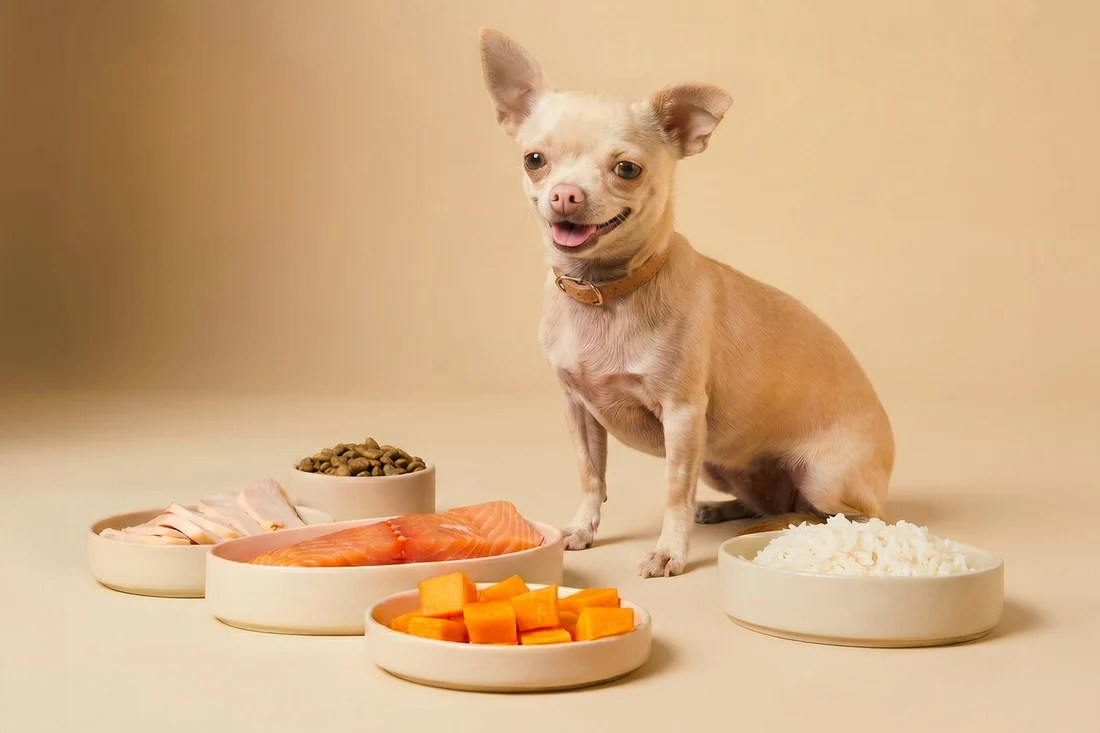
Choosing the best food for chihuahuas can feel overwhelming with so many bags, cans and fresh options on the shelf. The good news is that a few simple rules make it easy to find a food that keeps your tiny dog healthy, lean and full of energy.
We are AKC chihuahua breeders in Traverse City, Michigan, and we feed and raise our own dogs every day. This guide explains what the best food for chihuahuas looks like, how much to feed, how often, which ingredients to look for and which to avoid.
Look for foods that meet the nutrient profiles set by the Association of American Feed Control Officials (AAFCO). For breed size and background, see the AKC chihuahua breed page.
What chihuahuas need from their food
Chihuahuas have fast metabolisms and tiny stomachs. They burn energy quickly for their size, but they can only eat small amounts at a time.
- Calorie-dense food so small portions meet their needs.
- Small kibble that is easy to chew with tiny jaws.
- High-quality protein to support muscle.
- Steady energy to help prevent low blood sugar.
- Balanced vitamins and minerals for teeth, bones and coat.
Low blood sugar is a real risk for tiny dogs, especially puppies. Our chihuahua hypoglycemia guide explains why regular meals matter.
The best food for chihuahuas is a complete and balanced small-breed formula with a named animal protein first, small kibble and the right calories for your dog’s age. Feed puppies three to four meals a day and adults two to three, measure portions carefully and keep treats under 10% of daily calories.

What to look for in the best food for chihuahuas
The best food for chihuahuas ticks a few important boxes. Use this checklist when comparing options.
- An AAFCO “complete and balanced” statement for your dog’s life stage.
- A named animal protein, such as chicken, turkey, lamb or salmon, as the first ingredient.
- A small-breed or toy-breed formula with small pieces.
- Moderate fat for energy and a healthy coat.
- Omega-3 fatty acids for skin, coat and brain health.
- A brand that employs a qualified pet nutritionist and does feeding trials.
Price and fancy marketing don’t always mean you have found the best food for chihuahuas. The label tells you much more.
How to read a dog food label
Dog food labels follow rules that help you compare products. Here is what each part means.
| Label section | What it tells you |
|---|---|
| AAFCO statement | Whether the food is complete and balanced, and for which life stage |
| Ingredient list | Ingredients in order of weight before cooking |
| Guaranteed analysis | Minimum protein and fat, maximum fiber and moisture |
| Calorie content | Calories per cup or can, useful for portion control |
| Feeding guide | A starting point for daily amounts |
Compare calories per cup between foods. Small-breed formulas are often more calorie-dense, so you feed less.
Types of food: which is the best food for chihuahuas?
There is no single best food for chihuahuas for every dog. Dry, wet and fresh foods all have pros and cons.
| Type | Pros | Cons |
|---|---|---|
| Dry kibble | Convenient, affordable, easy to measure | Lower moisture; some dogs find it boring |
| Wet food | Tasty, high moisture, good for picky eaters | More expensive; spoils once opened |
| Fresh cooked | Very tasty, minimal processing | Expensive; needs fridge or freezer space |
| Raw | Some owners like it | Risk of bacteria for dogs and people; must be balanced |
| Mixed feeding | Combines benefits | Needs careful portion control |
Many owners feed small-breed kibble with a spoonful of wet food on top. It adds flavor and moisture without too many extra calories.
Dry food
Dry food is the most popular choice, and for many owners it is the best food for chihuahuas day to day. Choose a small-breed formula with small, easy-to-chew pieces.
- Store in its original bag inside an airtight container.
- Use within six weeks of opening for freshness.
- Measure with a cup or kitchen scale every meal.
- Soak in warm water for puppies or dogs with dental issues.
Dry food alone does not clean teeth well, despite popular belief. Brushing is still important.
Wet food
Wet food is very tasty and adds water to the diet, which helps dogs that don’t drink much. For picky eaters and seniors, it can be the best food for chihuahuas.
- Choose small cans or trays to reduce waste.
- Refrigerate leftovers and use within two to three days.
- Serve at room temperature for best smell and taste.
- Count wet food calories carefully if mixing with kibble.
Wet food can stick to teeth, so regular brushing matters even more.
Fresh and raw diets
Fresh cooked diets are increasingly popular and can be the best food for chihuahuas if they are complete and balanced. Raw diets are more controversial.
Raw meat can carry bacteria like Salmonella and Listeria, which can make both dogs and people sick. If you are interested in raw or home-cooked food, work with your vet or a board-certified veterinary nutritionist to make sure it is balanced.
The best food for chihuahuas by life stage
The best food for chihuahuas changes as your dog grows. Each life stage has different needs.
| Life stage | Age | What to feed |
|---|---|---|
| Puppy | 8 weeks to 10 to 12 months | Small-breed puppy food; three to four meals a day |
| Adult | 1 to 8 years | Small-breed adult food; two to three meals a day |
| Senior | 8 years and up | Senior or adult small-breed food; softer textures if needed |
| Pregnant or nursing | Any age | Puppy or all-life-stages food, as advised by your vet |
Our chihuahua puppy food guide covers feeding schedules for young puppies, and our old chihuahua guide covers seniors.
How much to feed a chihuahua
How much to feed depends on your dog’s weight, age, activity and the calories in the food. These approximate daily calories for healthy, spayed or neutered adults are a starting point.
| Adult weight | Approximate calories per day |
|---|---|
| 3 lb | 130 to 150 |
| 4 lb | 160 to 180 |
| 5 lb | 190 to 210 |
| 6 lb | 220 to 240 |
| 8 lb | 270 to 300 |
Check the calories per cup on your food and divide to find the right amount. Adjust by about 10% if your dog gains or loses weight.
An extra 20 or 30 calories a day can add up to noticeable weight gain in a tiny dog over a few months. Measure every meal and count treats.
How often to feed your chihuahua
Even the best food for chihuahuas only works if it is fed on a steady schedule. Regular meals keep energy and blood sugar steady.
| Age | Meals per day |
|---|---|
| 8 to 12 weeks | 4 meals |
| 3 to 6 months | 3 to 4 meals |
| 6 to 12 months | 3 meals |
| Adult | 2 to 3 meals |
| Senior | 2 to 3 smaller meals |
Feed at the same times each day. Avoid free-feeding, which makes it hard to control weight, even with the best food for chihuahuas.
Protein, fat and carbs
The best food for chihuahuas has a good balance of protein, fat and carbohydrates. Each one plays an important role.
- Protein builds and repairs muscle; look for named meats or fish.
- Fat provides energy and supports skin and coat health.
- Carbohydrates from grains or vegetables provide steady energy and fiber.
- Omega-3s from fish oil support the brain, skin and joints.
Small-breed foods usually have slightly higher fat and calories per cup than large-breed foods.
Is grain-free the best food for chihuahuas?
Grain-free food is not automatically the best food for chihuahuas. Most dogs digest grains well, and true grain allergies are uncommon.
The FDA has investigated a possible link between some grain-free diets, especially those heavy in peas and lentils, and a heart condition called dilated cardiomyopathy. Talk to your vet before choosing a grain-free food.
Ingredients to avoid
The best food for chihuahuas leaves out ingredients that add little value. Some additives are best avoided, especially for tiny dogs with sensitive stomachs.
- Unnamed “meat” or “animal” by-products of unclear origin.
- Artificial colors such as Red 40 or Yellow 5.
- Added sugar, corn syrup or sweeteners.
- Excessive salt.
- Xylitol, which is toxic to dogs.
- Onion or garlic powder.
If your dog has a sensitive stomach, a food with fewer ingredients may help.
Picky eaters
Chihuahuas have a reputation for being picky. Often, the problem is too many treats or too many food changes.
- Feed at set times and remove food after 15 to 20 minutes.
- Limit treats and table scraps.
- Warm wet food slightly to boost smell.
- Add a spoonful of wet food or warm water to kibble.
- Rule out dental pain or illness with your vet.
A dog that suddenly stops eating should see a vet, especially a puppy.
Switching foods
Once you find the best food for chihuahuas for your dog, change over slowly to avoid upset stomachs. A seven to ten day switch works well for most dogs.
| Days | Old food | New food |
|---|---|---|
| 1 to 3 | 75% | 25% |
| 4 to 6 | 50% | 50% |
| 7 to 9 | 25% | 75% |
| 10 | 0% | 100% |
Slow down if your dog gets loose stools. Some sensitive dogs need two weeks to switch.
Treats and chews
Treats are great for training, but they add calories fast. Keep treats under 10% of daily calories.
- Use tiny, soft training treats broken into small pieces.
- Use some of your dog’s daily kibble as treats.
- Choose dental chews sized for toy breeds.
- Avoid cooked bones, rawhide and hard chews.
Our overweight chihuahua guide explains how treats affect weight.
Human foods chihuahuas can eat
Some human foods are safe in small amounts as treats. Others are dangerous.
| Safe in small amounts | Never feed |
|---|---|
| Plain cooked chicken or turkey | Chocolate |
| Plain pumpkin | Grapes and raisins |
| Carrots and green beans | Onions and garlic |
| Apple slices without seeds | Xylitol (sugar-free products) |
| Plain cooked egg | Fatty or fried food and cooked bones |
Always introduce new foods slowly and in tiny amounts, and keep extras small so they don’t replace the best food for chihuahuas in the bowl.
Special diets
For some dogs with health conditions, the best food for chihuahuas is a prescription diet chosen by your vet.
- Food allergies: hydrolyzed or limited-ingredient diets.
- Weight loss: lower-calorie, high-fiber formulas.
- Dental disease: dental formulas or softer food after extractions.
- Kidney, liver or heart disease: prescription diets.
Our chihuahua allergies guide explains how food trials work.
Food and dental health
Chihuahuas are prone to dental disease because their teeth are crowded in a small mouth. Food alone can’t prevent it.
Brush daily or several times a week, offer vet-approved dental chews and book regular dental checkups. Our chihuahua teeth guide explains how to start.
Fresh water
Fresh water is just as important as food. Keep a clean bowl available all day.
- Use a shallow stainless steel or ceramic bowl.
- Change water at least once a day.
- Wash the bowl daily.
- Watch for sudden changes in drinking, which can signal illness.
The best food for chihuahuas on a budget
You don’t need to spend a fortune to buy the best food for chihuahuas. Tiny dogs eat very little, so even premium food costs less per day than you might expect.
| Food type | Rough cost per day for a 5 lb dog |
|---|---|
| Quality small-breed kibble | $0.30 to $0.80 |
| Mixed kibble and wet | $0.80 to $1.80 |
| All wet food | $1.50 to $3.00 |
| Fresh cooked subscription | $2.00 to $4.00 |
Buying a larger bag can save money, but only if you can use it before it goes stale. Our chihuahua cost guide covers food in your yearly budget.
Signs you have found the best food for chihuahuas
How do you know you have found the best food for chihuahuas for your own dog? Your dog will tell you.
- A lean body with a visible waist and ribs you can feel easily.
- A soft, shiny coat and healthy skin.
- Steady energy through the day.
- Small, firm, regular stools.
- Good appetite without begging constantly.
- Fresh breath and clean teeth with regular brushing.
If you see dull coat, itchy skin, loose stools or weight changes, talk to your vet. Sometimes a different formula is the best food for chihuahuas with sensitive systems.
Storing food safely
Even the best food for chihuahuas loses quality if it is stored badly. Good storage keeps food fresh and safe.
- Keep kibble in its original bag inside an airtight bin.
- Store in a cool, dry place away from sunlight.
- Wash scoops and bins between bags.
- Refrigerate opened cans with a lid and use within three days.
- Keep the lot number in case of a recall.
Sign up for FDA pet food recall alerts so you hear about any problems quickly.
Myths about the best food for chihuahuas
There are many myths about the best food for chihuahuas. Here are the facts.
| Myth | Fact |
|---|---|
| Grain-free is always healthier | Most dogs do well with grains; ask your vet |
| Expensive food is always better | The label matters more than the price |
| Dry food cleans teeth | Brushing is still needed |
| Chihuahuas can’t eat kibble | Small-breed kibble is easy for them to chew |
| Table scraps are a treat | They add calories and can upset the stomach |
Our chihuahua health problems guide covers conditions affected by diet, such as dental disease and obesity.
What we feed our dogs
At Chihuvas, we feed our dogs and puppies a complete and balanced small-breed diet in our Traverse City, Michigan home. Every family gets a starter bag of food, written feeding guidelines and tips on keeping blood sugar steady.
Every puppy goes home with vaccinations, a microchip, a vet health certificate, AKC registration and a two-year genetic health guarantee. We deliver nationwide by in-cabin chihuahua flight nanny and stay in touch for life.
See our available puppies, send us an inquiry or meet our family on our chihuahua breeder in Michigan page.
The best food is the one your dog thrives on: a lean body, a shiny coat, steady energy and firm stools.
Chihuvas breeding teamChihuvas is an AKC-registered Chihuahua breeder based in Michigan, and we deliver our puppies nationwide across the US. Every puppy is health-checked, vaccinated for their age and socialised from birth. See our available puppies or send us an inquiry.
Common questions about best food for chihuahuas
Looking for a healthy puppy?
Every puppy goes home with a starter bag of food, feeding guidelines and a two-year health guarantee. We deliver nationwide.
View available puppies →