
Chihuahua biting — 7 proven ways to stop your Chihuahua from biting.
Chihuahua biting is one of the most common behaviour concerns owners bring to us at Chihuvas — and it is almost always fixable with the right approach. Chihuahuas are not naturally aggressive dogs. Their AKC breed standard describes them as alert, confident, and terrier-like — not aggressive or vicious. When Chihuahua biting becomes a problem, it almost always has an identifiable cause: fear, pain, inadequate socialisation, resource guarding, or behaviour that has been inadvertently reinforced. Understanding the cause is the essential first step, because the solution varies significantly depending on what is driving the behaviour.
As AKC-registered breeders at Chihuvas, we socialise every puppy from birth to reduce the fear and anxiety that underlie most Chihuahua biting problems. This guide covers the seven most common causes and the seven proven solutions — for both puppy nipping and adult biting — drawing on the AKC guide to stopping dog biting and the PDSA guidance on dog biting.
7 causes of Chihuahua biting
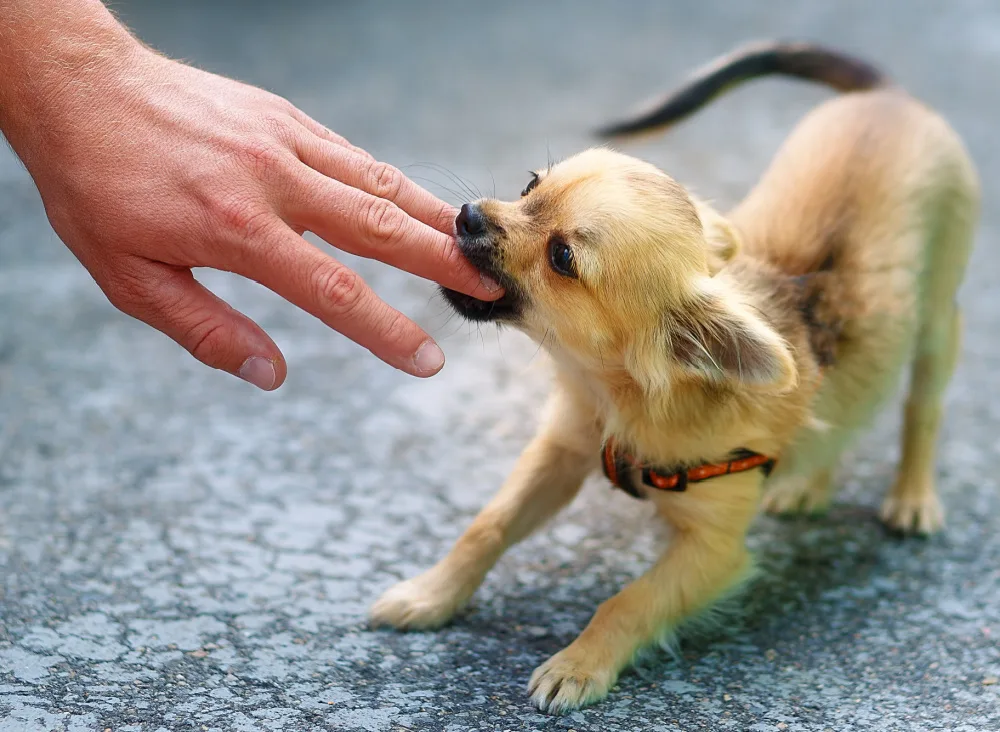
Identifying why your Chihuahua is biting is the most important step in solving the problem. These are the seven most common causes:
1. Fear and anxiety
Fear is the most common cause of Chihuahua biting in adult dogs. A Chihuahua that feels trapped, threatened, or overwhelmed will bite as a last resort to create distance from the perceived threat. Fear-based biting is typically preceded by warning signals — growling, flattened ears, whale eye, and a tucked tail — that are easy to miss or ignore. The solution is removing the fear trigger and rebuilding confidence through positive exposure and counter-conditioning.
2. Pain
Pain is a critical cause of Chihuahua biting that is frequently overlooked — particularly sudden-onset biting in a previously non-biting dog. A Chihuahua in pain from patellar luxation, dental disease, arthritis, or an injury may bite defensively when touched near the painful area. Before beginning any behaviour training programme for biting, always rule out a medical cause — particularly if biting began suddenly or is associated with specific touch locations on the body.
3. Lack of socialisation
A Chihuahua that was not well-socialised during the critical puppy window (weeks 3 to 16) finds the world more frightening and unpredictable than a well-socialised dog. This generalised anxiety manifests as reactive Chihuahua biting toward strangers, children, other animals, and unfamiliar situations. Improving socialisation at any age — through gradual, positive exposure — reduces the underlying anxiety and therefore the biting.
4. Resource guarding
Chihuahuas can develop strong resource-guarding behaviour — biting when someone approaches their food, toys, sleeping spot, or even their primary person. Resource guarding is not dominance — it is anxiety about losing something valued. The solution involves systematic desensitisation to the approach of a person near the guarded resource, combined with positive association training that teaches the dog that a person approaching is a good event rather than a threat.
5. Teething (puppies)
Puppy nipping and mouthing from approximately 4 to 9 months of age is primarily teething-driven. This is normal puppy behaviour — not Chihuahua biting in the problematic adult sense — but it must be consistently redirected to establish that human skin is never an acceptable bite target. Teething discomfort is real; the solution is not to eliminate chewing but to redirect it to appropriate chew toys.
6. Attention-seeking
Some Chihuahuas learn that nipping produces an immediate response — a yelp, a look, being picked up, or being told off. Any attention after biting — even negative attention — reinforces the behaviour. Attention-seeking Chihuahua biting is characterised by light nipping rather than hard biting, and by immediate improvement when completely ignored. Removing all attention for biting and consistently rewarding calm behaviour is the solution.
7. Medical causes
Beyond acute pain, certain medical conditions alter behaviour and can increase Chihuahua biting: hypothyroidism, hormonal changes, neurological conditions, and cognitive dysfunction in older dogs can all produce increased irritability or altered bite inhibition. Any sudden change in biting behaviour — particularly in a previously gentle dog — should prompt a veterinary assessment before behavioural intervention is attempted.
Puppy nipping vs adult Chihuahua biting
It is important to distinguish between puppy nipping and adult Chihuahua biting because the interventions differ. Puppy nipping is a normal developmental behaviour — puppies explore with their mouths, play bite with littermates, and are going through teething. The goal with puppies is consistent redirection and teaching bite inhibition — that human skin is never appropriate. Adult biting, by contrast, typically involves harder pressure, clearer triggering events, and requires more systematic behaviour modification addressing the underlying cause.
Puppy nipping that is not addressed consistently in the first months frequently develops into adult Chihuahua biting — this is one of the most important reasons to address mouthing early, even when it is mild and seems harmless in a small puppy. A 2-pound puppy nipping feels minor; a 5-pound adult Chihuahua biting with the same learned behaviour is a more significant problem.
7 proven ways to stop Chihuahua biting
1. Identify and address the specific trigger
Before applying any training technique, identify exactly what triggers your Chihuahua’s biting. Keep a one-week log — note when biting occurs, what immediately preceded it, who was involved, and what stopped it. The pattern almost always reveals one or two primary triggers. Addressing those specific triggers directly is far more effective than generic training for biting behaviour.
2. Never punish biting with physical correction
Physical punishment — tapping the nose, holding the muzzle shut, scruffing, or any form of physical correction — is the most counterproductive response to Chihuahua biting. It increases fear and anxiety, which are the underlying cause of most biting. It damages trust. And it teaches the dog that humans are unpredictable and threatening — the opposite of what is needed. Remove this approach entirely.
3. Use immediate, consistent redirection
For puppy nipping especially, immediate redirection is the most effective technique. The moment teeth touch skin — say “no” or “ouch” in a firm but calm voice, immediately remove your hand, and redirect to an appropriate chew toy. Make the toy interactive and engaging. Over consistent repetitions, the puppy learns that skin ends play and toys extend it. The key word is consistent — every person, every time, every interaction.
4. Implement the withdrawal of attention
For both puppy nipping and adult attention-seeking Chihuahua biting, complete withdrawal of attention is a powerful tool. When biting occurs — stand up, turn your back, fold your arms, and provide zero interaction for 30 to 60 seconds. Then return and reward immediate calm behaviour. The dog learns that biting ends all engagement. This technique requires every household member to apply it consistently — a single person who laughs at nipping or provides attention after a bite significantly delays progress.
5. Teach the leave it command
The leave it command is one of the most valuable tools for managing Chihuahua biting before it escalates. Teaching the dog to disengage from any stimulus on command — including a hand, another animal, or a triggering situation — gives you a reliable intervention point. See our Chihuahua training tips guide for the positive reinforcement technique to teach leave it step by step.
6. Desensitise to known bite triggers
For fear-based or resource-guarding Chihuahua biting, systematic desensitisation is the most effective long-term solution. This means controlled, repeated exposure to the trigger at a level below the reaction threshold, combined with high-value positive reinforcement for calm behaviour. For resource guarding, this involves approaching the guarded item and dropping a treat — teaching the dog that an approaching person predicts a positive event. Progress is measured in weeks and months, not days.
7. Socialise consistently and positively
Inadequate socialisation underlies more Chihuahua biting than any other single factor. A Chihuahua that has been consistently, positively exposed to different people, environments, sounds, children, and other animals is a more confident and less reactive dog. At Chihuvas, we begin this process before puppies leave our care — but socialisation must continue in the new home throughout the puppy phase and into adulthood. Browse our available puppies to see the foundation we build, or get in touch for specific biting behaviour advice.
What never to do with a biting Chihuahua
- Never physically punish biting — increases fear and worsens the underlying cause
- Never shout or react dramatically — an excited human response rewards the behaviour with high-value attention
- Never hold the muzzle shut — creates fear of handling and damages trust without teaching an alternative behaviour
- Never allow biting as play — even gentle puppy mouthing of fingers normalises skin as a bite target
- Never ignore growling before a bite — a growl is a warning communication. Punishing growling removes the warning without removing the impulse, producing a dog that bites without warning
- Never give up consistency — intermittent reinforcement (rewarding biting sometimes by reacting, ignoring it at other times) is the most powerful way to entrench the behaviour
Warning signs before a Chihuahua bite
Most Chihuahua biting incidents are not sudden or unprovoked — dogs communicate discomfort clearly before biting, but humans miss the signals. Learning to read pre-bite warning signs allows intervention before the bite occurs:
- Growling — the clearest warning. Never punish a growl. It is communication, not aggression
- Whale eye — whites of the eyes visible as the dog turns their head but keeps their gaze fixed
- Stiff body posture — muscles tense, movement loses natural fluidity
- Lip licking or yawning — displacement behaviours signalling stress
- Flattened ears — pressed flat against the skull rather than upright
- Tucked tail — carried low or between legs rather than naturally
- Air snap — a warning bite that stops short of contact. The next one may not
When to seek professional help for Chihuahua biting
Seek help from a qualified dog behaviourist if: biting breaks skin regularly, the behaviour has not responded to consistent positive training over 4 to 8 weeks, biting is associated with extreme fear or panic responses, or biting began suddenly in a previously gentle dog. Always have a vet rule out pain and medical causes before beginning any behaviour programme. Our Chihuahua training tips post covers the positive reinforcement foundation that underpins all effective behaviour work with this breed.
Common questions about Chihuahua biting
Start with a well-socialised Chihuahua from Chihuvas.
Our puppies leave with early socialisation built in — reducing the fear and anxiety behind most biting problems. AKC-registered, Michigan’s most trusted breeder.
View available puppies →