
Why does my Chihuahua shake? 7 proven reasons and how to help.
Why does my Chihuahua shake? If you have ever watched your tiny pup tremble without obvious cause, you are far from alone. Shaking is one of the most common behaviours in Chihuahuas — and one of the most misunderstood. In the vast majority of cases, a shaking Chihuahua is a perfectly healthy, perfectly normal Chihuahua. But knowing the difference between harmless shivering and a genuine health concern could one day save your dog’s life.
As AKC-registered Chihuahua breeders at Chihuvas, we have spent years observing this breed up close — from our nursery to the homes our puppies go to. This guide covers all seven proven reasons why Chihuahuas shake, what each one looks like, and exactly what you should do. You can also read the AKC’s expert guidance on dog shivering and the PDSA’s guidance on tremors in dogs for additional veterinary context.
On this page
- Reason 1: They are cold
- Reason 2: Excitement or strong emotion
- Reason 3: Anxiety or fear
- Reason 4: High metabolism
- Reason 5: Low blood sugar (hypoglycaemia)
- Reason 6: Pain or illness
- Reason 7: Generalised tremor syndrome
- When to see a vet
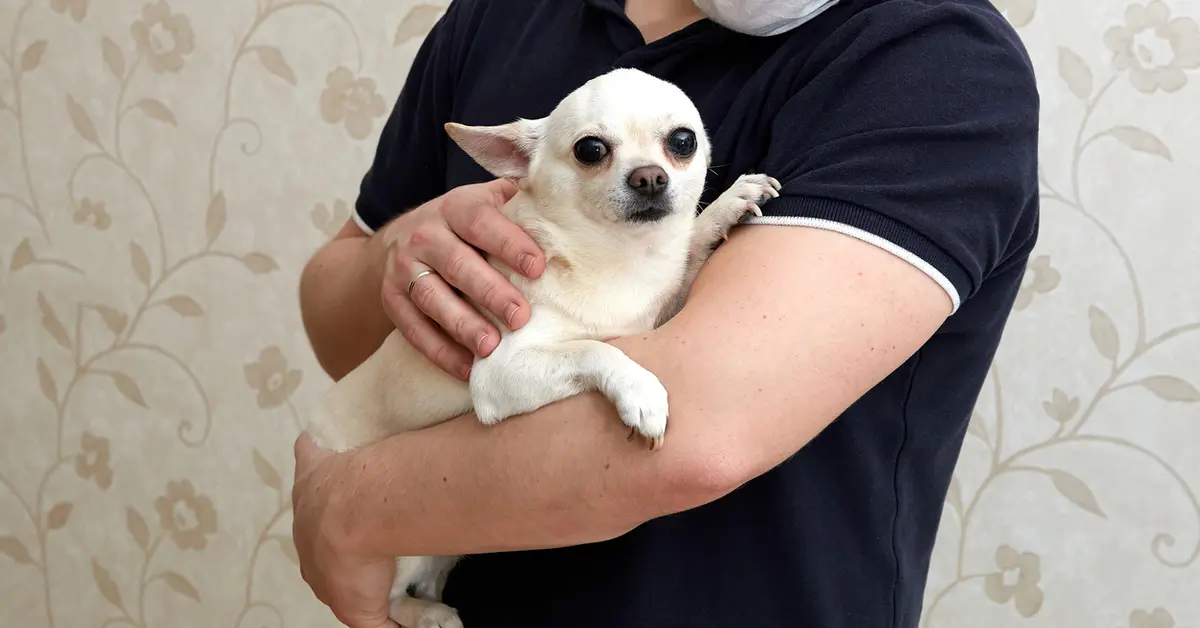
Reason 1: Your Chihuahua is cold
Chihuahuas have thin coats, tiny bodies, and very little body fat — a combination that makes them exceptionally sensitive to cold. While you might feel perfectly comfortable at room temperature, your Chihuahua could genuinely be shivering. Even a mild breeze from an air conditioner, a cool tile floor, or a slight drop in temperature after moving between rooms can trigger shaking in this breed.
One often overlooked point: the shaking may be delayed. Your Chihuahua might have entered a cooler house five minutes ago — but the shaking starts twenty minutes later as the body gradually loses the battle to maintain core temperature. This delay causes many owners to dismiss the cold as the cause when it is in fact the most likely explanation. When asking why does my Chihuahua shake, always check the temperature first.
What to do: Invest in a quality dog sweater or coat for cooler months. Provide a warm, draught-free sleeping area with a cosy blanket. Chihuahuas do best in warm environments — ideally above 18°C indoors.
Reason 2: Excitement or strong emotion
Chihuahuas feel emotions intensely — and they feel them throughout their entire body. If your Chihuahua shakes when you pick up the lead, when you come home from work, or when you reach for the treat jar, they are almost certainly experiencing excitement shaking. This is one of the most endearing quirks of the breed.
Excitement shaking looks different from anxiety shaking. A Chihuahua shaking with excitement will typically have a wagging tail, bright eyes, perked ears, and an upbeat body posture. The shaking is simply their body’s physical response to an emotion too big for their tiny frame to contain quietly. This is a completely harmless reason why Chihuahuas shake.
What to do: Nothing — excitement shaking is completely harmless. If the intensity of their excitement becomes problematic, calm greetings and positive reinforcement training can help moderate their response over time.
Reason 3: Anxiety or fear
Chihuahuas are known for their bold personalities — but underneath that bravado, many are genuinely anxious dogs. Fear and anxiety shaking looks physically similar to excitement shaking but the body language tells a completely different story. An anxious Chihuahua may tuck their tail, avoid eye contact, flatten their ears, or try to hide behind you.
Common anxiety triggers include strangers, loud noises such as fireworks or thunderstorms, car journeys, vet visits, or separation from their owner. Chihuahuas that were not well-socialised as puppies are particularly prone to anxiety-driven shaking. This is one reason we invest heavily in socialisation at our Chihuvas nursery — well-socialised puppies grow into more confident, less anxious adults.
What to do: Identify and reduce anxiety triggers where possible. Create a safe, quiet retreat your Chihuahua can access when overwhelmed. For severe anxiety, consult your vet — there are both behavioural and medical interventions that help significantly.
Reason 4: High metabolism
Chihuahuas have one of the highest metabolic rates of any dog breed. Their bodies burn energy rapidly — even at rest. This constant high-speed cellular activity can sometimes manifest as a subtle, involuntary trembling that has nothing to do with temperature or emotion. Think of it like an engine running at high RPM — the vibration is simply a byproduct of the system operating at full speed.
Metabolism-related shaking tends to be subtle and consistent rather than dramatic. It is often most noticeable after exercise or when the dog has not eaten recently. It is entirely normal in a healthy Chihuahua with a good feeding routine — and one of the most common true answers to why does my Chihuahua shake.
What to do: Maintain a consistent feeding schedule with small, frequent meals — typically three times daily for adult Chihuahuas and four to five times for puppies. Regular meals prevent blood sugar dips that intensify metabolism-related trembling.
Reason 5: Low blood sugar (hypoglycaemia)
Low blood sugar is one of the most serious reasons a Chihuahua might shake — and it is particularly common in puppies and toy breeds. Because of their tiny size and fast metabolism, Chihuahuas can experience dangerously low blood glucose levels when they go too long without eating, after intense exercise, or during periods of stress.
Hypoglycaemia shaking looks different from ordinary trembling. The dog may appear weak, wobbly, or disoriented alongside the shaking. They may be unusually lethargic, have glassy eyes, or in severe cases collapse or have a seizure. If you suspect your Chihuahua is hypoglycaemic, rub a small amount of honey or corn syrup on their gums and contact your vet immediately.
What to do: Feed Chihuahua puppies every three to four hours without fail. Adult Chihuahuas should eat at least twice daily — ideally three times. Keep honey or glucose gel on hand for emergencies. Never allow a Chihuahua puppy to go more than four hours without food, especially during stressful events.
Reason 6: Pain or illness
When a Chihuahua is in pain — whether from an injury, ear infection, dental pain, arthritis, or internal illness — shaking can be the primary visible symptom. Dogs communicate pain differently to humans and often mask discomfort instinctively. Shaking may be the clearest signal your Chihuahua gives you that something is wrong internally.
Pain-related shaking is usually accompanied by other behavioural changes — less willing to move, reluctant to be touched in certain areas, eating less than usual, or appearing withdrawn and quiet. Kidney disease, ear infections, and accidental poisoning from toxic foods like chocolate, xylitol, grapes, or raisins can all present with shaking as a primary symptom. If this is why your Chihuahua shakes, prompt veterinary attention is essential.
What to do: If shaking is sudden, unexplained, or accompanied by any change in behaviour, appetite, or energy, visit your vet promptly. Do not attempt to diagnose the cause yourself — pain and illness in small breeds can deteriorate quickly.
Reason 7: Generalised Tremor Syndrome
Generalised Tremor Syndrome (GTS) is a neurological condition that causes full-body tremors unrelated to cold, emotion, or blood sugar. It was first identified in small white dogs — hence the alternative name White Shaker Dog Syndrome — but can affect any small breed including Chihuahuas regardless of coat colour. GTS typically develops in young adult dogs between one and five years of age.
GTS shaking is distinctive because it is constant rather than situational. The tremors occur regardless of temperature, food intake, or emotional state and do not respond to warming or calming the dog. The dog may also have difficulty walking, appear uncoordinated, or have abnormal eye movements. If this is why your Chihuahua shakes, GTS requires veterinary diagnosis and is treated with corticosteroids, responding well when caught early.
What to do: If your Chihuahua experiences constant, unexplained full-body tremors that do not respond to warmth, feeding, or reassurance — especially with coordination problems — contact your vet for a neurological assessment.
When to see a vet about Chihuahua shaking
The question of why does my Chihuahua shake has a reassuring answer most of the time — cold, excitement, or anxiety, and completely harmless. But contact your vet immediately if the shaking:
- Comes on suddenly and severely with no obvious emotional or temperature trigger
- Is accompanied by weakness, wobbling, glazed eyes, or collapse — possible hypoglycaemia
- Follows possible ingestion of toxic foods — chocolate, xylitol, grapes, raisins, onions
- Is constant and does not respond to warmth, feeding, or reassurance — possible GTS
- Is accompanied by changes in appetite, energy, or behaviour lasting more than 24 hours
- Occurs only when touching a specific body part — possible pain or injury
- Is accompanied by vomiting, diarrhoea, or difficulty breathing
Common questions about why Chihuahuas shake
Looking for a healthy, well-raised Chihuahua puppy?
At Chihuvas, our AKC-registered puppies are raised with love, socialised from birth, and health-checked before going home. Michigan’s most trusted Chihuahua breeder.
View available puppies →