
First night with a chihuahua puppy — what to expect and how to survive it.
First night with a chihuahua puppy is one of the most exciting and most exhausting experiences of dog ownership. You have prepared the house, bought the supplies, picked up your tiny new companion from the breeder — and now it is 10 pm, the puppy is in an unfamiliar home without its mother or littermates for the first time, and neither of you knows quite what to do next. The good news is that the first night with a chihuahua puppy follows a predictable pattern, and knowing what to expect makes the difference between a stressful ordeal and a manageable transition.
This guide covers everything you need to know about the first night with a chihuahua puppy: how to prepare before collection day, where the puppy should sleep, how to handle crying and whimpering, toilet breaks, feeding, temperature, and the things that are completely normal but feel alarming when you have never done this before. The advice here is based on our own experience since 2018 and is consistent with general puppy care guidance from the American Kennel Club.
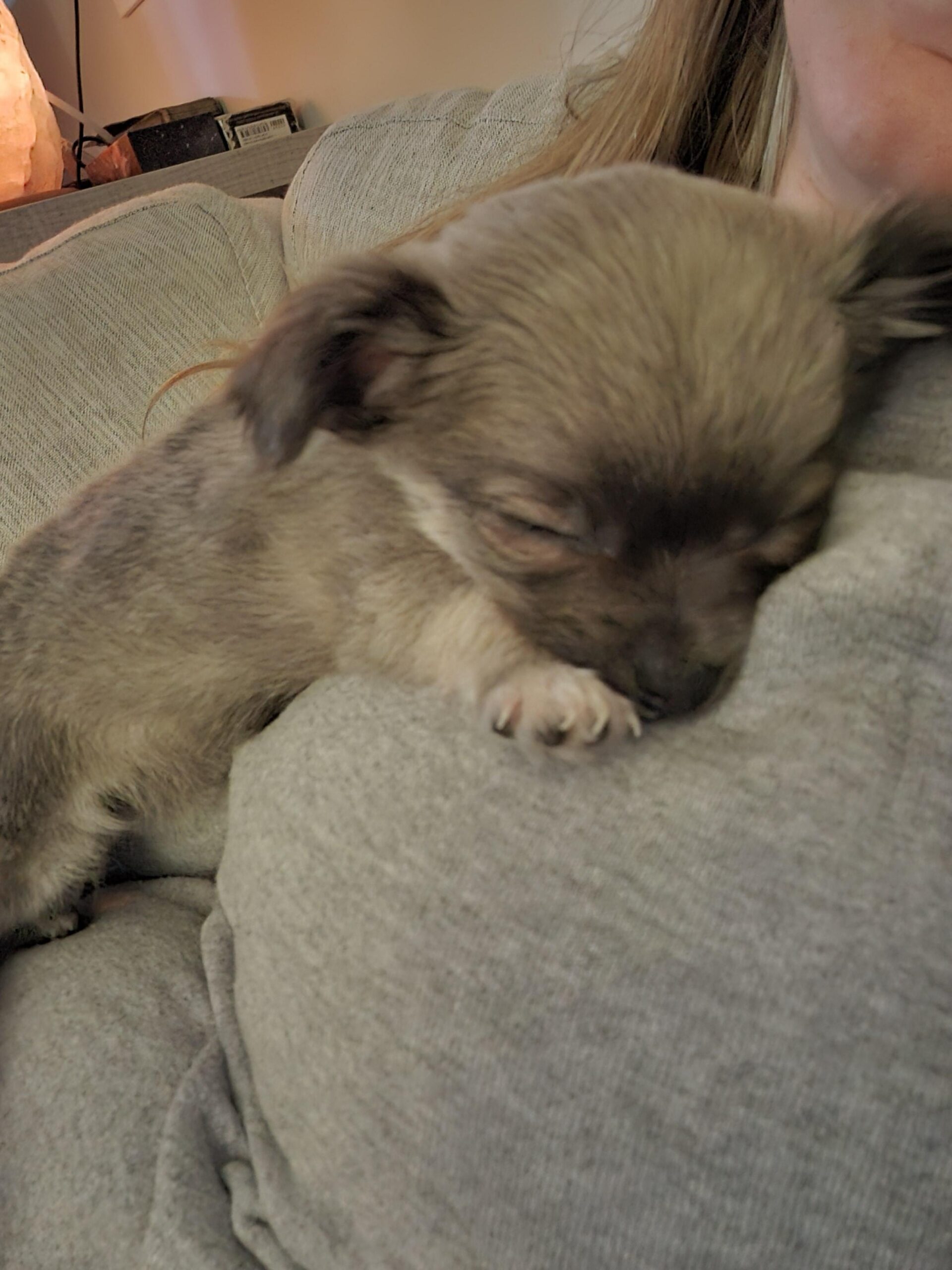
First night with a chihuahua puppy — preparing before collection day
- Crate or puppy pen: A small crate with a soft blanket or bed is the safest sleeping arrangement. Size matters — it should be big enough for the puppy to stand, turn around, and lie down, but small enough to feel enclosed and secure.
- Bedding: Soft, washable blankets. Expect accidents — have spares ready. A snuggle toy with a heartbeat simulator can help mimic the presence of littermates.
- Puppy pads: Place these near the crate and by the back door. Even if you plan to toilet train outdoors, puppy pads are essential backup for the first night with a chihuahua puppy.
- Food and water bowls: Small, shallow, and stable. Chihuahua puppies have tiny mouths — oversized bowls make eating and drinking harder.
- The breeder’s food: Get the exact same food the breeder was using. Dietary changes cause digestive upset — the last thing you need on night one.
- Warm blanket or heat pad: Chihuahua puppies lose body heat rapidly. A snuggle-safe heat pad (microwave type designed for pets) provides warmth without electrical risk.
- Enzymatic cleaner: For inevitable accidents. Standard cleaning products do not fully remove urine scent — enzymatic cleaners break down the proteins and prevent re-marking.
- Quiet, draught-free room: Decide where the puppy will sleep before they arrive. Rearranging at midnight with a crying puppy is not ideal.
First night with a chihuahua puppy — the first few hours at home
Keep it calm
The journey home has been stressful. Everything is new — new smells, new sounds, new people, new surfaces underfoot. The first few hours before the first night with a chihuahua puppy should be calm, quiet, and low-pressure. Resist the urge to invite everyone over to meet the puppy, pass it around, or overwhelm it with toys and attention. The puppy needs time to decompress, explore at its own pace, and begin to associate your home with safety.
Let the puppy explore one room
Do not give the puppy access to the entire house. One room — puppy-proofed and safe — is enough. Let them sniff, wander, and investigate. Stay nearby, sit on the floor at their level, and let them come to you rather than chasing or picking them up constantly. This builds confidence and trust in the hours before the first night with a chihuahua puppy.
Offer water and a small meal
Put fresh water down and offer a small meal of the breeder’s food. Do not worry if the puppy does not eat much — many puppies are too anxious or overstimulated to eat during the first few hours. As long as they drink water, a skipped meal on the first evening is not a concern. Forcing food creates negative associations.
Ask your breeder for a blanket or cloth that has been with the mother and littermates — something that carries their scent. Place this in the puppy’s crate on the first night with a chihuahua puppy. The familiar scent provides enormous comfort and can significantly reduce crying. Most good breeders will offer this without being asked, but if they do not, request it — it makes a real difference.
First night with a chihuahua puppy — where should they sleep?
Best option: crate next to your bed
The ideal sleeping arrangement for the first night with a chihuahua puppy is a crate or puppy pen placed directly next to your bed, at the same height if possible. The puppy can hear your breathing, sense your presence, and feel less alone — without being in your bed where they could be injured by rolling or falling. You can also reach down and place your fingers against the crate door for reassurance without fully waking up.
Why not your bed?
Chihuahua puppies at 8–12 weeks are incredibly small and fragile. An adult rolling over in sleep can injure or suffocate a tiny puppy. Beyond safety, starting the puppy in your bed creates an expectation that is very difficult to reverse later if you want them to sleep independently. The first night with a chihuahua puppy sets the pattern — start as you mean to continue.
Making the crate comfortable
- Soft, warm bedding: Fleece blankets or a puppy-sized bed. Nothing too thick that the puppy could get tangled in.
- The breeder’s scent blanket: Place it where the puppy will rest their head.
- A warm heat pad: Microwave snuggle-safe pads provide gentle warmth for 8–10 hours. Place it under the bedding, not directly against the puppy.
- A ticking clock or heartbeat toy: The rhythmic sound mimics a mother’s heartbeat and can soothe a distressed puppy.
- No food or water inside the crate overnight: Water bowls spill and create a wet, cold bed. Offer water at toilet breaks instead.
First night with a chihuahua puppy — handling the crying
Your chihuahua puppy will almost certainly cry, whimper, or whine on the first night. This is completely normal. The puppy has been separated from its mother and siblings for the first time, placed in a strange environment, and left alone in the dark. It is frightened, confused, and looking for reassurance. Understanding this context helps you respond appropriately during the first night with a chihuahua puppy.
What to do
- Reassure without removing from the crate: Place your hand against the crate door. Speak softly. Let the puppy know you are there without picking it up or bringing it into your bed. The goal is comfort, not rescue — the puppy needs to learn that the crate is safe.
- Wait for a pause in crying before responding: If you respond every time the puppy cries, you inadvertently teach it that crying produces attention. Wait for a brief quiet moment, then offer gentle praise or a soft “good” to reinforce the silence.
- Keep the room dark and quiet: Stimulation keeps the puppy awake. A dark, calm environment signals sleep time.
- Accept that the first night will be broken: You will lose sleep on the first night with a chihuahua puppy. Accept this in advance and plan accordingly — take the next day off work if possible.
Never shout at, shake, or punish a chihuahua puppy for crying on the first night. The puppy is not being naughty — it is genuinely distressed. Punishment creates fear and destroys the trust you are trying to build. Patience, presence, and gentle reassurance are the only appropriate responses during the first night with a chihuahua puppy.
First night with a chihuahua puppy — toilet breaks
A chihuahua puppy at 8–12 weeks cannot hold its bladder through the night. Expect to get up at least once or twice for toilet breaks during the first night with a chihuahua puppy — typically every 3–4 hours.
- Set an alarm: Do not wait for the puppy to cry to signal it needs to go — by that point, an accident may have already happened. Set a quiet alarm for 3–4 hours after bedtime.
- Keep it boring: Carry the puppy to the toilet spot (outdoor if possible, puppy pad if not). No play, no excitement, no lights on. This is a business trip, not a social event.
- Praise quietly when they go: A soft “good” and gentle pat when they toilet in the right place. Then straight back to the crate. The puppy learns: wake up → toilet → back to sleep. No play in between.
- Clean accidents without fuss: If you find an accident in the crate, clean it calmly with enzymatic cleaner, replace the bedding, and move on. Do not scold — the puppy cannot connect a past accident with a present punishment.
First night with a chihuahua puppy — feeding
Feeding on the first night with a chihuahua puppy should be simple and stress-free: the same food the breeder was using, in the same portion size, at approximately the same time. Do not change anything about the diet on day one. The puppy’s digestive system is already dealing with the stress of a new environment — adding a dietary change on top guarantees digestive upset.
Feed the last meal of the day 2–3 hours before bedtime. This gives the puppy time to digest and have a final toilet break before settling for the night. Feeding right before bed increases the chance of overnight accidents and discomfort. On the first night with a chihuahua puppy, an early evening meal around 6–7 pm with a final toilet break at 10 pm works well for most households.
Chihuahua puppies are prone to hypoglycaemia (low blood sugar) because of their tiny body mass and fast metabolism. If your puppy did not eat dinner and seems lethargic, wobbly, or unresponsive, rub a small amount of honey or sugar water on their gums and contact your vet immediately. Hypoglycaemia is a medical emergency in toy breed puppies. On the first night with a chihuahua puppy, monitor eating closely — if the puppy refuses all food for more than 12 hours, consult your vet.
First night with a chihuahua puppy — what is normal
- Crying and whimpering for 10–30 minutes: Normal. It reduces each night and usually stops by night 2–3.
- Refusing food on the first evening: Normal. Stress and overstimulation suppress appetite. As long as the puppy drinks water and eats the next morning, one missed meal is fine.
- Shivering or trembling: Often normal for chihuahuas — they shiver when cold, anxious, or excited. Ensure the room is warm (20–24°C) and provide blankets. If shivering is persistent and accompanied by lethargy, contact your vet.
- Following you everywhere: Normal. You are the only familiar thing in this new world. The puppy will become more independent as it settles over the first week.
- One or two toilet accidents: Completely normal and expected. Clean without fuss, adjust your alarm timing, and continue.
- Restlessness and not settling immediately: Normal. The puppy is processing a huge amount of new information. It may take 20–40 minutes of fidgeting before sleep comes.
When to call the vet
- Vomiting more than once or vomiting combined with diarrhoea
- Lethargy, wobbliness, or unresponsiveness — possible hypoglycaemia
- Complete refusal of food and water for 12+ hours
- Persistent diarrhoea — especially if bloody
- Difficulty breathing, excessive panting, or blue-tinged gums
The first night with a chihuahua puppy is not a test you pass or fail — it is a shared experience you survive together. It will be messy, it will be tiring, and it will be the beginning of a bond that lasts a decade or more. Lower your expectations, trust the process, and remember: every chihuahua owner has been exactly where you are tonight.
Chihuvas experienceCommon questions — first night with a chihuahua puppy
More guides for your new chihuahua puppy.
Practical advice, honest stories, and everything we have learned raising chihuahuas at home since 2018. No jargon, no sponsored content — just real experience.
Read more guides →