Chihuahua hydrocephalus: signs, diagnosis and care
Chihuahua hydrocephalus is one of the conditions new owners worry about most, often after they first feel their puppy’s soft spot. It is a serious condition, but it is also much less common than online fear suggests, and early signs are usually clear.
We are AKC chihuahua breeders in Traverse City, Michigan, and we get questions about chihuahua hydrocephalus from families every month. This guide explains what it is, how it differs from a normal molera, the signs to watch for, how vets diagnose and treat it and how to choose a healthy puppy.
For a vet-written overview of the condition, see the VCA Animal Hospitals guide to hydrocephalus. For general breed information, visit the AKC chihuahua breed page.
What is chihuahua hydrocephalus?
Chihuahua hydrocephalus is a build-up of cerebrospinal fluid (CSF) in the brain. CSF normally cushions the brain and drains away, but when too much collects, pressure rises and can damage brain tissue.
The name comes from Greek words meaning “water on the brain”. The fluid usually collects in the ventricles, which are small spaces deep inside the brain.
Chihuahua hydrocephalus is a build-up of fluid in the brain, most often present from birth in toy breeds. Watch for a domed head, a large soft spot, eyes pointing down and outward, slow learning, circling and seizures. A vet diagnoses it with an exam and imaging, and many dogs can be helped with medication or surgery.

Types of hydrocephalus
Vets usually describe two main types. Knowing which one a dog has helps guide treatment.
| Type | What it means | Typical age |
|---|---|---|
| Congenital | Present from birth, often linked to how the skull and brain develop | Signs in the first weeks or months |
| Acquired | Caused later by a blockage from a tumor, infection, bleeding or injury | Any age, often adults |
In chihuahuas, congenital hydrocephalus is the more common form. Acquired chihuahua hydrocephalus is rarer and usually linked to another illness or injury.
Why toy breeds are at higher risk
Small breeds with rounded, dome-shaped heads are more likely to have hydrocephalus. Chihuahuas, Yorkshire Terriers, Pomeranians, Maltese and toy poodles are among the breeds most often affected.
- A very rounded skull can affect how fluid drains from the brain.
- Skull bones in toy breeds often close later.
- An inherited tendency appears to run in some lines.
- Small size means even modest pressure changes can cause signs.
It is important to keep this in perspective. Most chihuahuas never develop hydrocephalus, and many families never encounter it.
Molera vs chihuahua hydrocephalus
A molera is a soft spot on top of the skull where the bones haven’t fully joined. It is common in chihuahuas and is allowed in the breed standard, so it is not a sign of chihuahua hydrocephalus on its own.
| Normal molera | Possible hydrocephalus |
|---|---|
| Small, fingertip size or less | Very large or growing soft spot |
| Normal, rounded head | Domed, swollen-looking head |
| Eyes look straight ahead | Eyes point down and outward |
| Playful and learning normally | Dull, confused or slow to learn |
| Walks normally | Wobbly, circling or head pressing |
The key is the combination of signs. A large soft spot plus neurological signs is what needs a vet check.
Signs of chihuahua hydrocephalus
Signs of chihuahua hydrocephalus vary with how much pressure there is and which parts of the brain are affected. Some puppies show several signs, others just one or two.
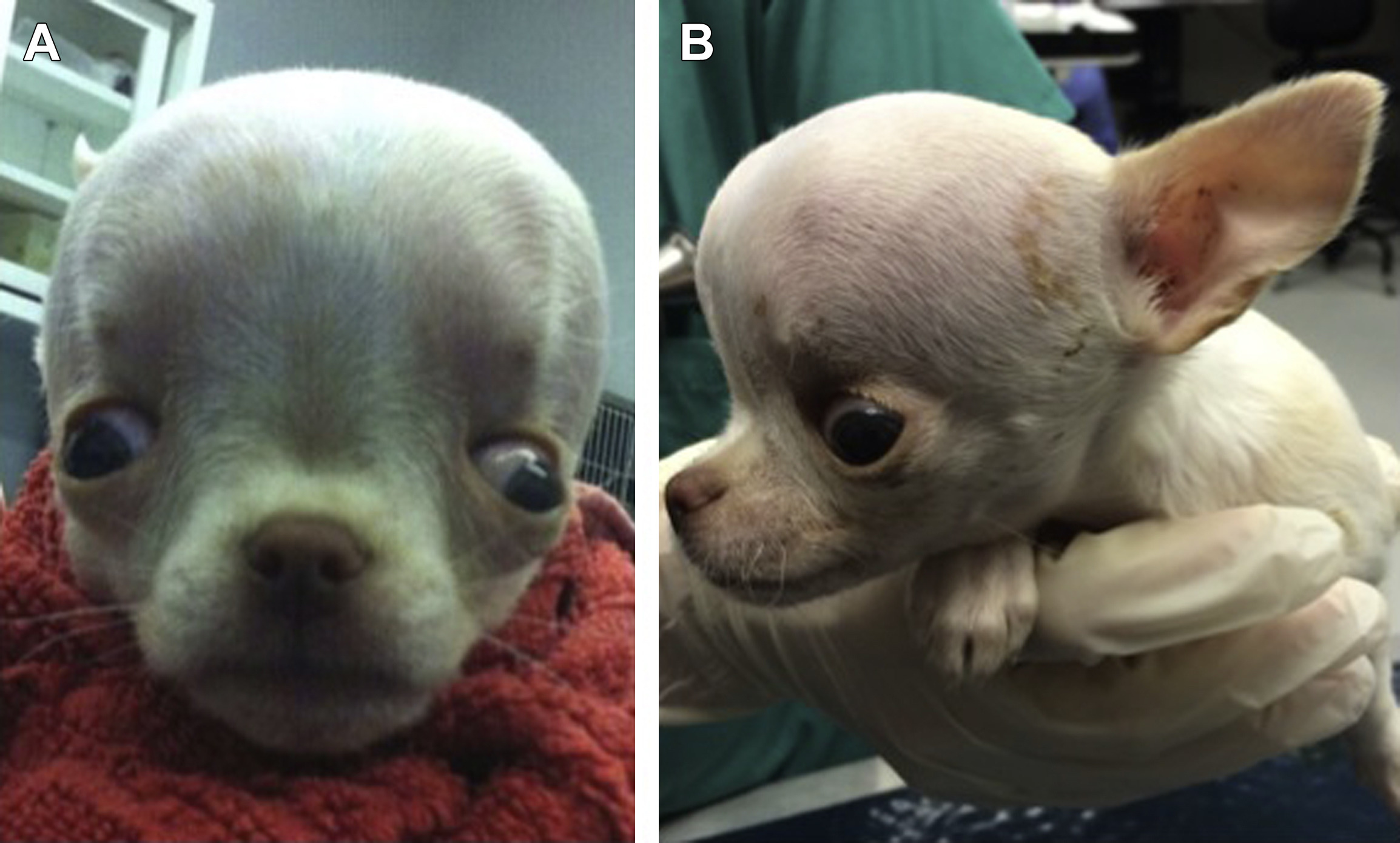
- A domed or unusually large head for the body.
- A large, tense or growing soft spot.
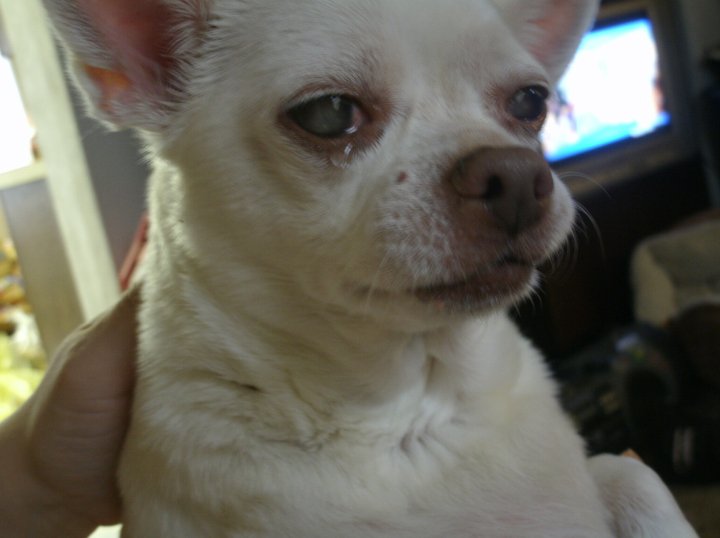
- Eyes that point down and outward, sometimes called “setting sun” eyes.
- Slow learning and very poor potty training progress.
- Circling, pacing or pressing the head against walls.
- Wobbly walking, falling over or poor coordination.
- Seizures or staring spells.
- Poor vision or bumping into things.
- Unusual crying, sleepiness or slow growth.
Some of these signs have other causes, such as low blood sugar, infections or liver problems. Always see a vet for a proper diagnosis.
Low blood sugar can cause weakness, wobbliness and seizures in tiny puppies too. Our chihuahua hypoglycemia guide explains how to tell the difference.
When signs usually appear
Most congenital cases show signs early. Many puppies with chihuahua hydrocephalus show changes by a few months of age.
| Age | What you might notice |
|---|---|
| Birth to 8 weeks | Domed head, slow growth, weak nursing |
| 8 to 16 weeks | Slow learning, odd eye position, wobbly walking |
| 4 to 12 months | Behavior changes, seizures, poor house training |
| Adult | Usually acquired causes, such as a tumor or infection |
This is one reason good breeders keep puppies until at least 8 weeks, and often longer for tiny ones. It gives time to see that each puppy is developing normally.
Causes of chihuahua hydrocephalus
Chihuahua hydrocephalus happens when fluid is produced faster than it drains, or when drainage is blocked. The exact cause often isn’t found in congenital cases.
- Inherited differences in brain and skull development.
- Narrowing or blockage of the channels that drain CSF.
- Infections during pregnancy or early life.
- Bleeding in the brain around birth.
- Tumors, inflammation or injury in older dogs.
Because inheritance plays a role, careful breeding is the best way to lower the risk.
How vets diagnose chihuahua hydrocephalus
Diagnosing chihuahua hydrocephalus starts with a full physical and neurological exam. Your vet will look at the head shape, eyes, walking, reflexes and behavior.
| Test | What it shows |
|---|---|
| Neurological exam | Which brain functions are affected |
| Ultrasound through the molera | Size of the fluid spaces in puppies with an open soft spot |
| CT scan | Detailed images of the brain and skull |
| MRI scan | The most detailed view, including possible causes |
| Blood tests | Rule out low blood sugar, liver disease and infections |
One important point: some toy-breed dogs have slightly enlarged ventricles on scans but no signs at all. Vets look at the whole picture, not just the images.
Treatment for chihuahua hydrocephalus
Treatment for chihuahua hydrocephalus depends on how severe it is and whether there is an underlying cause. The goal is to reduce pressure, control symptoms and protect the brain.
- Medication to reduce fluid production and swelling.
- Anti-seizure medication if seizures occur.
- Treating any underlying cause, such as an infection.
- Regular rechecks to adjust treatment.
- Surgery for dogs that don’t respond well to medication.
Your vet or a veterinary neurologist will tailor the plan to your dog. Never give medication without a vet’s guidance, as doses for tiny dogs must be precise.
Shunt surgery
For some dogs, surgery is the best option. A surgeon places a thin tube, called a ventriculoperitoneal (VP) shunt, that drains extra fluid from the brain into the belly, where the body absorbs it.
- Usually done by a veterinary neurologist or specialist surgeon.
- Can greatly improve signs in suitable dogs.
- Requires careful follow-up for infection or blockage.
- Not every dog is a good candidate.
Ask the specialist about success rates, risks and aftercare so you can make an informed decision.
The cost of treating chihuahua hydrocephalus
Costs for chihuahua hydrocephalus vary widely by region, clinic and how much care is needed. These are rough US ranges to help you plan.
| Item | Typical range |
|---|---|
| Vet exam and blood tests | $150 to $500 |
| Ultrasound | $300 to $700 |
| CT or MRI scan | $1,500 to $3,500 |
| Ongoing medication | $30 to $150 per month |
| Shunt surgery | Several thousand dollars, often $5,000 or more |
Pet insurance taken out early can help with costs, as long as the condition isn’t pre-existing. Our chihuahua cost guide covers insurance and budgeting.
Outlook and life expectancy
The outlook for chihuahua hydrocephalus depends on how severe the signs are and how well the dog responds to treatment. Mild cases can live good lives with medication and care.
| Severity | Typical outlook |
|---|---|
| Mild, responds to medication | Often a good quality of life with monitoring |
| Moderate | Can improve with medication or surgery |
| Severe, with ongoing seizures or blindness | More guarded; quality of life is the focus |
Your vet will help you judge quality of life over time. Our chihuahua lifespan guide explains what affects how long chihuahuas live.
Caring for a dog with chihuahua hydrocephalus
Home care plays a big part in helping a dog with chihuahua hydrocephalus live well. A calm, safe and predictable home makes daily life easier.
- Give medication exactly as prescribed, on time every day.
- Keep furniture in the same places so your dog can find its way.
- Block stairs and use ramps to prevent falls.
- Use a harness, not a collar, to avoid pressure on the neck.
- Handle the head gently and avoid bumps.
- Keep a diary of signs, seizures and medication changes.
Patience helps with training, as some affected dogs learn more slowly. Our chihuahua potty training guide has a gentle, step-by-step plan.
Managing seizures
Seizures can be frightening to watch, but staying calm helps you keep your dog safe.
- Move furniture and objects away so your dog can’t get hurt.
- Do not put your hands near the mouth.
- Time the seizure and note what happened before it.
- Keep the room quiet and dim.
- Call your vet after any seizure, and urgently if it lasts more than a few minutes or seizures come in clusters.
Video recordings can help your vet understand what is happening. Keep your phone handy if your dog has had seizures before.
Other conditions with similar signs
Several other problems can look like hydrocephalus, especially in young toy-breed puppies. Your vet will rule these out during testing.
| Condition | Shared signs |
|---|---|
| Low blood sugar | Weakness, wobbliness, seizures |
| Liver shunt | Slow growth, odd behavior after meals, seizures |
| Brain infection or inflammation | Circling, seizures, behavior changes |
| Head injury | Wobbliness, uneven pupils, sleepiness |
This is why blood tests and a careful history matter. Treating the right cause makes all the difference.
When to call the vet
Some signs need same-day or emergency care. Don’t wait if you see any of these.
- A seizure lasting longer than a few minutes.
- More than one seizure in a day.
- Sudden blindness or loss of balance.
- Severe sleepiness or difficulty waking.
- Vomiting along with neurological signs.
- Signs of infection or swelling along a shunt.
Keep your vet’s and the nearest emergency clinic’s numbers saved and easy to find.
A daily routine for chihuahua hydrocephalus
A steady routine helps a dog with chihuahua hydrocephalus feel secure. Predictable days reduce stress, which can make some signs worse.
| Time | Routine |
|---|---|
| Morning | Medication with breakfast; short, calm potty walk |
| Midday | Small meal or snack; quiet play |
| Afternoon | Rest in a safe, familiar space |
| Evening | Medication with dinner; gentle grooming or cuddles |
| Bedtime | Final potty break; dim, quiet room |
Small, regular meals also help prevent low blood sugar, which can mimic or worsen neurological signs in tiny dogs.
Questions to ask your vet
If your vet suspects chihuahua hydrocephalus, a list of questions helps you understand the plan. Bring these to your appointment.
- How sure are you of the diagnosis, and what tests do you recommend?
- Is this congenital or could there be another cause?
- What are the treatment options and their side effects?
- Should we see a veterinary neurologist?
- What signs mean I should call you straight away?
- How often will we need rechecks?
Write the answers down and keep them with your dog’s records. It makes later visits and decisions much easier.
Judging quality of life
For dogs with moderate or severe chihuahua hydrocephalus, quality of life becomes an important focus. Your vet can help you track it over time.
- Is your dog eating and drinking well?
- Can it move around and potty without distress?
- Are seizures controlled?
- Does it still enjoy cuddles, toys or short walks?
- Are good days more common than bad days?
Keeping a simple daily score from 1 to 10 can help you see patterns and talk clearly with your vet.
Preventing chihuahua hydrocephalus through breeding
You can’t prevent congenital chihuahua hydrocephalus in a puppy that already has it. The best prevention happens before puppies are born, through careful breeding.
- Breed only healthy dogs with no neurological signs.
- Do not breed from dogs that have produced affected puppies.
- Avoid breeding for extremely tiny size.
- Keep puppies long enough to check normal development.
- Offer a written genetic health guarantee.
Our how we raise chihuahua puppies page explains our health and care routine.
Choosing a healthy puppy
Choosing the right breeder is the most important step you can take. Look for a breeder who is open about health and happy to answer questions.
- Ask about health in the parents and past litters.
- Make sure the puppy is active, curious and eating well.
- Check that the eyes look straight ahead and the puppy walks normally.
- Ask about the size of the molera.
- Get a written health guarantee and vet records.
Our guides on how to choose a chihuahua breeder help you make a confident choice.
Myths about chihuahua hydrocephalus
There is a lot of confusion about chihuahua hydrocephalus online. Here are the facts.
| Myth | Fact |
|---|---|
| Every molera means hydrocephalus | Most chihuahuas with a molera are healthy |
| Hydrocephalus is always fatal | Many dogs can be managed with treatment |
| Tiny “teacup” puppies are healthier | Breeding for extreme size may raise health risks |
| You can diagnose it by head shape | Diagnosis needs a vet exam and imaging |
| Nothing can be done | Medication and surgery can help many dogs |
Our chihuahua health problems guide covers other conditions worth knowing about.
Our approach to puppy health
At Chihuvas, we watch every puppy’s development closely in our Traverse City, Michigan home, including head shape, eyes, walking, learning and molera size. Puppies are vet-checked before they leave.
Every puppy goes home with vaccinations, a microchip, a vet health certificate, AKC registration and a two-year genetic health guarantee. We deliver nationwide by in-cabin chihuahua flight nanny and stay in touch for life.
See our available puppies, send us an inquiry or meet our family on our chihuahua breeder in Michigan page.
Healthy puppies come from healthy parents, careful raising and time to make sure every pup is developing normally before it leaves.
Chihuvas breeding teamChihuvas is an AKC-registered Chihuahua breeder based in Michigan, and we deliver our puppies nationwide across the US. Every puppy is health-checked, vaccinated for their age and socialised from birth. See our available puppies or send us an inquiry.
Common questions about chihuahua hydrocephalus
Looking for a healthy puppy?
Every puppy is vet-checked, raised in our Michigan home and delivered nationwide with a two-year genetic health guarantee.
View available puppies →