Chihuahua weight chart — is your Chihuahua a healthy weight?
Owners search for a Chihuahua weight chart when they wonder whether those extra treats have added up, or whether their puppy is growing at the right pace. It is an important question, because Chihuahuas are the smallest dog breed and even small changes in weight have a big effect on their health.
This Chihuahua weight chart guide covers healthy weight ranges for adults and puppies, how to check body condition at home, signs your dog is overweight or underweight, and what to do about it. Weights are shown in pounds and ounces first, with kilograms for reference.
The ranges are consistent with the AKC Chihuahua breed standard, which sets a maximum of 6 pounds for show dogs.
Chihuahua weight chart — adult weight
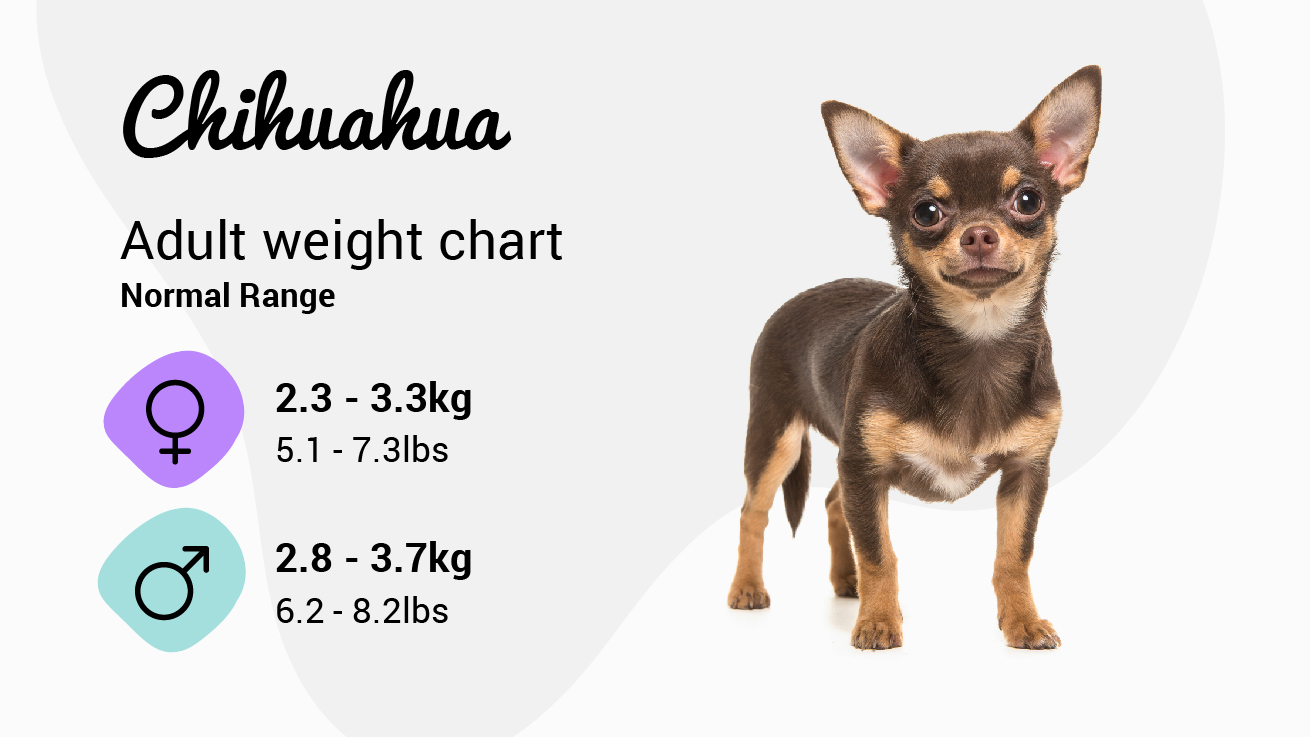
The AKC breed standard says a Chihuahua should not exceed 6 pounds (2.7 kg). In practice, the Chihuahua weight chart for healthy adults runs from about 3 to 7 pounds, depending on bone structure and build.
| Build | Typical healthy weight | Notes |
|---|---|---|
| Small-framed | 3.3–4.4 lb (1.5–2.0 kg) | Fine bones, lean build |
| Medium-framed | 4.4–6.0 lb (2.0–2.7 kg) | Most common range; within breed standard |
| Large-framed | 6.0–7.0 lb (2.7–3.2 kg) | Heavier bone, stockier build |
The Chihuahua weight chart is a guide, not a verdict. A muscular, active Chihuahua at 6.5 pounds may be healthier than a sedentary one at 5 pounds carrying extra fat, so always combine the chart with a body condition check.
Chihuahua puppy weight chart by age
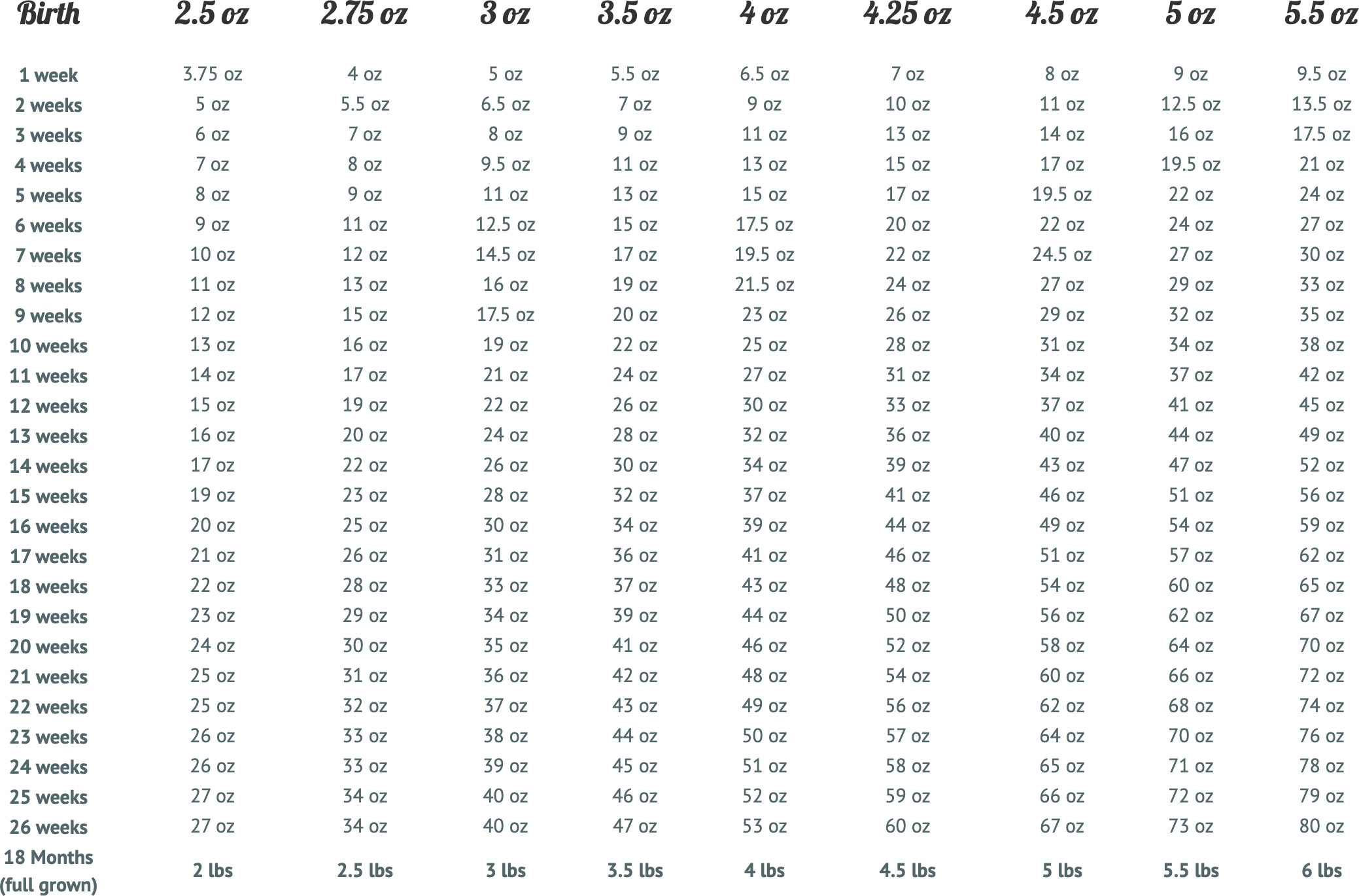
Tracking your puppy against a Chihuahua weight chart in the first year helps confirm healthy growth. The columns show the expected adult size.
| Age | Small adult (3.3–4.4 lb) | Medium adult (4.4–6 lb) | Large adult (6–7 lb) |
|---|---|---|---|
| Birth | 2.5–3.2 oz | 3.2–4.2 oz | 4.2–5.1 oz |
| 4 weeks | 7–10 oz | 10–14 oz | 14 oz–1.1 lb |
| 8 weeks | 12–16 oz | 1.0–1.4 lb | 1.4–1.9 lb |
| 12 weeks | 1.1–1.4 lb | 1.4–2.0 lb | 2.0–2.4 lb |
| 16 weeks | 1.4–1.9 lb | 1.9–2.6 lb | 2.6–3.3 lb |
| 6 months | 2.0–2.6 lb | 2.6–4.0 lb | 4.0–5.1 lb |
| 9 months | 2.6–3.7 lb | 3.7–5.1 lb | 5.1–6.4 lb |
| 12 months | 3.3–4.4 lb | 4.4–6.0 lb | 6.0–7.1 lb |
Puppies do not follow the Chihuahua weight chart exactly; they have growth spurts and pauses, so one slow week is normal. If your puppy stays below the chart for two or three weeks running, or stops gaining altogether, talk to your vet.
Use the Chihuahua weight chart alongside regular feeding, because small puppies can be prone to low blood sugar, so regular meals matter. Our Chihuahua puppy food guide explains how much and how often to feed.
When do Chihuahuas stop growing?
On our Chihuahua weight chart, most dogs reach adult weight by 10 to 12 months. Some larger-framed dogs keep filling out slightly until about 18 months.
After the first year, any noticeable weight gain is usually fat rather than growth. That is the point to watch portions closely.
Beyond the Chihuahua weight chart: body condition checks
Body condition scoring is the best partner to a Chihuahua weight chart, because it accounts for your dog’s frame. Vets use a 1 to 9 scale, and the ideal for a Chihuahua is 4 to 5.
The rib test
Run your fingers along the ribcage with light pressure. You should feel each rib easily, like the knuckles on the back of your hand, without seeing them from across the room.
The waist test
Look down at your Chihuahua from above. You should see a clear narrowing behind the ribs, like an hourglass.
The tuck test
Look from the side. The tummy should slope upwards from the ribcage towards the back legs rather than hanging level or sagging.
A Chihuahua weight chart tells you what the breed should weigh. A body condition check tells you what your own Chihuahua should weigh.
The Chihuvas approachSigns your Chihuahua is overweight
If your dog sits above the Chihuahua weight chart, it may be overweight. More than half of US dogs are thought to be overweight, and Chihuahuas are especially at risk because they need so few calories. Even 7 to 10 ounces of extra weight is significant on a dog this small.
- Ribs are hard to feel under a layer of fat
- No visible waist from above
- A rounded or sagging belly from the side
- Tiring quickly or reluctance to walk
- Heavy panting after little effort
- Struggling to jump onto furniture they used to manage
- A waddling walk
How to help an overweight Chihuahua
- Cut portions by 10–15%: small, gradual reductions are safer than big cuts
- Limit treats: keep them under 10% of daily calories and use tiny pieces
- Stop table scraps: a small human snack can be a big share of a Chihuahua’s daily calories
- Consider a weight management food: switch gradually over 7–10 days
- Increase exercise slowly: start with two 15-minute walks a day
- Weigh weekly: aim for a loss of about 1–2% of body weight per week
- Involve your vet: especially if your dog needs to lose more than 10–15% of its weight
Our Chihuahua exercise guide has safe activity ideas for every age.
Signs your Chihuahua is underweight
Falling below the Chihuahua weight chart is often more worrying than being above it, because it can point to a health problem. Look for:
- Ribs, spine and hip bones clearly visible
- No fat felt over the ribs
- A very pronounced waist and hollow tummy
- Muscle loss, especially over the back and hips
- Dull coat, low energy or reduced appetite
Common causes
- Dental pain making eating uncomfortable
- Intestinal parasites stealing nutrients
- Picky eating, often made worse by frequent food changes
- Stress or anxiety after changes at home
- Medical conditions such as kidney, liver or thyroid disease
Never simply increase food before finding the cause. A vet check, and sometimes blood tests, comes first.
Health risks of the wrong weight
| Condition | Overweight risk | Underweight risk |
|---|---|---|
| Heart disease | Extra strain on the heart | Weakness from poor nutrition |
| Joints | Worse luxating kneecaps and arthritis | Muscle loss reduces stability |
| Breathing | Extra pressure on a weak windpipe | Low risk |
| Blood sugar | Higher diabetes risk | Higher risk of low blood sugar |
| Lifespan | Shorter life expectancy | Weaker immunity and resilience |
Staying within the Chihuahua weight chart is one of the most powerful ways to protect your dog’s health. Our Chihuahua lifespan guide explains how it adds years to life.
How much should a Chihuahua eat?
As a rough guide, many adult Chihuahuas need about 40 calories per pound of body weight a day. A 4-pound adult needs around 160 calories, which is a very small amount of food.
Puppies and very active dogs need more, while older or less active dogs may need less. Always measure meals with a cup or kitchen scale rather than guessing.
| Adult weight | Approximate daily calories |
|---|---|
| 3 lb | About 120 |
| 4 lb | About 160 |
| 5 lb | About 200 |
| 6 lb | About 240 |
Use these as starting points and adjust based on body condition. Your vet can calculate exact needs for your dog.
How to weigh a Chihuahua at home
Chihuahuas are small enough to weigh accurately at home and compare with the Chihuahua weight chart. A digital kitchen scale or baby scale works well, because bathroom scales are not precise enough for a dog this light.
- Place a shallow box or basket on a kitchen scale and zero it
- Put your Chihuahua in the box and wait for the reading to settle
- Weigh at the same time of day, ideally before a meal
- Record the weight with the date in a notes app or notebook
- For bigger dogs, weigh yourself holding the dog, then subtract your own weight
Weigh puppies weekly and adults monthly. Seniors benefit from monthly checks too, since weight loss can be an early sign of illness.
How much to feed a Chihuahua puppy
To keep puppies on track with the Chihuahua weight chart, feed little and often. Puppies need more calories per pound than adults to fuel growth, and their small stomachs mean little and often is best. Low blood sugar is a real risk if meals are missed.
| Age | Meals per day | Notes |
|---|---|---|
| 8–12 weeks | 4–5 | Never skip meals; watch for weakness |
| 3–6 months | 3–4 | Steady growth; adjust portions as weight rises |
| 6–12 months | 3 | Move towards adult routine |
| Adult | 2–3 | Measure every meal |
Follow the feeding guide on your puppy food as a starting point, then adjust using the puppy weight chart and body condition checks. Your vet can help if growth seems too fast or too slow.
Weight changes in senior Chihuahuas
As Chihuahuas age, they can drift off the Chihuahua weight chart in either direction. Some gain fat because they are less active, while others lose muscle and become thin.
- Reduce portions slightly if your senior is gaining weight
- Keep up gentle daily walks to protect muscle
- Choose softer food if dental problems make eating hard
- Report unexplained weight loss to your vet promptly
- Ask about a senior blood panel to check kidneys, liver and thyroid
Regular monitoring helps older dogs stay comfortable for longer. Our senior Chihuahua care guide explains how to adjust care as your dog ages.
Choosing healthy treats
Treats are where many Chihuahuas creep above the Chihuahua weight chart without anyone noticing. Because their daily calorie needs are so low, even a few biscuits can make a big difference.
- Break treats into pea-sized pieces for training
- Use part of the daily food allowance as rewards
- Try small pieces of plain cooked chicken or green beans
- Avoid fatty human foods and anything containing xylitol, chocolate, grapes or onion
- Count chews and dental sticks as part of daily calories
Small, frequent rewards keep training fun without adding much to your dog’s waistline.
What about “teacup” Chihuahuas?
“Teacup” is a marketing label, not an official type of Chihuahua, and it does not appear on any Chihuahua weight chart. It usually describes dogs expected to weigh under about 3 pounds as adults.
Very tiny Chihuahuas can be more prone to low blood sugar, fragile bones and other health issues. If your dog is naturally small, focus on steady growth and good body condition rather than keeping weight as low as possible.
Our guide to teacup vs standard Chihuahuas explains the differences and risks.
Male vs female Chihuahua weight
Unlike many breeds, male and female Chihuahuas share the same Chihuahua weight chart. The AKC standard uses the same 6-pound limit for both, and frame size matters far more than sex.
Some males are slightly stockier, but you should judge each dog on its own body condition. A small female and a large male can both be perfectly healthy at different weights.
Does coat type change weight?
Long-coated Chihuahuas can look heavier than the Chihuahua weight chart suggests, because the fur hides their outline. Always use your hands, not just your eyes, to check ribs and waist on a long-coated dog.
Smooth-coated dogs show their shape more clearly, which makes weight changes easier to spot. Read more in our guide to long coat vs smooth coat Chihuahuas.
Weight after spaying or neutering
After spaying or neutering, many dogs drift above the Chihuahua weight chart because they need fewer calories because their metabolism slows a little. Without any change to portions, weight can creep up over the following months.
- Weigh your dog every two weeks for the first few months after surgery
- Reduce portions by around 10% if weight starts to rise
- Keep daily walks and play consistent
- Ask your vet whether a different food would help
A small adjustment early on is much easier than trying to reverse significant weight gain later.
Common weight mistakes owners make
- Free feeding, leaving food out all day
- Guessing portions instead of measuring
- Forgetting that treats and chews count as calories
- Sharing food from the table
- Judging weight by eye on a fluffy long-coated dog
- Cutting food sharply instead of gradually
- Ignoring slow weight loss in an older dog
Avoiding these simple mistakes keeps most Chihuahuas within the Chihuahua weight chart range for life.
A simple weight log
| Date | Weight | Body condition | Notes |
|---|---|---|---|
| 1 March | 5.2 lb | 5/9 | Ideal |
| 1 April | 5.4 lb | 5/9 | More treats this month |
| 1 May | 5.6 lb | 6/9 | Cut portions by 10% |
| 1 June | 5.3 lb | 5/9 | Back on track |
A log like this, used with the Chihuahua weight chart, makes trends obvious at a glance, long before you would notice a change by eye. It is also very useful to show your vet at check-ups, as it gives a clear picture of the months between visits.
Exercise for a healthy weight
Food controls most of where your dog sits on the Chihuahua weight chart, but exercise keeps muscles strong and metabolism active. Most adults do well with 30 to 50 minutes of activity a day, split into two walks plus play.
Indoor games such as gentle fetch, hide-and-seek with treats and short training sessions count too. They are especially useful in cold or wet weather, when long walks are not practical for a tiny dog.
What affects healthy weight
- Bone structure: deer-head Chihuahuas with longer legs are often lighter than stockier apple-heads
- Age: puppies are still growing; seniors may lose muscle or gain fat
- Spay or neuter status: metabolism can slow afterwards, so portions may need adjusting
- Activity level: active dogs carry more muscle at the same weight
- Diet quality: better protein supports a leaner body
Read more in our guide to apple head vs deer head Chihuahuas.
Weigh your Chihuahua once a month on the same scale at the same time of day. A kitchen scale or baby scale works well for a dog this size. Small monthly changes add up, and tracking them turns the Chihuahua weight chart into a real health tool.
When to see the vet about your Chihuahua’s weight
- Your dog gains or loses more than about half a pound in a month without a change in diet
- Weight keeps rising despite careful feeding and exercise
- Weight drops even though your dog is eating normally
- Appetite changes suddenly in either direction
- Your puppy falls well below the chart for several weeks
For more on keeping your Chihuahua healthy, see our Chihuahua health problems guide and senior Chihuahua care guide.
Chihuvas is an AKC-registered Chihuahua breeder based in Michigan, and we deliver our puppies nationwide across the US. Every puppy is health-checked, vaccinated for their age and socialised from birth. See our available puppies or send us an inquiry.
Common questions about chihuahua weight chart
Find a healthy, well-nourished Chihuahua puppy at Chihuvas.
Every Chihuvas puppy is weight-monitored from birth and goes home at a healthy body condition. AKC-registered Michigan breeder, delivering nationwide.
View available puppies →