
Chihuahua crate training — 7 proven steps for a calm puppy.
Chihuahua crate training is one of the most valuable foundations you can build in your puppy’s first weeks at home — and the good news is that this breed is naturally well suited to it. Chihuahuas tend to love cosy, enclosed spaces, and their instinctive reluctance to soil their own den makes a properly introduced crate one of the most effective tools available for house training, settling, and giving your puppy a genuine retreat space of their own. Done right, crate training is calm, positive, and surprisingly quick. Done in a rush or used as punishment, it can backfire into exactly the anxiety it was meant to prevent. This guide gives you the complete, proven process.
As AKC-registered Chihuahua breeders at Chihuvas, we begin gentle den introduction with every litter before they leave for their new homes — your puppy will already have some positive crate association built in. This guide covers the seven proven steps to continue that foundation, the right schedule by age, and how to handle the most common challenges. Guidance draws on the AKC guide to crate training and the PDSA puppy training guidance.
Choosing the right crate
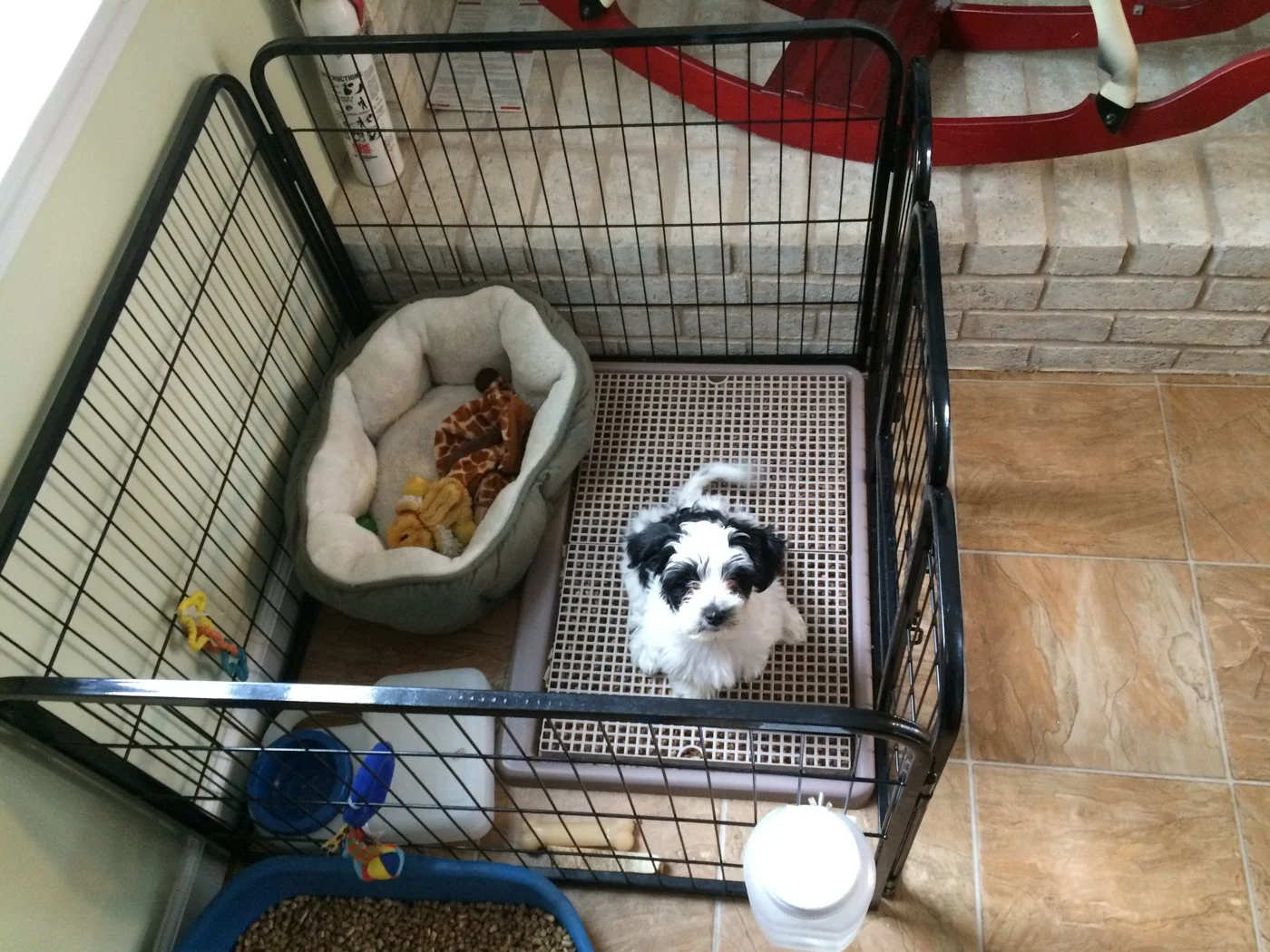
The right crate is the foundation of successful Chihuahua crate training. Choose a small or extra-small breed crate, typically 18 to 22 inches long, designed for dogs up to around 10 lbs. The crate should be large enough for your Chihuahua to stand up, turn around, and lie down comfortably — but not so large that it loses the secure, den-like feeling that makes crates genuinely effective for this breed. A crate that feels cavernous undermines the cosy security Chihuahuas naturally seek out.
Line the crate with a soft, washable bed or blanket to mimic a natural den environment — though see the important caveat on bedding timing in the mistakes section below. Ensure good ventilation and a sturdy, secure base, and place the crate somewhere central to family life rather than isolated, so your puppy does not associate it with being shut away from everyone.
7 proven steps for Chihuahua crate training
1. Let your puppy explore freely first
Place the crate in a high-traffic family area with the door open and secured so it cannot swing and startle your puppy. Let them investigate entirely at their own pace, with no pressure to enter. Some naturally curious Chihuahuas will start exploring or even napping in the crate within the first day. For others, this exploration phase may take a few days — both are completely normal in Chihuahua crate training.
2. Lure them in with treats and a happy tone
If your puppy is hesitant, encourage them with a warm, happy voice and small high-value treats — tiny pieces of chicken, cheese, or hot dog work well. Toss treats near the crate entrance first, then just inside the door, and gradually further inside over several sessions. Never force or push your Chihuahua into the crate; if they refuse to go all the way in at first, simply continue tossing treats progressively deeper until they walk in calmly on their own.
3. Feed meals inside the crate
Once your puppy enters somewhat willingly, begin feeding regular meals with the bowl placed inside the crate — starting near the entrance and moving progressively toward the back over successive meals. This step builds one of the strongest positive associations in Chihuahua crate training, since food is one of the most powerful motivators available. Once your puppy stands comfortably eating at the back of the crate, you can begin briefly closing the door while they eat.
4. Introduce a release and entry command
Choose a consistent word — “kennel,” “crate,” or “bed” — and use it every time you encourage your puppy to enter. Pair the command with a treat tossed inside. Consistency here builds a clear, reliable cue your Chihuahua will quickly learn to respond to, which becomes invaluable as crate training progresses beyond the introductory phase.
5. Practise short absences while you’re home
Once your puppy is entering the crate calmly and the door has been closed for short meal periods, begin closing the door for brief periods while you remain in the room — then gradually extend to leaving the room for a minute or two before returning. Burn off excess energy with 10 to 15 minutes of active play before each crating session; a tired puppy settles easily, while a puppy with pent-up energy is far more likely to view the crate as confinement rather than comfort.
6. Extend duration and add real absences gradually
Once your Chihuahua is comfortable with you out of sight for short periods at home, begin practising brief real absences — stepping out to get the mail, then a short errand. Extend crate duration gradually rather than jumping straight to a full working day. This patient, incremental approach is what separates successful Chihuahua crate training from crate experiences that create anxiety rather than calm.
7. Reward calm settling, not just entry
The final and most overlooked step: actively reward your Chihuahua for settling calmly and quietly inside the crate, not just for walking in. Open the door and offer praise or a treat during a calm, quiet moment — never the instant your puppy starts fussing or whining. This reinforces the behaviour you actually want: relaxed, contented time in the crate, which is the genuine end goal of Chihuahua crate training.
Crate time schedule by age
| Age | Maximum crate time | Notes |
|---|---|---|
| 8–12 weeks | 1–2 hours | Very limited bladder control — frequent breaks essential |
| 3–6 months | 2–3 hours | Gradually extending as bladder control develops |
| Under 6 months (general guideline) | 3–4 hours maximum | Never exceed this regardless of age within this range |
| Healthy adult | Up to 8 hours | Only with adequate exercise, stimulation and affection outside crate time |
These maximums apply regardless of how well Chihuahua crate training is progressing — even a perfectly calm, well-adjusted puppy still has physical limitations that must be respected. Always provide a toilet break, water, and brief interaction before and after any extended crate period.
How to handle whining in the crate
Not all whining during Chihuahua crate training means the same thing, and responding correctly to each type matters:
- Urgent, escalating whining that begins after your puppy has settled likely signals a genuine bathroom need. Take them out calmly for a brief, no-play potty break, then return them to the crate without extended interaction
- Attention-seeking whining — starting the moment you leave, inconsistent, with pauses to check if you are responding — should be ignored completely. Responding teaches your puppy that whining works
- Never open the door the instant whining stops. Wait for 10 to 15 seconds of genuine silence first. Opening immediately rewards the cessation of noise specifically, not calm behaviour generally — wait for the calm, then reward that
Common mistakes to avoid
- Using the crate for punishment — sending your puppy to the crate as a “time-out” poisons the entire positive association. Only crate during calm moments or when offering something positive like meals or puzzle toys
- Removing them too quickly after whining stops — teaches your Chihuahua that complaining eventually works. Always wait for genuine calm first
- Skipping exercise before crating — a puppy with pent-up energy experiences the crate as confinement rather than comfort. Burn energy first with active play
- Adding soft bedding before house training is complete — bedding absorbs and masks accidents, allowing a puppy to sleep in their own mess without you realising. Keep the crate bare until consistently accident-free for at least two weeks, then introduce a thin washable mat
- Going too fast through the steps — rushing any stage of Chihuahua crate training is the single most common cause of crate anxiety. Move at the pace your individual puppy sets
Why crates suit Chihuahuas so well
Chihuahua crate training tends to succeed more readily than with some other breeds because of two natural tendencies: Chihuahuas genuinely gravitate toward small, enclosed, cosy spaces, and they have a strong instinctive reluctance to soil their own den. Combined, these traits make the crate both appealing as a retreat and effective as a house training tool almost from the outset, provided the introduction is gradual and consistently positive. If your Chihuahua shows signs of genuine separation anxiety rather than typical settling-in whining, consult your vet for tailored guidance — see our Chihuahua separation anxiety guide for more detail on recognising and addressing this specifically.
Browse our available puppies or get in touch with our team for any questions about crate training your new Chihuahua.
Common questions about Chihuahua crate training
Find your well-prepared Chihuahua puppy at Chihuvas.
Our puppies leave with early den and handling introduction already begun — making crate training easier from day one. AKC-registered, Michigan’s most trusted Chihuahua breeder.
View available puppies →