
Chihuahua exercise guide — 7 proven tips for a fit, happy dog.
Chihuahua exercise is one of the most misunderstood aspects of owning this breed. The assumption that a small dog needs very little exercise is one of the most common and most damaging misconceptions in dog ownership. Chihuahuas are energetic, intelligent, curious dogs who need daily physical activity and mental stimulation just as much as any larger breed — the difference is only in duration and intensity. A Chihuahua that does not receive adequate Chihuahua exercise is more likely to develop anxiety, excessive barking, destructive behaviour, and obesity — all of which are far more work to manage than a daily 30-minute walk.
As AKC-registered Chihuahua breeders at Chihuvas, we discuss exercise requirements with every new puppy family before they take their puppy home. This guide covers everything you need to know about Chihuahua exercise — the daily requirements, exercise by age, the best types of activity, indoor options, and seven proven tips for keeping your Chihuahua fit and happy throughout their life. Guidance follows the AKC Chihuahua breed information and the PDSA Chihuahua care guidance.
How much exercise does a Chihuahua need?
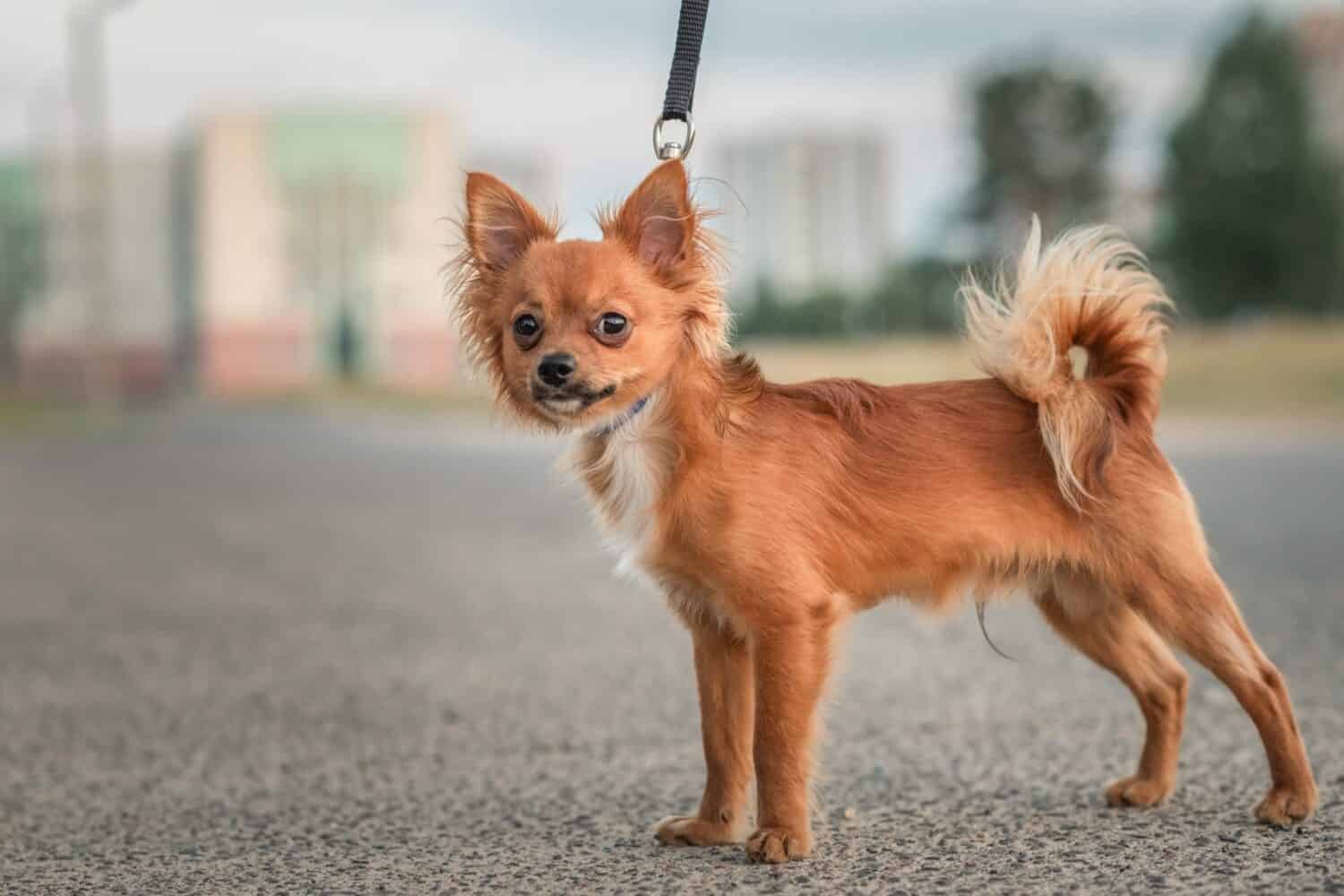
Adult Chihuahuas need approximately 30 to 50 minutes of exercise daily — ideally split across two shorter sessions of 15 to 25 minutes each rather than one longer walk. This is because Chihuahuas have short legs relative to their energy levels, and their small stride means they cover significantly more steps per mile than larger dogs. Two shorter walks are more comfortable and sustainable than one long walk that exhausts them.
This daily Chihuahua exercise requirement can be met through a combination of outdoor walks, backyard play, indoor games, and structured training sessions. Not every session needs to be a formal walk — active indoor play, trick training, and mental enrichment activities all count toward the daily total. The key is consistency: daily activity every day, rather than occasional intense sessions followed by days of inactivity.
Chihuahua exercise requirements by age
| Life stage | Age | Daily exercise target | Best approach |
|---|---|---|---|
| Puppy | 8 weeks – 6 months | 5 min per month of age, 2–3× daily | Gentle play, short sniff walks — no forced exercise |
| Young adult | 6 months – 2 years | 30–40 minutes daily | Two walks, backyard play, training sessions |
| Adult | 2–7 years | 30–50 minutes daily | Two walks, active play, enrichment activities |
| Senior | 8+ years | 20–30 minutes daily | Two gentle walks, low-impact play, mental stimulation |
Best types of Chihuahua exercise
These are the most effective and appropriate Chihuahua exercise types for different life stages and circumstances:
- Daily walks on lead — the gold standard of Chihuahua exercise. Two walks of 15 to 25 minutes each provides physical activity, mental stimulation from new scents and sights, socialisation opportunities, and important routine structure for the dog
- Off-lead play in a secure garden or enclosed area — excellent for free movement and natural play behaviour. A securely fenced garden allows a Chihuahua to run, explore, and self-regulate their activity level. Never allow a Chihuahua off-lead in an unenclosed area — they are too small to be reliably visible and too bold to be reliably recalled from danger
- Interactive indoor games — fetch in a hallway, tug with appropriate toys, and hide-and-seek games provide meaningful physical activity on days when outdoor walks are not possible due to weather or other constraints
- Structured training sessions — short five to ten-minute training sessions are both mentally and physically tiring for Chihuahuas. Teaching new commands, practising existing ones, and trick training all contribute to the daily exercise total
- Nose work and scent games — hiding treats around the home or garden and allowing the Chihuahua to find them using their nose is an excellent low-impact activity that is particularly valuable for senior dogs or those with joint limitations
- Hydrotherapy or swimming — an excellent low-impact exercise option for senior Chihuahuas or those with patellar luxation or arthritis. Water supports body weight, eliminating joint impact while providing resistance exercise
7 proven Chihuahua exercise tips
1. Always use a harness, never a collar
For all Chihuahua exercise involving a lead, a harness is essential. Collar pressure on a Chihuahua during walking — particularly if they pull or lunge — puts direct pressure on the tracheal cartilage rings, worsening the risk of tracheal collapse. A well-fitted harness distributes pressure across the chest and shoulders instead. This is one of the most important practical changes any Chihuahua owner can make and should be implemented from the very first walk.
2. Let them sniff — it counts as exercise
A Chihuahua walk is not just physical — it is a mental experience. Allowing your Chihuahua to sniff extensively during walks provides mental stimulation equivalent to significant physical exertion. A 20-minute walk with generous sniffing time is more satisfying and tiring for a dog than a brisk 20-minute march with no stopping. Build sniff time deliberately into your Chihuahua exercise routine — let them choose their pace and pause at interesting smells rather than pulling them along.
3. Never over-exercise a puppy
Puppy Chihuahua exercise must be carefully limited — growth plates in the bones are cartilaginous and vulnerable to damage until the dog is fully grown at approximately 12 to 18 months. The safest guideline is no more than five minutes of structured walking per month of age, two to three times per day. A 12-week puppy should not be walked for more than 15 minutes at a stretch. Excessive puppy exercise damages developing joints and can contribute to long-term orthopaedic problems.
4. Build exercise gradually after illness or inactivity
A Chihuahua returning from illness, surgery, or a period of reduced activity needs a gradual return to normal Chihuahua exercise levels rather than immediate resumption at full intensity. Start with five to ten-minute gentle walks and increase by a few minutes each day over one to two weeks. Monitor for any limping, stiffness, or reluctance to continue — these are signals to slow down further.
5. Adjust exercise for weather conditions
Chihuahuas are extremely sensitive to both cold and heat. In cold weather, always use a dog coat or jumper and monitor for shivering — a shivering Chihuahua must come inside immediately. In hot weather, walk in the early morning or evening when temperatures are lower, check pavement temperature with the back of your hand (if it is too hot for your hand it is too hot for their paws), and always carry water. Never leave a Chihuahua in a hot car even briefly.
6. Combine physical and mental exercise daily
The most effective Chihuahua exercise routine combines physical activity with mental stimulation. A Chihuahua that receives both is calmer, less anxious, less likely to bark excessively, and more settled at home than one receiving only physical exercise. Incorporate a training session, a food puzzle, or a scent game into every day alongside the daily walks. These mental activities are particularly valuable on days when physical exercise is limited by weather or other factors.
7. Watch for individual variation
Every Chihuahua is an individual. Some are naturally higher-energy and will actively seek more activity than the minimum guidelines suggest. Others are lower-energy and are content with less. Learn your individual dog’s natural energy level and adjust accordingly. Your Chihuahua will tell you when they have had enough — slowing down, lagging behind, or sitting down during a walk are signals to head home. Browse our available puppies or get in touch to discuss the energy levels typical of our current litters.
Mental stimulation — as important as physical exercise
Mental stimulation is as important as physical Chihuahua exercise for behavioural health. Chihuahuas are highly intelligent dogs that become bored, anxious, and vocal when their minds are not adequately engaged. Mental enrichment activities include: food puzzles and Kongs stuffed with treats, hide-and-seek games with treats or toys, short training sessions teaching new commands or tricks, sniff walks where the dog leads the exploration, and supervised socialisation with familiar dogs or people.
A common pattern in Chihuahuas with excessive barking, separation anxiety, or destructive behaviour is insufficient mental stimulation rather than insufficient physical exercise. Adding 10 to 15 minutes of mental enrichment daily often produces more improvement in these behaviours than doubling physical exercise. See our guides on Chihuahua training tips and why Chihuahuas bark so much for complementary approaches.
Exercise in hot and cold weather
Temperature management is one of the most important considerations in Chihuahua exercise. Chihuahuas have almost no body fat reserves and lose heat rapidly in cold environments:
- Below 10°C / 50°F: always use a dog coat or fleece jumper. Monitor for shivering and limit walk duration
- Below 5°C / 40°F: keep walks very short, use a coat, and consider indoor exercise alternatives on the coldest days
- Above 25°C / 77°F: walk only in early morning or evening. Check pavement temperature. Always carry water
- Above 30°C / 86°F: avoid outdoor exercise except for toilet breaks. Provide indoor exercise and mental stimulation only
Signs of over-exercise and under-exercise
Signs of over-exercise to watch for: excessive panting that takes more than 10 minutes to resolve, reluctance to continue walking or sitting/lying down during a walk, lameness or limping during or after exercise, extreme tiredness after sessions, overheating (panting heavily, weakness, glazed eyes).
Signs of under-exercise to watch for: excessive barking or vocalisations, destructive behaviour around the home, difficulty settling, weight gain, anxiety, hyperactive behaviour during brief activity periods — suggesting pent-up energy from insufficient daily exercise.
Common questions about Chihuahua exercise
Find a naturally active Chihuahua from Chihuvas.
Our AKC-registered puppies are socialised from birth — well-balanced, confident, and ready for daily life. Michigan’s most trusted Chihuahua breeder.
View available puppies →