
Chihuahua first vet visit — 9 important things to expect.
Your Chihuahua’s first vet visit is one of the most important appointments in your new puppy’s life — and one of the most important things you can do in the first week of bringing them home. The first veterinary examination establishes a health baseline, confirms the vaccination record from your breeder, screens for conditions specific to the breed, and starts the preventive care relationship that will protect your Chihuahua throughout their life. Most vets recommend scheduling within the first three to five days of bringing a new puppy home — before the excitement of settling in has fully overtaken the practicalities of health care.
At Chihuvas, every puppy leaves with their first vaccinations administered, a full health record, and a puppy pack with the information your vet needs at the Chihuahua first vet visit. This guide covers the nine most important things to expect at your Chihuahua’s first vet visit, drawing on the AKC guide to the puppy’s first vet visit and the PDSA puppy health care guidance.
When to schedule the first vet visit
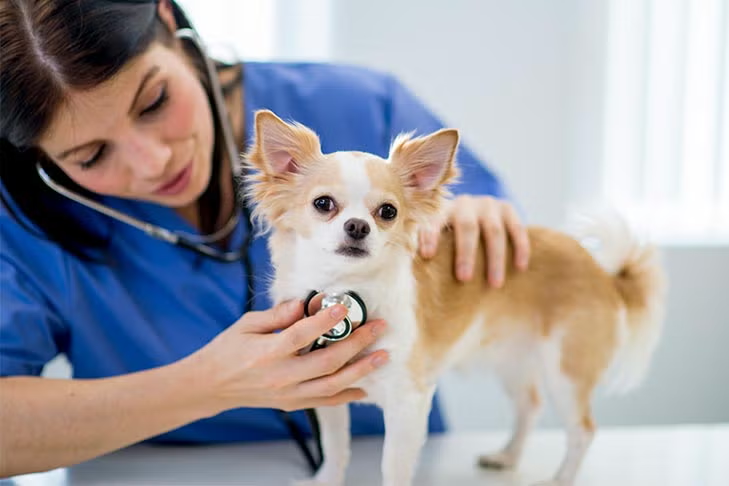
Schedule your Chihuahua first vet visit within the first week of bringing them home — most veterinary guidelines recommend within three to five days. Puppies have immature immune systems and can carry health conditions that are not visible to the untrained eye. The first vet visit catches any concerns early, before they become serious, and allows you to establish the preventive care routine that protects your puppy through the critical early months.
If possible, identify a vet with small breed experience before your Chihuahua first vet visit. A vet familiar with Chihuahua-specific health concerns — patellar luxation, hypoglycaemia, cardiac screening, and vaccine sensitivities — will provide more targeted care than one primarily experienced with larger breeds.
What to bring to your Chihuahua’s first vet visit
- All health and vaccination records from your breeder — at Chihuvas, this is included in your puppy pack. The vet needs to know which vaccines have been given, when, and by whom
- A fresh stool sample — collected within a few hours of the appointment in a sealed container. The vet will test for intestinal parasites including roundworm, hookworm, and giardia
- A list of questions — write them down before the appointment. First-time owners often forget their most important questions once in the room
- Your puppy in a secure carrier — never carry a Chihuahua puppy loose into a vet waiting room where other dogs may be present
- A familiar blanket or toy — something from home that carries your scent and the puppy’s own familiar smell. This significantly reduces anxiety in an unfamiliar environment
- Any current medication — including the deworming and flea prevention products given by your breeder, so the vet can continue the appropriate protocol
- Pet insurance details — if you have already enrolled, bring the policy information for the vet’s records
9 important things to expect at your Chihuahua’s first vet visit
1. A full head-to-tail physical examination
The vet will examine your Chihuahua thoroughly from nose to tail: eyes, ears, teeth and gums, skin and coat, lymph nodes, abdomen, limbs, and reproductive organs. They will record weight and body temperature. This baseline examination is the reference point against which all future check-ups are compared — changes from baseline are how developing health conditions are identified early.
2. Heart and lung auscultation
Cardiac examination is particularly important at the Chihuahua first vet visit. Chihuahuas are predisposed to mitral valve disease — the leading cause of death in the breed. While this condition typically develops in middle to older age, congenital heart defects can sometimes be detected at puppy age. The vet will listen carefully to the heart for any murmur, abnormal rhythm, or unusual sounds. Clean heart sounds at the first visit establish the baseline for all future cardiac monitoring throughout your dog’s life.
3. Patellar luxation assessment
Patellar luxation — slipping kneecap — is one of the most common orthopaedic conditions in Chihuahuas and can be assessed from puppy age. The vet will manipulate the knee joints to assess whether the patella moves normally within its groove. Early identification of even mild luxation allows appropriate management — weight control, joint supplements, restricted jumping — before the condition progresses. At Chihuvas, we screen all our breeding dogs for patellar luxation. See our complete Chihuahua health problems guide for more.
4. Review of the vaccination record
Your Chihuahua’s first vet visit will include a careful review of the vaccination record provided by your breeder. The vet will confirm which vaccines have been given, verify the dates, assess which vaccines are due next, and schedule the continuation of the puppy vaccination series. At Chihuvas, all puppies leave with their first DA2PP vaccination administered and documented. The vet will typically schedule the next booster at 10 to 12 weeks, followed by the final puppy dose and rabies vaccine at 14 to 16 weeks.
5. Parasite screening and prevention
The stool sample you bring will be tested for intestinal parasites. Roundworm and hookworm are common in puppies regardless of the care taken by breeders — transmission from mother to puppy can occur before or after birth despite deworming protocols. The vet will also discuss and prescribe an ongoing flea, tick, and heartworm prevention protocol appropriate for your Chihuahua’s age, weight, and local environment in Michigan.
6. Nutritional and feeding guidance
At the Chihuahua first vet visit, the vet will review the current diet your puppy is eating and provide guidance on feeding frequency, portion sizes, and the transition to adult food at the appropriate age. This is particularly important for Chihuahuas because their small size and fast metabolism make hypoglycaemia a real risk if feeding schedules are inconsistent. Your vet will advise on the recommended feeding frequency — typically three to four small meals per day for young Chihuahua puppies.
7. Dental assessment
Even at puppy age, a dental assessment at the Chihuahua first vet visit is valuable. Chihuahuas are prone to tooth overcrowding and retained deciduous (baby) teeth — where the adult tooth erupts without the baby tooth falling out naturally. Early identification of retained teeth allows timely intervention, usually at the time of spay or neuter surgery. The vet will also begin the discussion about daily tooth brushing — establishing this habit early is essential for the breed’s lifelong dental health.
8. Microchipping
If your Chihuahua has not already been microchipped by your breeder, your Chihuahua’s first vet visit is the ideal opportunity to have this done. Microchipping is a legal requirement in the UK for all dogs over eight weeks old, and strongly recommended in the US. The procedure takes seconds, causes minimal discomfort, and provides permanent identification that collars and tags cannot guarantee. At Chihuvas, all puppies are microchipped before leaving our care.
9. Scheduling the next visit and establishing a care plan
The first vet visit ends with a forward-looking discussion — scheduling the next booster appointment (typically 2 to 4 weeks later), discussing the spay or neuter schedule if appropriate, and establishing an ongoing preventive care calendar. The vet will typically schedule puppy check-ups every three to four weeks between 8 weeks and 5 months to complete the vaccination series. This is also the time to enrol in pet insurance if you have not done so already — coverage is easiest and most comprehensive when started before any health conditions develop.
Chihuahua-specific checks at the first visit
Beyond the standard puppy examination, ensure your vet specifically assesses these Chihuahua-relevant areas at the first visit:
- Molera assessment — the soft spot at the top of the skull. Normal in Chihuahuas but its size and firmness should be noted. A very large, soft molera warrants monitoring for hydrocephalus
- Head shape and proportions — the vet should note whether the head structure is within the normal apple dome range or indicates potential hydrocephalus risk
- Body weight relative to frame — very underweight puppies are at high hypoglycaemia risk and need more frequent feeding. Weight should be tracked at every visit
- Tracheal assessment — while tracheal collapse is an adult condition, the vet can assess whether the tracheal cartilage rings feel appropriately firm in a young puppy
Vaccine considerations for Chihuahuas at the first visit
Chihuahuas and small breeds are more prone to vaccine reactions. At your Chihuahua first vet visit, inform the vet your puppy is a Chihuahua and ask them to:
- Monitor your puppy in or near the clinic for at least 30 to 60 minutes after vaccination
- Consider splitting combination vaccines across two appointments for very small puppies under 2 pounds
- Note the vaccine brand and lot number in the record for reference if any reaction occurs
Signs of a vaccine reaction requiring immediate attention: facial swelling, hives, vomiting within 30 minutes of vaccination, extreme lethargy, or difficulty breathing. See our complete Chihuahua vaccination schedule guide for the full protocol.
Questions to ask your vet at the first visit
Come prepared with questions. These are the most valuable ones for Chihuahua owners at the first visit:
- When is the next vaccine booster due and which vaccines will it include?
- What flea, tick, and heartworm prevention do you recommend for a Chihuahua of this age and weight?
- Is the patellar luxation assessment normal? Is any monitoring needed?
- How often should I feed this puppy and how much?
- When should I start brushing teeth and what products do you recommend?
- When do you recommend spay or neutering for a Chihuahua?
- What signs of illness should I watch for in the first weeks?
- When should I schedule the next wellness visit?
Common questions about the Chihuahua first vet visit
Get a health-documented Chihuahua puppy from Chihuvas.
Every Chihuvas puppy leaves with complete vaccination records and health documentation — making the first vet visit straightforward. AKC-registered, Michigan’s most trusted breeder.
View available puppies →