
Chihuahua vaccination schedule — 9 important vaccines every puppy needs.
Understanding your Chihuahua vaccination schedule is one of the first and most important things every new owner needs to get right. Vaccinations protect your puppy from potentially fatal diseases during the period when their maternal antibody protection is waning and their own immune system is still developing. Getting the timing right, knowing which vaccines are essential versus optional, and understanding Chihuahua-specific sensitivities makes the difference between a protected, healthy puppy and one left vulnerable at a critical stage of development.
As AKC-registered Chihuahua breeders at Chihuvas, every puppy leaves our care with their first vaccinations already administered and their vaccination records included in their new puppy pack. This guide covers the complete Chihuahua vaccination schedule from 6 weeks through to adult boosters, drawing on the AKC puppy vaccination guide and the American Animal Hospital Association (AAHA) vaccination guidelines.
Why vaccinations matter for Chihuahuas
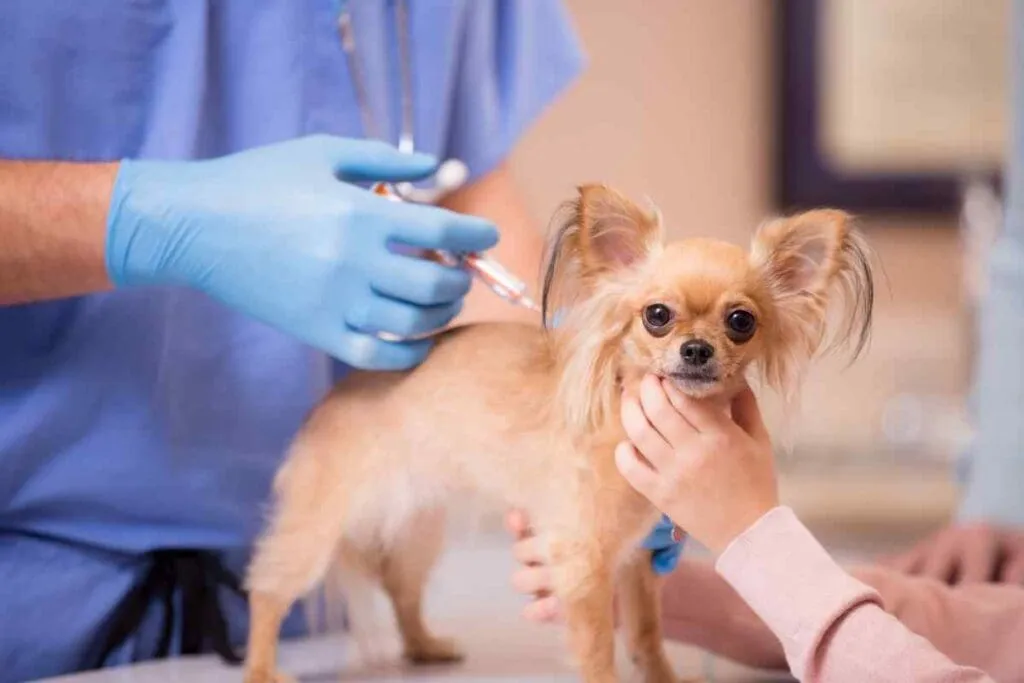
When Chihuahua puppies are born, they receive temporary antibodies from their mother’s colostrum — the first milk. These maternal antibodies provide short-term protection against diseases, but they begin to wane from around 6 to 8 weeks of age. During this transition period, the puppy is increasingly vulnerable — and this is exactly when the Chihuahua vaccination schedule begins.
Vaccinations work by presenting the puppy’s immune system with an inactive or modified form of a pathogen, triggering the production of antibodies without causing disease. When the puppy later encounters the real pathogen, their immune system recognises it and mounts a rapid protective response. Without vaccination, diseases like parvovirus — which can kill a puppy within 48 to 72 hours of onset — are a genuine and preventable threat.
Core vs non-core vaccines for Chihuahuas
The Chihuahua vaccination schedule divides vaccines into two categories — core and non-core — based on the universality of the disease risk and the severity of the disease protected against.
- Core vaccines are recommended for every Chihuahua regardless of lifestyle, location, or risk factors. They protect against diseases that are widespread, potentially fatal, or pose a public health risk. Core vaccines include distemper, parvovirus, adenovirus (hepatitis), and rabies
- Non-core vaccines are recommended based on individual risk factors — your location, your dog’s lifestyle, boarding frequency, and environmental exposure. Non-core vaccines include Bordetella (kennel cough), leptospirosis, Lyme disease, and canine influenza
Your veterinarian will advise which non-core vaccines are appropriate for your specific Chihuahua based on your location in Michigan and your dog’s individual lifestyle. Always follow your vet’s specific recommendations — this guide provides a general framework, not a substitute for individual veterinary advice.
Complete Chihuahua vaccination schedule table
| Age | Vaccine | Type | Notes |
|---|---|---|---|
| 6–8 weeks | DA2PP (Distemper, Adenovirus, Parvovirus, Parainfluenza) | Core | First combination vaccine — given by breeder or vet |
| 6–8 weeks | Bordetella | Non-core | Recommended if socialising with other dogs |
| 10–12 weeks | DA2PP booster | Core | Second dose — essential to complete series |
| 10–12 weeks | Leptospirosis (first dose) | Non-core | Recommended in Michigan — present in standing water |
| 14–16 weeks | DA2PP booster | Core | Third and final puppy series dose |
| 14–16 weeks | Rabies | Core (legally required) | Single dose — legally required in most US states |
| 14–16 weeks | Leptospirosis (second dose) | Non-core | Completes the two-dose initial leptospirosis series |
| 12–16 weeks | Canine Influenza (H3N2/H3N8) | Non-core | Recommended if attending dog shows, boarding, or dog parks |
| 1 year | All core vaccines booster | Core | First annual booster — then 3-yearly for most core vaccines |
The 9 vaccines in your Chihuahua vaccination schedule explained
1. Distemper
Canine distemper is a severe, often fatal viral disease affecting the respiratory, gastrointestinal, and nervous systems. There is no cure — vaccination is the only protection. Distemper is included in every combination vaccine in the Chihuahua vaccination schedule and is considered the most important core vaccine alongside parvovirus.
2. Parvovirus
Canine parvovirus is one of the most serious disease threats to unvaccinated puppies. Highly contagious and environmentally persistent, parvovirus attacks the gastrointestinal tract and can kill a puppy within 48 to 72 hours without treatment. Small breeds including Chihuahuas are particularly vulnerable. Completing the full three-dose puppy series is essential — a single missed dose leaves a gap in protection.
3. Adenovirus (Hepatitis)
Canine adenovirus type 2 (Ad2) protects against both infectious canine hepatitis (caused by adenovirus type 1) and is included in all DA2PP combination vaccines. The liver damage caused by untreated adenovirus infection can be severe and permanent.
4. Parainfluenza
Canine parainfluenza is a respiratory virus and one of the contributors to kennel cough complex. It is included in most DA2PP combination vaccines. While rarely fatal in healthy adult dogs, parainfluenza can be more serious in very young Chihuahua puppies with developing immune systems.
5. Rabies
Rabies vaccination is a legal requirement in most US states and is administered as a single dose at 14 to 16 weeks in the initial Chihuahua vaccination schedule. Rabies is universally fatal once symptoms appear. The booster schedule for rabies varies by state — some require annual boosters, others every three years. Your Michigan vet will confirm the local legal requirement.
6. Bordetella (Kennel Cough)
Bordetella bronchiseptica is the primary bacterial cause of kennel cough — a highly contagious respiratory infection. The Bordetella vaccine is non-core but strongly recommended for any Chihuahua that socialises with other dogs, attends dog shows, uses boarding facilities, or visits dog parks. It is available as an injectable, intranasal, or oral formulation and typically requires annual or twice-yearly boosters.
7. Leptospirosis
Leptospirosis is a bacterial disease transmitted through water contaminated by infected animal urine — including wildlife such as raccoons, deer, and rodents. In Michigan, where wildlife is abundant and standing water is common, leptospirosis is a genuine risk for dogs. The leptospirosis vaccine requires a two-dose initial series four weeks apart and annual boosters thereafter. This is one of the non-core vaccines we particularly recommend for Chihuvas puppies in Michigan.
8. Lyme Disease
Lyme disease is transmitted by deer ticks and is increasingly prevalent across Michigan. The Lyme vaccine is recommended for dogs with outdoor access — particularly in wooded or grassy areas where tick exposure is likely. It requires a two-dose initial series followed by annual boosters. Tick prevention should be used alongside vaccination as the two approaches are complementary.
9. Canine Influenza
Canine influenza (H3N2 and H3N8) is a highly contagious respiratory disease. The vaccine is non-core but strongly recommended for Chihuahuas that attend shows, boarding, grooming salons, or dog parks. It requires a two-dose initial series two to four weeks apart, followed by annual boosters. Given that Chihuahua shows are a significant part of breed culture, we recommend this vaccine for any show-prospect Chihuahua.
Chihuahua-specific vaccination considerations
Chihuahuas are one of the breeds known to be more sensitive to certain vaccines and medications than larger dogs. Their small body mass means that the same vaccine dose used for larger dogs has a proportionally greater impact. While all currently licensed vaccines are safe for Chihuahuas, there are some practical steps that make the Chihuahua vaccination schedule safer and more comfortable:
- Monitor for 30 to 60 minutes post-vaccination — remain at or near the vet clinic for at least 30 minutes after each vaccination. Allergic reactions, when they occur, typically manifest within this window
- Consider splitting combination vaccines — for very small puppies under 2 pounds, some vets recommend administering core and non-core vaccines on separate days rather than simultaneously to reduce the immune load and the risk of reactions
- Inform your vet of any previous reactions — if your Chihuahua has ever shown signs of a vaccine reaction, always inform your vet before any subsequent vaccination. Pre-treatment with diphenhydramine may be recommended
- Schedule morning appointments — vaccinating in the morning means any reaction that develops during the day can be monitored and addressed while the vet clinic is open
Adult booster schedule for Chihuahuas
Once the puppy Chihuahua vaccination schedule is complete and the one-year booster has been given, adult Chihuahuas follow a less intensive schedule:
- DA2PP (core): every 3 years after the 1-year booster — per AAHA guidelines
- Rabies: every 1 to 3 years depending on Michigan state law and the specific vaccine product used
- Bordetella: every 6 to 12 months for dogs with social exposure
- Leptospirosis: annually — this vaccine does not provide 3-year protection
- Lyme: annually — consistent annual boosters are required for maintained protection
- Canine influenza: annually — particularly important before show season
Vaccine reactions — what to watch for
Most Chihuahuas tolerate their vaccinations without any significant reaction. Mild, normal responses include brief lethargy for 24 hours, mild soreness at the injection site, and slightly reduced appetite on the day of vaccination. These are signs that the immune system is responding and typically resolve within 24 to 48 hours.
Signs requiring immediate veterinary attention include facial swelling, hives or skin redness, vomiting or diarrhoea starting within 30 minutes of vaccination, collapse or extreme weakness, or difficulty breathing. These are signs of a vaccine allergy — rare but more common in small breeds. Contact your vet immediately if any of these occur. Browse our complete Chihuahua health problems guide for more on keeping your dog healthy, and view our available puppies or get in touch with our team.
Common questions about the Chihuahua vaccination schedule
Find a healthy, vaccinated Chihuahua puppy at Chihuvas.
Every Chihuvas puppy leaves with their first vaccinations administered and full health documentation included. AKC-registered, Michigan’s most trusted breeder.
View available puppies →