
Chihuahua separation anxiety — 7 proven ways to calm your dog.
Chihuahua separation anxiety is one of the most common challenges owners face with this breed — and one of the most misunderstood. It is not bad behaviour. It is not spite. It is a genuine psychological distress response, comparable in intensity to a panic attack in humans, triggered by one of the most powerful emotional bonds in the dog world. Understanding that distinction is the first step toward actually fixing it.
As AKC-registered breeders at Chihuvas, we counsel new puppy families on Chihuahua separation anxiety regularly. This guide covers the signs, causes, severity levels, and seven proven strategies that work — from the approach we use with our own puppies through to the techniques recommended for severe cases. The AKC guidance on dog separation anxiety and the PDSA separation anxiety resource both provide excellent supplementary reading.
Signs of Chihuahua separation anxiety
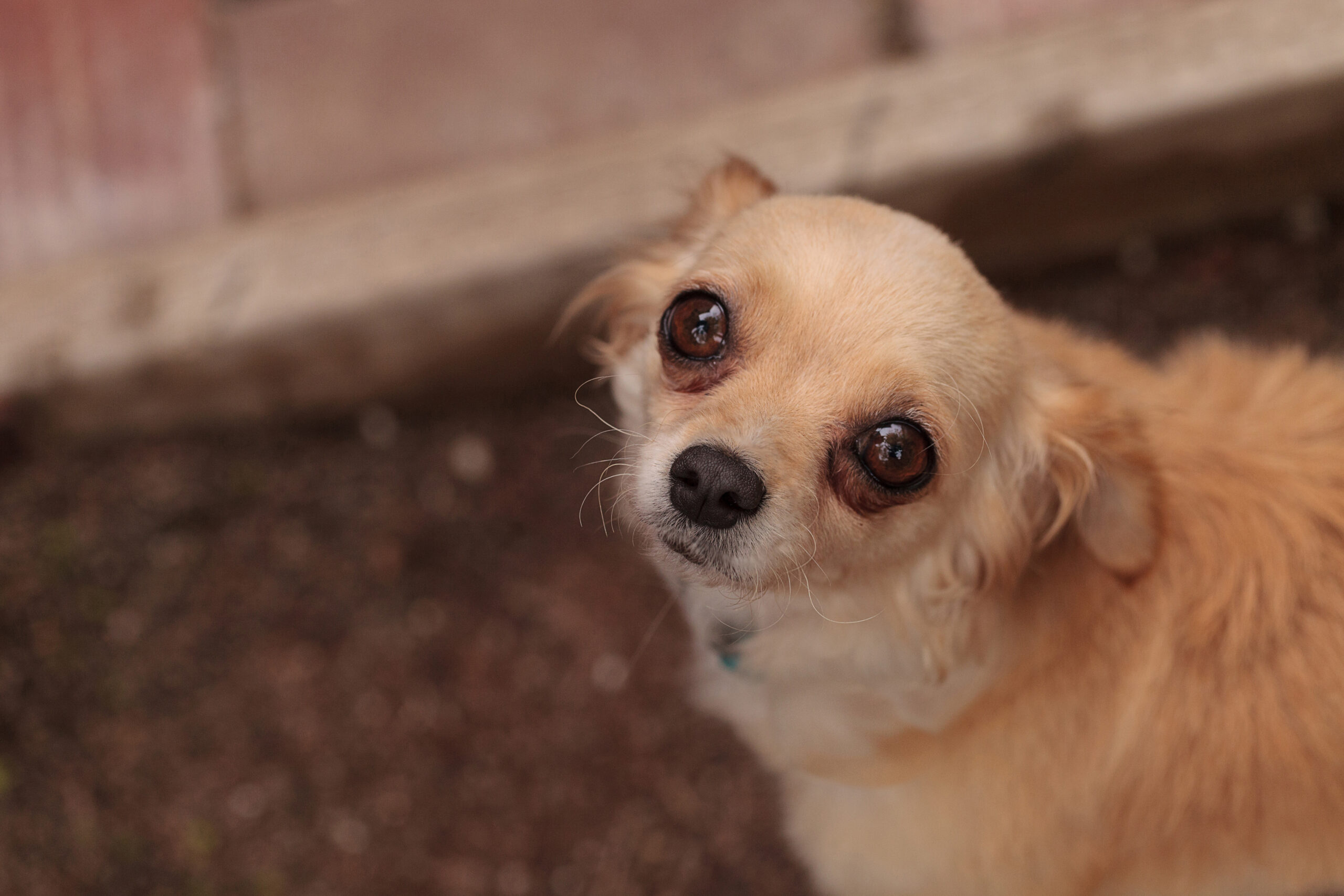
Chihuahua separation anxiety is characterised by distress behaviours that occur specifically when the dog is left alone or separated from their primary attachment figure. The key distinguishing feature is context — these behaviours happen when you leave, not as general misbehaviour throughout the day. Signs include:
- Excessive barking, howling, or whining — often continuous from the moment you leave, reported by neighbours or caught on a home camera
- Destructive behaviour — chewing door frames, scratching floors, destroying cushions or possessions. Typically focused near exits or areas associated with the owner
- House training regression — accidents indoors from a dog that is normally reliably house trained, occurring only when left alone
- Pacing and restlessness — repetitive movement patterns, inability to settle, constant scanning of the environment
- Anticipatory anxiety — trembling, pacing, or distress beginning when you pick up your keys, put on shoes, or show other pre-departure cues
- Velcro behaviour — following you from room to room, refusing to be more than a metre away, distress if a door closes between you
- Excessive drooling or panting — signs of physiological stress response, often accompanied by a tucked tail and lowered body posture
Why Chihuahuas are so prone to separation anxiety
Chihuahua separation anxiety is not a random occurrence — it is rooted in the breed’s fundamental nature. Chihuahuas were bred to be companion dogs. Their entire evolutionary purpose is close human contact. Unlike working breeds that were bred for independent tasks, Chihuahuas are biologically orientated toward proximity to their person. When that proximity is broken, their stress response activates powerfully.
Several factors make Chihuahuas particularly vulnerable to separation anxiety compared to other breeds:
- Extreme owner bonding — Chihuahuas typically form an intense primary attachment to one person. When that person is absent, no other family member or companion provides the same sense of security
- Poor early socialisation — Chihuahuas not exposed to being alone as puppies develop no tolerance for it as adults. This is one of the most preventable causes of Chihuahua separation anxiety
- Rescue or rehoming history — Dogs that have experienced abandonment or multiple rehomings are significantly more prone to separation distress
- Routine disruption — Changes in work schedule, moving home, loss of another pet, or the arrival of a new family member can all trigger anxiety in a previously settled Chihuahua
- Reinforced clingy behaviour — When owners respond to attention-seeking with attention, they inadvertently teach the dog that distress gets results — escalating the attachment over time
Mild vs severe Chihuahua separation anxiety
Not all Chihuahua separation anxiety is the same. Understanding where your dog sits on the severity spectrum helps you choose the right intervention and set realistic expectations for progress.
- Mild anxiety — Your Chihuahua settles within 20 to 30 minutes of your departure. Some whining or restlessness initially but no destruction, no accidents, and no continuous distress. Responds well to enrichment and routine management
- Moderate anxiety — Persistent distress behaviours lasting 30 minutes to several hours. Some destructive behaviour. May have occasional accidents. Requires structured desensitisation training over several weeks
- Severe anxiety — Continuous distress from the moment of departure until return. Significant destruction, consistent indoor accidents, and possible self-harm behaviours such as excessive licking or chewing. Requires professional behaviourist support and potentially veterinary medication alongside behaviour modification
7 proven ways to calm Chihuahua separation anxiety
These seven strategies are evidence-based and practical — drawn from veterinary behavioural science and the real-world experience of our Chihuvas breeding team.
1. Practise gradual desensitisation
Gradual desensitisation is the most effective long-term treatment for Chihuahua separation anxiety. The principle is simple: leave for a period short enough that your dog does not become anxious, then return before distress begins. Gradually increase the duration over days and weeks. Start with thirty seconds. Then two minutes. Then five. Build up slowly — there are no shortcuts. Rushing desensitisation is the most common reason it fails.
2. Desensitise departure cues
Many Chihuahuas with separation anxiety begin showing distress the moment their owner picks up keys, puts on shoes, or reaches for a coat. These pre-departure cues have become associated with the distressing event of being left alone. Desensitise them independently — pick up your keys and sit back down. Put on your coat and watch television. Repeat dozens of times daily until the cues lose their predictive power and your Chihuahua stops reacting to them.
3. Create a positive safe space
A designated den area — whether a crate, a specific room, or a comfortable corner — can help your Chihuahua feel secure in your absence. The key is that this space must be associated entirely with positive experiences. Feed meals there, offer special treats there, and place worn clothing with your scent inside. Never use this space as punishment. For dogs that respond well to crates, a covered crate simulates a burrow — deeply calming for many small breeds.
4. Provide enrichment and exercise before leaving
A mentally and physically tired Chihuahua is a calmer Chihuahua. Before you leave, offer a fifteen to twenty minute walk followed by a food puzzle, stuffed Kong, or lick mat with frozen food. Mental enrichment is particularly effective — it occupies the brain in a way that physical exercise alone cannot. A Chihuahua engaged with a food puzzle at departure is far less likely to escalate into full Chihuahua separation anxiety behaviours.
5. Establish and maintain a consistent routine
Predictability is profoundly calming for anxious dogs. If your Chihuahua knows that you always leave at 8am and always return by 1pm, the pattern becomes familiar rather than frightening. Inconsistent schedules — sometimes leaving for two hours, sometimes eight — prevent your dog from developing any sense of safety around your absence. Build as much routine as your lifestyle allows, including consistent departure and return times, feeding schedules, and exercise windows.
6. Avoid dramatic departures and arrivals
Emotional departures — long goodbyes, excessive reassurance, guilty apologies — heighten your Chihuahua’s awareness that something significant is happening. The same applies to dramatic reunions. Keep departures calm and matter-of-fact. Leave without fuss. When you return, wait until your Chihuahua has settled before greeting them — even thirty seconds of calm before acknowledging them teaches them that arrivals are not the frantic, emotional events they may have learned to anticipate.
7. Consider calming aids for mild to moderate anxiety
Several calming interventions can support your training efforts for mild to moderate Chihuahua separation anxiety. Dog appeasing pheromone (DAP) diffusers mimic the calming pheromones produced by nursing mothers and can reduce generalised anxiety. Calming supplements containing L-theanine, ashwagandha, or melatonin have evidence for mild anxiolytic effects in dogs. Anxiety wraps such as the ThunderShirt apply gentle, consistent pressure that many dogs find calming. These aids work best as training supports, not replacements for the behavioural work above.
Preventing Chihuahua separation anxiety in puppies
The most effective treatment for Chihuahua separation anxiety is prevention. The puppy period — particularly weeks eight to sixteen — is the critical window for building confident independence. At Chihuvas, we begin this process in our nursery before puppies leave for their new homes.
- Start alone time immediately — From your puppy’s first day home, build short periods of alone time into the daily routine. Even five minutes in a separate room matters. Increase gradually over weeks
- Do not let puppies follow you everywhere — A puppy that never experiences a closed door between themselves and their owner will struggle enormously when real separations begin. Teach them that closed doors are normal and temporary
- Crate train from day one — A properly introduced crate gives your puppy a safe, comfortable space that is theirs alone — invaluable for building the independence that prevents Chihuahua separation anxiety later
- Avoid excessive reassurance — Responding to every whine and cry with attention teaches your puppy that distress produces connection. Instead, wait for a moment of quiet before re-entering. This is one of the hardest but most important things new puppy owners can do
- Socialise broadly — Puppies exposed to many different people, environments, and experiences develop greater general resilience and lower baseline anxiety levels
When to see a vet or behaviourist about Chihuahua separation anxiety
Seek professional help if your Chihuahua’s separation anxiety is severe, if there is no improvement after four to six weeks of consistent home training, or if the behaviours are causing harm — either to your dog or to your home and relationships. A veterinary behaviourist can diagnose the condition accurately and may prescribe short-term anti-anxiety medication alongside a behaviour modification programme.
Medications commonly used for canine separation anxiety include selective serotonin reuptake inhibitors (SSRIs) such as fluoxetine, which are used alongside — never instead of — behaviour modification. These medications reduce the anxiety ceiling enough to allow training to take effect. They are not sedatives and do not suppress personality — they simply make learning possible for a dog that is too anxious to absorb it otherwise.
For guidance on raising a confident, well-adjusted Chihuahua from puppyhood, visit our blog, browse our available puppies, or get in touch with our team directly. Our puppies leave Chihuvas with early alone-time exposure built in — giving every new family the best possible starting point.
Common questions about Chihuahua separation anxiety
Get a confident, well-socialised Chihuahua from Chihuvas.
Our AKC-registered puppies are raised with early alone-time exposure and broad socialisation built in — giving every family the best possible start against separation anxiety. Michigan’s most trusted Chihuahua breeder.
View available puppies →