
A day in our chihuahua nursery — what happens before your puppy comes home.

When a family asks us what makes a Chihuvas puppy different, the honest answer is: everything that happens before you ever see them. The eight weeks your puppy spends in our home shape their confidence, their temperament, and their capacity to trust people. That’s not marketing — it’s biology. And it happens in our chihuahua nursery, one day at a time.
This post is a behind-the-scenes look at our chihuahua nursery and how we raise chihuahua puppies from the moment they’re born to the day they go home. We’re sharing our daily routine, the protocols we follow, and the reasoning behind every decision — so you know exactly what your Chihuvas puppy has experienced before they arrive at your door.
The AKC’s guidance on puppy socialisation makes clear that the foundation for a confident adult dog is built between birth and 8 weeks — and that the breeder’s role during this period is critical. This is what we take seriously every single day in our chihuahua nursery in Traverse City, Michigan.
Our nursery setup
The Chihuvas chihuahua nursery isn’t a separate room, a kennel block, or a purpose-built outbuilding. It’s a corner of our bedroom. That’s a deliberate choice, not a constraint.
Newborn chihuahua puppies need warmth, quiet, and constant proximity to their mother. Having the whelping box in our bedroom means we hear everything at night — every sound a puppy makes, every sign that something might be off. In the first two weeks, when the puppies’ eyes and ears are still sealed shut and they depend entirely on warmth and touch to survive, this closeness isn’t optional. It’s the difference between catching a problem at midnight and finding one in the morning.
As the puppies grow and their eyes open — usually between days 10 and 14 — we gradually expand their world. By week three, they move to a larger play area in our living room, where they experience the full soundscape of a family home. This is central to how we raise chihuahua puppies — not in silence, but in life. Our chihuahua nursery grows with them week by week.
“A puppy raised in a quiet kennel arrives at your home and experiences your household as overwhelming and frightening. A puppy raised inside a family home arrives and thinks: I know this. This is safe.”
— Mara, Chihuvas founder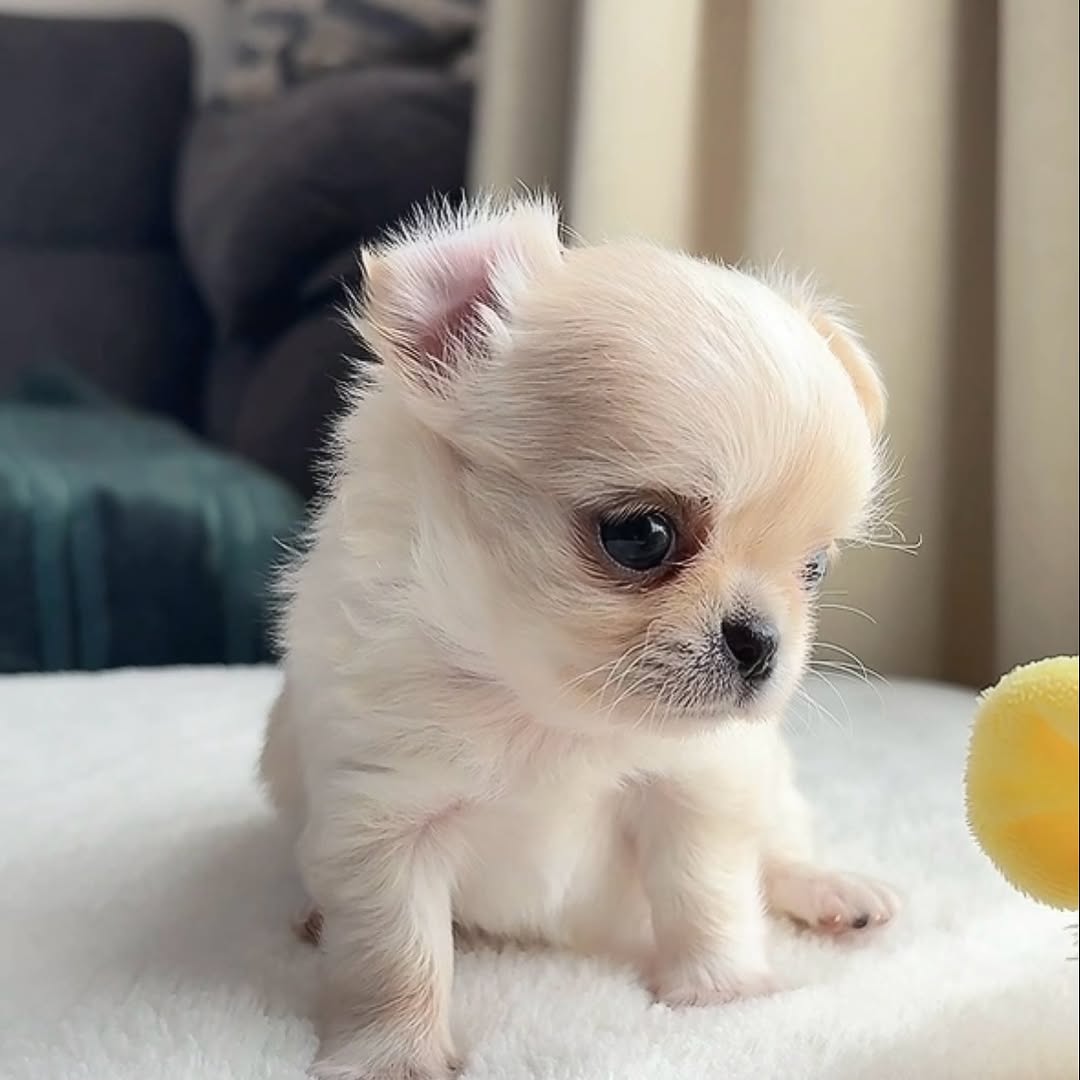
Week-by-week development
Understanding how we raise chihuahua puppies in our chihuahua nursery starts with understanding what’s happening developmentally in each of those eight weeks. Every decision we make is timed to what the puppies are actually ready for, not what’s convenient for us.
-
W1–2
Weeks 1–2 — The neonatal period
Eyes and ears sealed shut. Puppies cannot regulate their own body temperature and depend entirely on their mother and the whelping box heat source. We begin Early Neurological Stimulation on day 3 and perform it daily through day 16. Every puppy is weighed twice daily to confirm steady weight gain — in the first week, a healthy chihuahua puppy should roughly double their birth weight.
- Whelping box maintained at 29–32°C (85–90°F)
- ENS exercises performed daily from day 3
- Twice-daily weight checks — any failure to gain triggers immediate action
- Gentle handling by Mara and Jonas only at this stage
-
W3–4
Weeks 3–4 — Eyes open, world begins
Eyes open between days 10–14. Ears open around day 14–16. This is when the socialisation window begins in earnest. We move to the larger play area, introduce different floor textures, and begin exposing the puppies to a wider range of household sounds. Weaning begins at 3–4 weeks onto a high-quality wet puppy food alongside nursing.
- Introduction to carpet, tile, and soft play mat surfaces
- First exposure to gentle household sounds — television, music, kitchen activity
- Children begin supervised interaction — the puppies start meeting multiple people
- Weaning begins — small amounts of wet puppy food offered 2–3 times daily
-
W5–6
Weeks 5–6 — Confidence building
The puppies are now fully weaned, mobile, and intensely curious. This is when we introduce more complex stimuli — visitors to the home, different objects in the play area, and early crate familiarisation. We begin gently handling paws, ears, and mouths to prepare for grooming and veterinary handling later in life.
- Regular visitors of different ages, builds, and voices
- New objects introduced to the play area every 2–3 days — cardboard boxes, tunnels, ramps
- Crate introduced with the door open — puppies explore freely without pressure
- Paw, ear, and mouth handling begins — building grooming tolerance
- First introduction to grooming tools — brush and nail clipper shown and touched, never used under stress
-
W7–8
Weeks 7–8 — Ready for the world
The final two weeks focus on consolidating everything the puppies have learned, completing health requirements, and preparing both the puppy and the new family for a smooth transition. Puppies receive their first vaccination and health check from our vet. We begin matched introductions — choosing which puppy goes to which family based on temperament.
- First vaccination and full veterinary health check
- Microchip fitted and registered
- Car journey experience — short trips in a carrier to familiarise with travel
- Puppy packet prepared for each family — health records, feeding schedule, breeder contact details
- Temperament matching — we observe each puppy’s individual personality and match accordingly
A typical day in our chihuahua nursery
People often ask us what a typical day looks like when raising a litter. The honest answer is that no two days are identical — the routine shifts week by week as the puppies develop. But for a litter at the four-to-six-week stage, here’s roughly what our day looks like:
Every Chihuvas litter has a written daily log from birth to departure. We record weights, feeding amounts, any health observations, and temperament notes. When you take your puppy home, we give you a copy. It’s a record of their first eight weeks — and it helps your vet understand their history at the very first appointment.
Early Neurological Stimulation — why we do it
Early Neurological Stimulation (ENS) is a programme originally developed for military working dogs and later adopted by responsible breeders worldwide. It is one of the most important things we do in our chihuahua nursery — and a core part of how we raise chihuahua puppies at Chihuvas. The programme involves five specific exercises performed on each puppy once daily from day 3 to day 16 of life. The exercises are gentle and take about 30 seconds per puppy.
Research shows that puppies who receive ENS develop stronger cardiovascular systems, greater adrenal response, and better tolerance for stress throughout their lives. For a breed like the chihuahua — which is genetically predisposed toward anxiety and nervousness when poorly raised — ENS is one of the most meaningful investments we make in how we raise chihuahua puppies.
The five exercises are: tactile stimulation (tickling between the toes), thermal stimulation (placing the puppy on a cool damp cloth for a few seconds), head-up position, head-down position, and dorsal position (lying on their back). Each position is held for 3–5 seconds. The puppy is then returned to their mother.
A puppy who received ENS in their first two weeks of life handles stress more calmly as an adult. They recover faster from startling events, adapt more easily to new environments, and show fewer anxiety-related behaviours. When you bring a Chihuvas puppy home, this is already built into them — you’re starting from a stronger foundation than most.
How we socialise our chihuahua puppies
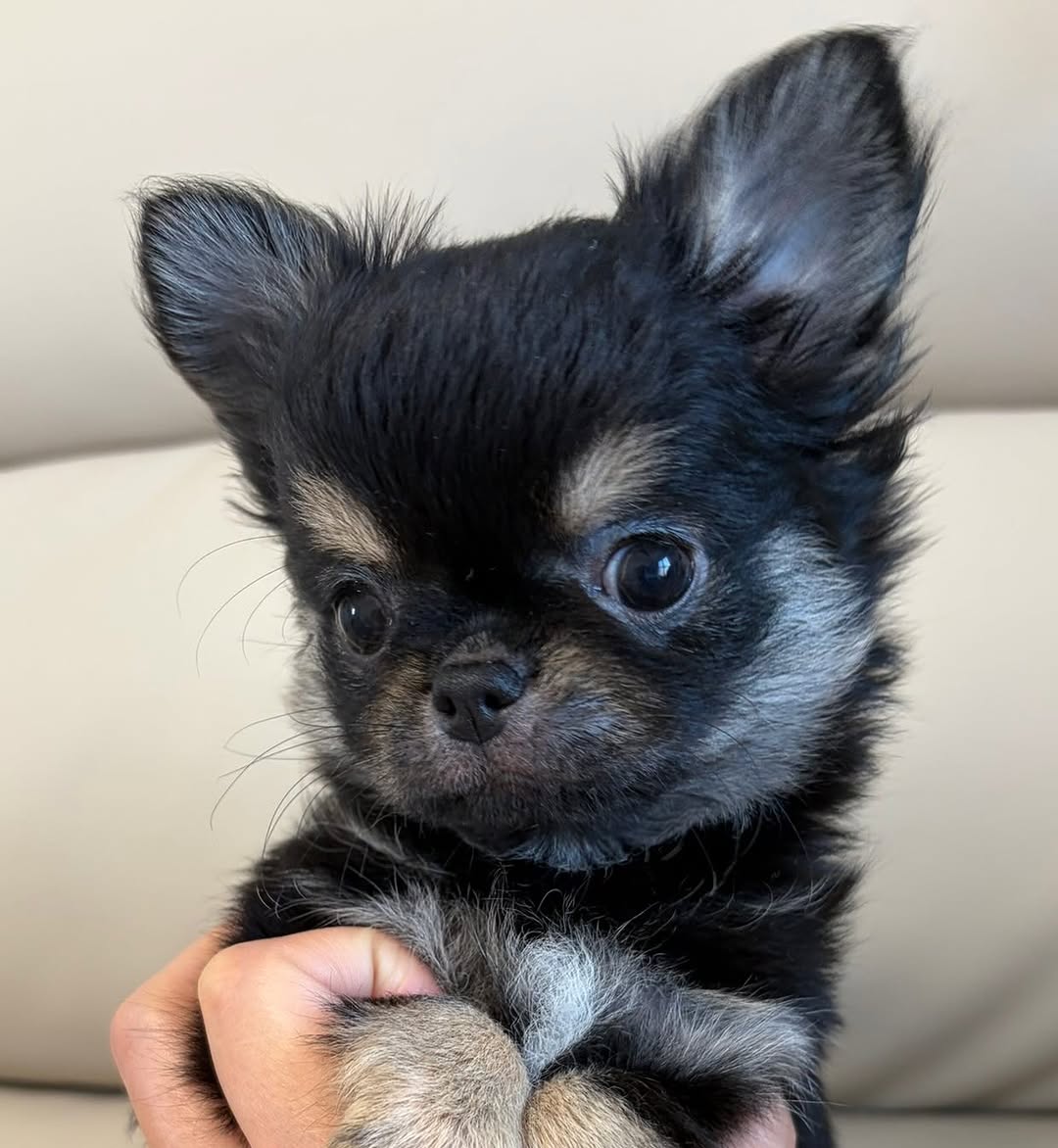
The socialisation window for puppies runs from roughly 3 to 14 weeks of age. Our puppies leave our chihuahua nursery at 8 weeks, which means we’re responsible for the first half of this window. Here is what every puppy experiences in our chihuahua nursery before leaving — this is the heart of how we raise chihuahua puppies at Chihuvas:
- Multiple people of different ages — adults, children, visitors of different sizes and voices. Puppies who only meet their immediate breeders can become one-person dogs
- Different floor surfaces — carpet, hardwood, tile, soft play mat, outdoor grass (once vaccinations begin). Surface confidence matters for vet visits, new homes, and general adaptability
- Household sounds — hoover, washing machine, television, music, doorbell, children playing, cooking sounds. We never deliberately startle puppies, but we don’t go quiet for them either
- Car journeys — at least one short car trip before departure day, in a carrier, to reduce the stress of the collection journey
- Crate introduction — every puppy leaves us already familiar with a crate as a positive, safe space. We never force crate time — we make it appealing
- Grooming tool familiarisation — every puppy has been shown and touched with a brush, comb, and nail clipper before leaving. Their first groom at home won’t be their first encounter with those tools
Health checks and veterinary care
Every Chihuvas chihuahua nursery litter is under veterinary oversight from before birth. Our breeding females receive pre-breeding health checks, and we work with our vet to confirm optimal timing for each litter. This is non-negotiable in how we raise chihuahua puppies — health comes before everything.
Before leaving our chihuahua nursery, every puppy receives:
- First vaccination — typically at 6–7 weeks, before the puppy leaves us
- Full veterinary health check — eyes, ears, heart, abdomen, musculoskeletal system
- Microchip — fitted and registered before departure
- Deworming treatment — documented in the health records we give you
- Written health certificate — issued by our vet, confirming the puppy is healthy and fit to go home
We give every family a complete health folder on collection day — vaccination records, health certificate, microchip details, deworming history, and our daily nursery log. Your vet will thank you for it.
What every puppy has done before coming home
By the time a Chihuvas puppy leaves our chihuahua nursery at 8 weeks, here is the full picture of what they’ve experienced. We share this because we want you to understand what you’re taking home — and what a difference it makes.
- ✓ Early Neurological Stimulation, days 3–16
- ✓ Daily individual handling from birth
- ✓ Met multiple adults and children of different ages and appearances
- ✓ Experienced a wide range of household sounds
- ✓ Walked on multiple floor surfaces
- ✓ Introduced to a crate as a positive, familiar space
- ✓ Familiar with brushes, combs, and nail clippers
- ✓ Had at least one car journey
- ✓ First vaccination and full vet health check
- ✓ Microchipped and registered
- ✓ Fully weaned and eating independently
- ✓ Temperament assessed and matched to their new family
This is how we raise chihuahua puppies at Chihuvas — and what makes our chihuahua nursery different from a kennel operation. Not in isolation. Not in silence. In life — our life — so they’re ready for yours. If you’d like to learn more about our family and our approach, visit our about page. And if you’re ready to meet the current litter, browse our available puppies.
Questions about our chihuahua nursery
Ready to meet a Chihuvas puppy?
Every puppy in our current litter has been through everything described in this post. Browse who’s available and get in touch — we’d love to find the right match for your family.
See available puppies