
Bringing home a chihuahua puppy
for the first time.

Bringing home a chihuahua puppy for the first time is one of the most exciting things you’ll ever do. It’s also, if we’re honest, one of the most overwhelming — especially in those first 48 hours when the puppy won’t stop crying, you haven’t slept, and you’re questioning every decision you’ve ever made.
We’ve been through this process over 120 times at Chihuvas. Every puppy we’ve raised and placed has taught us something. This guide on bringing home a chihuahua puppy pulls together everything we tell every new family the day they come to pick up their puppy — the stuff that actually matters, written plainly, without the fluff.
According to the AKC’s official chihuahua breed profile, chihuahuas are one of the most loyal and alert of all toy breeds — and that personality starts forming from the very first day you bring them home. The decisions you make in week one have a lasting impact on your puppy’s confidence and temperament. This guide walks you through every one of those decisions.
Before your chihuahua puppy arrives
The single biggest mistake first-time owners make when bringing home a chihuahua puppy is leaving preparation to the last minute. Your puppy’s first hour at home sets the tone for everything that follows. If you scramble to find a bowl, a crate, or somewhere warm for them to sleep, you start that hour already stressed — and puppies read stress immediately.
Get everything in place at least 48 hours before pickup day. Here is the complete list of what you need before bringing home a chihuahua puppy:
- A small crate with a divider — choose one sized for an adult chihuahua (about 24 inches long) with a divider to make it smaller while the puppy grows. A crate that’s too large makes house training harder.
- A soft, washable dog bed — place it inside the crate. Look for one with raised sides so the puppy feels enclosed and secure.
- Stainless steel food and water bowls — small, shallow, and tip-resistant. Avoid plastic — it harbours bacteria in scratches and puppies chew it.
- Puppy food (same brand as the breeder) — ask your breeder exactly what food they’ve been using. Changing food in the first week causes digestive upset on top of the stress of a new home.
- Collar, harness, and ID tag — a soft breakaway collar for now. A harness is better for walks because chihuahuas have fragile tracheas. Get the ID tag engraved before pickup day.
- Puppy pads — for the first few weeks while the vaccination schedule completes and outdoor toilet trips aren’t yet safe.
- A few small toys — a soft plush toy (about the same size as the puppy), a chew toy, and a small rubber toy. Not too many — puppies get overwhelmed.
- Nutri-Cal or honey — keep this in your cupboard. Chihuahua puppies are prone to hypoglycaemia (low blood sugar). Having a glucose supplement ready is not optional.
- A warm water bottle — wrapped in a towel, this goes in the crate on night one to mimic the warmth of their littermates.
Set up the crate in your bedroom before the puppy arrives. Being able to hear and smell you at night dramatically reduces first-night crying. You can move the crate later — but start it near you.
The journey home
For many puppies, the car journey is their first experience of the outside world beyond the breeder’s home. Keep it calm. Bring a small blanket that smells of the litter — most responsible breeders will give you one. Hold the puppy on your lap or have a passenger hold them wrapped in that blanket.
Do not put the puppy in a carrier in the boot or back seat alone for their first journey. The isolation on top of the unfamiliar movement and sounds is too much. Human contact on the journey home settles them significantly faster.
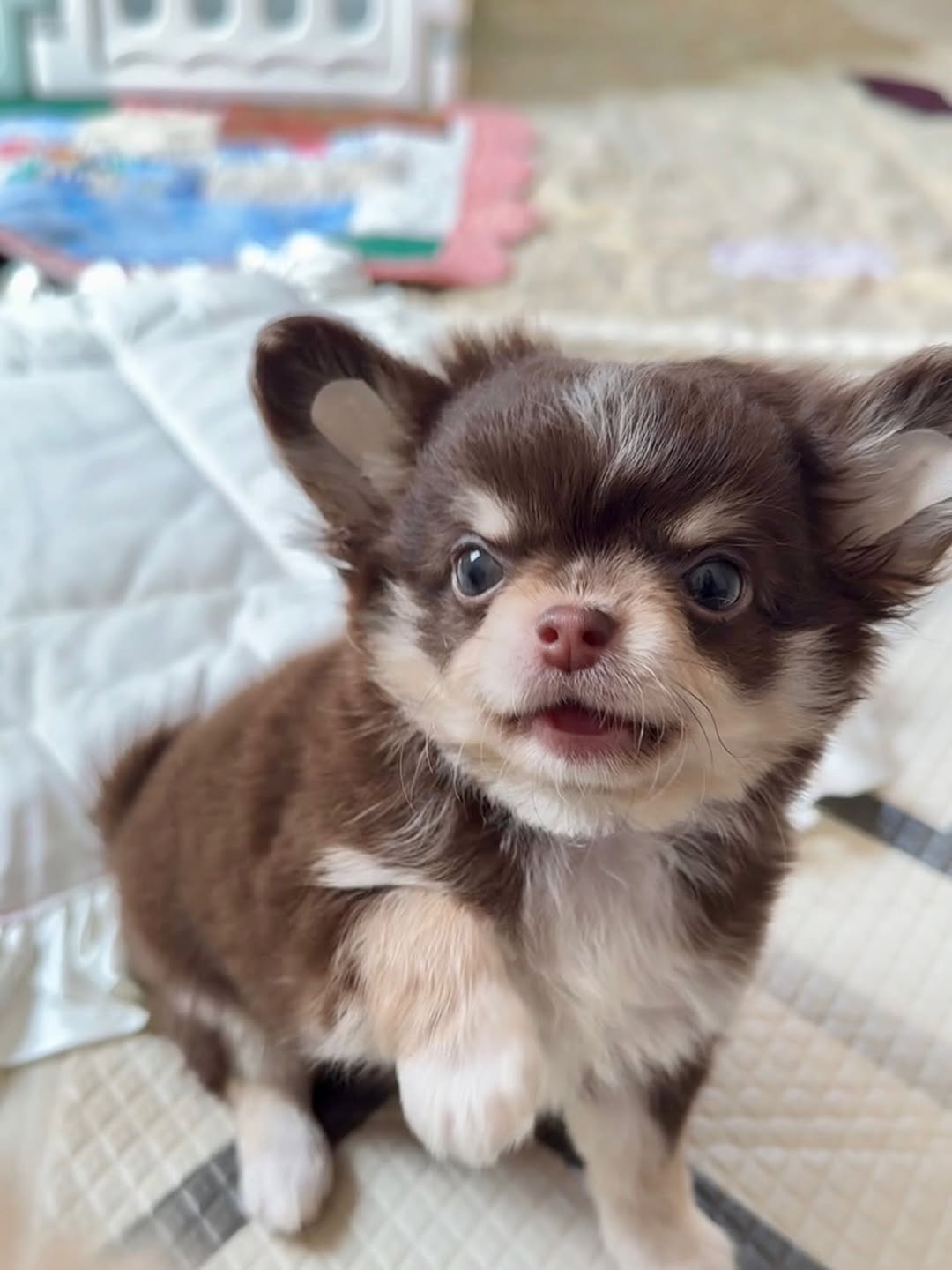
If the journey is longer than an hour, bring water and a small amount of food. Offer water every 30–40 minutes. Don’t feed a large meal before a long drive — car sickness is common in young puppies.
The first night — what to expect
We’ll be honest: the first night after bringing home a chihuahua puppy is often hard. Your puppy has just left the only home and the only companions they’ve ever known. Crying at night — especially in the first 2–3 nights — is completely normal and does not mean anything is wrong.
“The first night your puppy cries, your instinct will be to pick them up and bring them into your bed. We understand. But the kindest thing you can do for your long-term relationship is to resist it.”
— Mara, Chihuvas founderHere’s what works for the first night when bringing home a chihuahua puppy:
- Place the crate next to your bed — close enough that you can hear each other and the puppy can smell you
- Put the warm water bottle (wrapped tightly in a towel so it’s not hot) inside the crate bed
- Include the breeder’s blanket or a worn t-shirt of yours
- Keep the room at a comfortable temperature — chihuahuas feel the cold acutely
- If the puppy wakes and cries, speak calmly without picking them up — “it’s okay, I’m here” in a quiet voice is usually enough to settle them within a few minutes
If your chihuahua puppy is crying, lethargic, has glazed eyes, or seems unresponsive at any point in the first night, rub a small amount of honey or Nutri-Cal on their gums immediately and call your vet or an emergency animal clinic. These can be signs of hypoglycaemia, which moves fast in tiny puppies.
Feeding your chihuahua puppy
Chihuahua puppies have tiny stomachs and fast metabolisms. Unlike larger breeds, they cannot go long periods between meals — especially in the first few months. Low blood sugar is a genuine risk, and the consequences of missing meals are more serious than they would be with a Labrador or a Spaniel.
For the first week of bringing your chihuahua puppy home, feed them exactly what your breeder was feeding — same brand, same amount, same timing. Once they’ve settled (usually after 7–10 days), you can begin a gradual transition to a new food if you wish to change.
Feeding schedule for a chihuahua puppy (8–16 weeks)
- Frequency: 3–4 small meals per day, spaced evenly — roughly every 4–5 hours while you’re awake
- Quantity: follow the packet guidelines for their weight, but start on the lower end — you can always increase
- Fresh water: always available in a clean bowl — refill and wash the bowl daily
- No table scraps: many human foods are harmful to chihuahuas — grapes, raisins, onions, garlic, xylitol (found in sugar-free products) are particularly dangerous
Choose a food with real meat as the first ingredient (chicken, turkey, lamb — not “meat meal” or “animal derivatives”). Look for “complete and balanced” on the label and “formulated for small or toy breeds.” Avoid foods with artificial colours, flavours, or excessive fillers like corn syrup.

Crate training from day one
We crate-train every puppy before they leave us. By the time your Chihuvas puppy comes home, they already understand the crate as a safe, comfortable space — not a punishment. When bringing home a chihuahua puppy, your job in week one is to reinforce that association.
The key principle: the crate is never used as punishment. It’s a den. Dogs are naturally den animals. A well-introduced crate is the kindest gift you can give a puppy when bringing home a chihuahua puppy — they have a space that’s entirely theirs.
How to crate train a chihuahua puppy in week one
- Leave the crate door open during the day and let the puppy explore it freely
- Feed meals inside the crate with the door open — this builds a positive association with the space
- Begin closing the door for short periods (5 minutes) while the puppy is settled and calm
- Gradually extend the closed-door time over the first week
- Never open the door if the puppy is crying — wait for a moment of quiet, then open it. Opening to crying teaches the puppy that crying works
- Always take the puppy outside (or to a puppy pad) immediately after they come out of the crate
Cover three sides of the crate with a blanket to make it feel more den-like and less exposed. Leave the door side uncovered. Many puppies settle significantly faster in a covered crate.
The first vet visit
We recommend booking your first vet appointment before your puppy even comes home. Most vets have availability within a few days, and having the appointment booked gives you confidence — you know exactly who to call if anything comes up in week one.
Aim to see the vet within the first 5–7 days of bringing your chihuahua puppy home. The vet will:
- Confirm and review the health certificate from your breeder
- Weigh the puppy and check growth against expected milestones
- Check eyes, ears, teeth, heart, and abdomen
- Map out the remainder of the vaccination schedule
- Discuss flea, tick, and worming prevention appropriate for their age
- Register the microchip to your details if not already done
Bring your puppy’s health certificate, vaccination records, and AKC registration paperwork to the appointment. Keep these documents in a dedicated folder — you’ll need them at every vet visit.
Why is my chihuahua puppy shaking?
Shaking is one of the most alarming things first-time chihuahua owners encounter — and one of the most common questions we get in the first week. The good news: most of the time, it’s completely normal.
Chihuahuas shake for several reasons:
- Cold — they have very little body fat and thin coats (especially smooth-coats). If the room is below 18°C (65°F), your puppy will shake. A puppy jumper or a warm spot near (not on) a radiator usually stops this immediately
- Excitement or emotion — chihuahuas have fast metabolisms and highly reactive nervous systems. New people, new sounds, and new experiences can all trigger a shake response that looks alarming but is just excitement or mild stress
- Anxiety — in the first week of bringing a chihuahua puppy home, some shaking is a normal response to the enormous change in their environment
- Low blood sugar (hypoglycaemia) — this requires immediate action (see below)
If your puppy is shaking and any of the following: seems weak or wobbly, has glazed or unfocused eyes, won’t respond to you, or is unusually still — this may be hypoglycaemia. Rub honey or Nutri-Cal on the gums immediately and call your vet. Do not wait to see if it improves. Hypoglycaemia in small puppies moves very fast.
Early socialisation
The window between 3 and 14 weeks of age is the most important socialisation window in a dog’s life. What your chihuahua puppy experiences during this period shapes their personality, confidence, and behaviour for the rest of their life. This is one of the most important things to understand when bringing home a chihuahua puppy.
Our puppies leave at 8 weeks — which means you have roughly 6 weeks of this critical window remaining when you bring them home. Use it well.
Safe socialisation before vaccinations complete
Until your puppy’s vaccination schedule completes (and your vet gives the all-clear for outdoor socialisation), you can still expose them to the world safely:
- Carry them in a sling or bag in public places — they experience sounds, smells, and people without touching the ground
- Invite vaccinated, healthy, dog-savvy visitors to meet the puppy at home
- Expose them to different surfaces, sounds, and situations inside your home — the hoover, the washing machine, people wearing hats, children playing
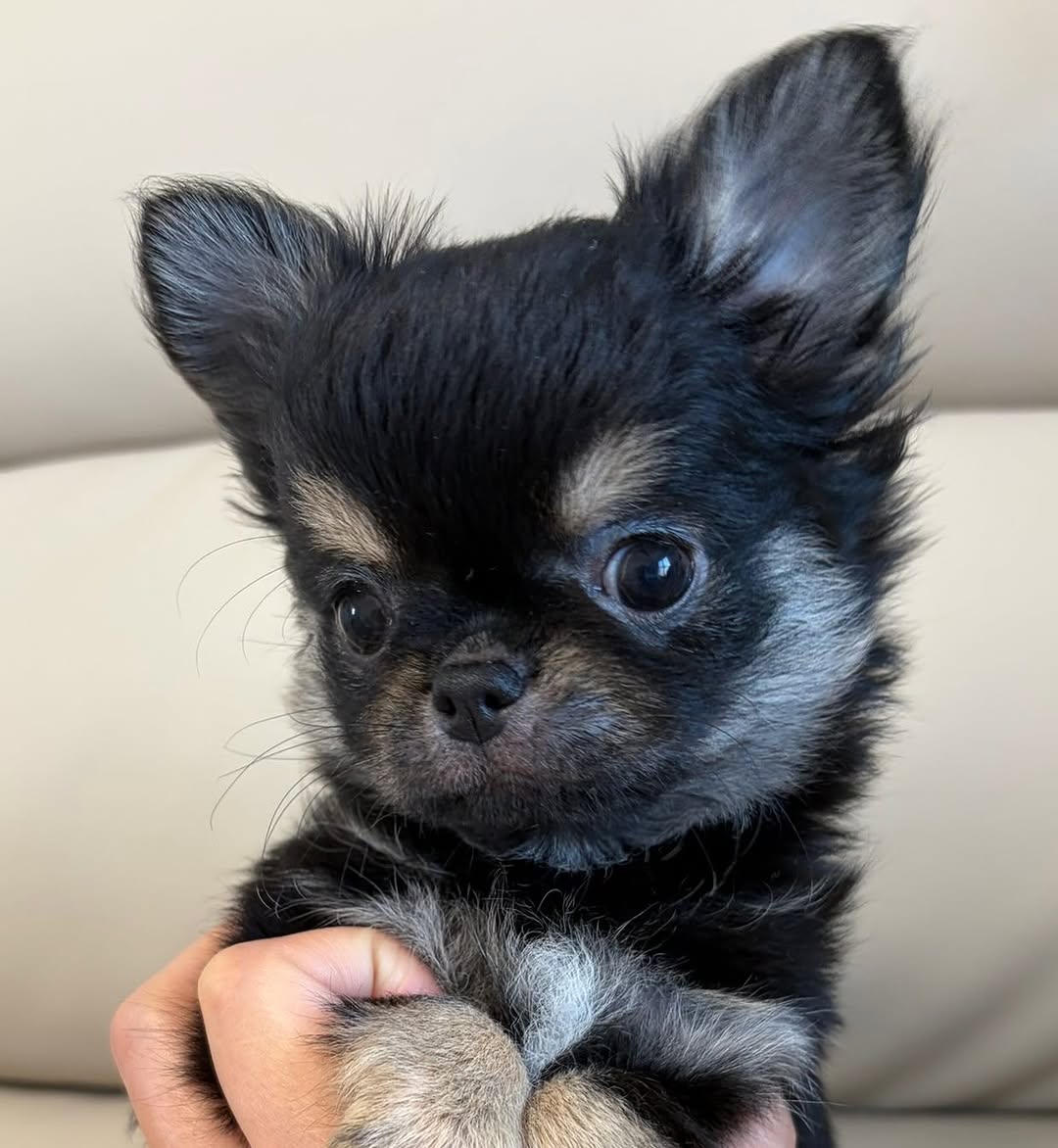
- Handle their paws, ears, and mouth daily — this makes vet visits and grooming far easier later
What to expect in week one
Week one after bringing home a chihuahua puppy is a rollercoaster. Here is an honest picture of what most families experience — so nothing catches you off guard.
- Days 1–2: The puppy is quiet, cautious, and possibly not eating well. This is completely normal. They’re processing an enormous change. Keep things calm and quiet, don’t overwhelm them with visitors, and offer food on schedule even if they don’t eat much.
- Days 3–4: Most puppies start to eat more consistently and begin exploring their space. Personality starts to emerge. You may get your first tail wag.
- Days 5–7: The puppy should be eating well, sleeping on a more predictable schedule, and beginning to recognise your voice. First vet visit usually happens around here.
“Every family asks us — is it normal that my puppy just sleeps and eats? Yes. That’s exactly what they should be doing. Growth, adjustment, and development all happen during sleep. Let them rest.”
— Jonas, Chihuvas co-founderBy the end of week one, bringing home a chihuahua puppy will feel less like a crisis and more like the beginning of something extraordinary. It takes time — for both of you. Be patient with the puppy and with yourself.
If you found this guide helpful and want to read more about life with a chihuahua, visit our journal for more guides. And if you’re still looking for the right chihuahua puppy to bring home, browse our available puppies — every one is AKC-registered and raised inside our Traverse City home.
As always, we’re here. Every family who takes home a Chihuvas puppy has our contact details for exactly this reason. If anything in week one concerns you, reach out to us — that’s what we’re for.
Common questions about bringing home a chihuahua puppy
Meet our available puppies.
Every Chihuvas puppy comes home with a full breeder packet, AKC registration, and our personal support from day one — including through everything in this guide.
See available puppies